Trump Admin Secretly Rewrites Nuclear Safety Rules
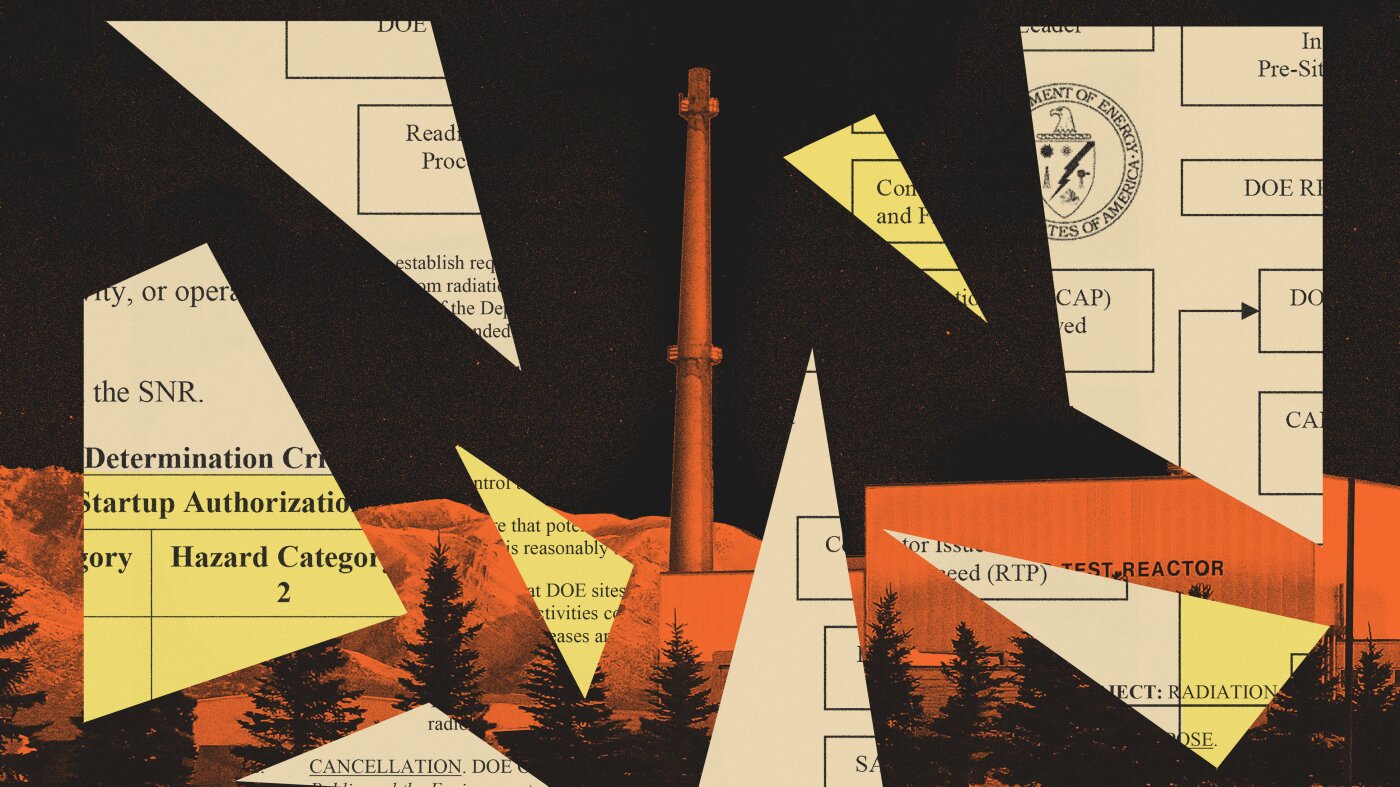
The Trump administration has secretly rewritten nuclear safety rulesImage Credit: NPR Politics
Key Points
- •WASHINGTON – In a move to accelerate the development of a new generation of nuclear reactors, the Trump administration has quietly overhauled foundational nuclear safety and security regulations, sharing the new rules with private industry but shielding them from public view, according to an exclusive review of internal documents.
- •Security Protocols: Hundreds of pages detailing security requirements for reactor sites have been eliminated, fundamentally altering the approach to site protection.
- •Environmental Safeguards: Protections for groundwater and the surrounding environment have been significantly loosened.
- •Accident Triggers: The threshold for radiation exposure a worker can receive before an official accident investigation is required has been raised, potentially delaying responses to safety incidents.
- •Safety Roles: At least one key safety oversight role has been eliminated from the operational requirements.
The Trump Administration Has Secretly Rewritten Nuclear Safety Rules
WASHINGTON – In a move to accelerate the development of a new generation of nuclear reactors, the Trump administration has quietly overhauled foundational nuclear safety and security regulations, sharing the new rules with private industry but shielding them from public view, according to an exclusive review of internal documents.
The sweeping revisions, made by the Department of Energy (DOE) over the fall and winter, gut hundreds of pages of established protocols. The changes are designed to fast-track an ambitious White House initiative to build and operate at least three experimental commercial nuclear reactors by mid-2026, a timeline that experts call unprecedented.
Why It Matters
The undisclosed changes place the administration's goal of rapid energy innovation in direct conflict with decades of carefully constructed nuclear safety policy. While proponents argue that streamlining is necessary to unleash a new era of carbon-free power, former regulators and safety advocates warn that dismantling the existing framework without public oversight introduces significant risk.
The move comes as billions in private and public capital, including from major tech firms, pour into advanced nuclear designs, raising the stakes for both the industry's future and public safety.
The Big Picture: A Regulatory Overhaul by Subtraction
The core of the changes lies in the revision of the DOE's "departmental orders"—the comprehensive rulebooks that govern nearly every facet of the reactors under its jurisdiction. An analysis of over a dozen of the new orders reveals a dramatic reduction in regulatory requirements.
Over 750 pages were cut from previous versions, leaving roughly one-third of the original content. The specific changes include:
- Security Protocols: Hundreds of pages detailing security requirements for reactor sites have been eliminated, fundamentally altering the approach to site protection.
- Environmental Safeguards: Protections for groundwater and the surrounding environment have been significantly loosened.
- Accident Triggers: The threshold for radiation exposure a worker can receive before an official accident investigation is required has been raised, potentially delaying responses to safety incidents.
- Safety Roles: At least one key safety oversight role has been eliminated from the operational requirements.
- Record-Keeping: Mandates for maintaining comprehensive records have been substantially cut back, which could impact long-term safety analysis and accountability.
Driving the News: An Executive Mandate for Speed
The regulatory overhaul is a direct consequence of a series of executive orders on nuclear energy signed by President Trump last May. Flanked by industry executives in the Oval Office, the president declared nuclear power a "hot industry" that has "become very safe."
One of those orders established a new "Reactor Pilot Program" at the DOE with an explicit and aggressive deadline:
- The Goal: The Secretary of Energy was directed to approve at least three experimental reactors with the objective of achieving "criticality"—a sustained nuclear chain reaction—in each "by July 4, 2026."
This directive gave the department just over a year to approve and oversee the construction of multiple, unproven reactor designs. Following the order, DOE officials met with industry leaders in June at the Nuclear Energy Institute, the sector's primary lobbying group, to brief them on the accelerated program.
Between the Lines: The Money Behind the Machine
The push for speed is fueled by massive investment and intense commercial interest in a new class of reactors known as Small Modular Reactors (SMRs). These smaller, factory-built designs are seen by backers as a critical tool for providing reliable, carbon-free power.
- Major Investors: The SMR sector is backed by billions in private equity, venture capital, and government funding.
- Big Tech's Demand: Tech giants including Amazon, Google, and Meta have signaled strong interest, viewing SMRs as a potential 24/7 power source for their energy-hungry artificial intelligence data centers. (Amazon and Google are financial supporters of NPR, the original source of this report).
This powerful coalition of government ambition and corporate demand has created immense pressure to remove regulatory hurdles that could slow deployment.
What They're Saying
The secrecy and substance of the changes have drawn sharp criticism from former top officials and independent watchdogs.
- On Public Trust: "I would argue that the Department of Energy relaxing its nuclear safety and security standards in secret is not the best way to engender the kind of public trust that's going to be needed for nuclear to succeed more broadly," said Christopher Hanson, who chaired the Nuclear Regulatory Commission until being fired by President Trump in 2025.
- On Safety Risks: "They're taking a wrecking ball to the system of nuclear safety and security regulation oversight that has kept the U.S. from having another Three Mile Island accident," warned Edwin Lyman, director of nuclear power safety at the Union of Concerned Scientists. "I am absolutely worried about the safety of these reactors."
- On the Timeline: "To say that it's aggressive is a pretty big understatement," said Kathryn Huff, a professor at the University of Illinois who led the DOE's Office of Nuclear Energy from 2022 to 2024. She noted that research reactors typically take at least two years to build after construction begins, making the 2026 goal exceptionally challenging.
The Department of Energy did not respond to a recent request for comment. In a previous statement from December, a spokesperson said the department "is committed to the highest standards of safety in the research and development of nuclear technologies."
The Bottom Line
The administration's strategy creates a high-stakes test for the future of nuclear energy in the United States. By prioritizing speed and reducing regulatory friction in secret, the DOE is gambling that innovation can be achieved without compromising the safety standards that have defined the industry for a generation.
The immediate challenge will be whether the department can safely manage the construction and operation of multiple new reactor designs on an accelerated, politically motivated timeline. For investors, developers, and the public, the lack of transparency surrounding the new rules remains a critical and unanswered question.
Source: NPR Politics
Related Articles
ARRY Stock Sinks Despite Market Gains: What to Know
Array Technologies (ARRY) stock declined 2.5% in the latest session, contrasting with market gains. Find out why the solar stock fell and what it means for inve
India and the EU clinch the 'mother of all deals' in a histo
Jay Vine Wins Tour Down Under 2026 After Kangaroo Crash
Australian cyclist Jay Vine secures the overall victory at the 2026 Tour Down Under despite a dramatic final-stage crash involving a kangaroo.
Trump's New Defense Strategy: Allies Must Fund Own Security
The Trump administration's new National Defense Strategy realigns US policy, demanding allies assume primary responsibility for their own security and defense c