UK Joins Major North Sea Wind Farm Project with 8 Nations
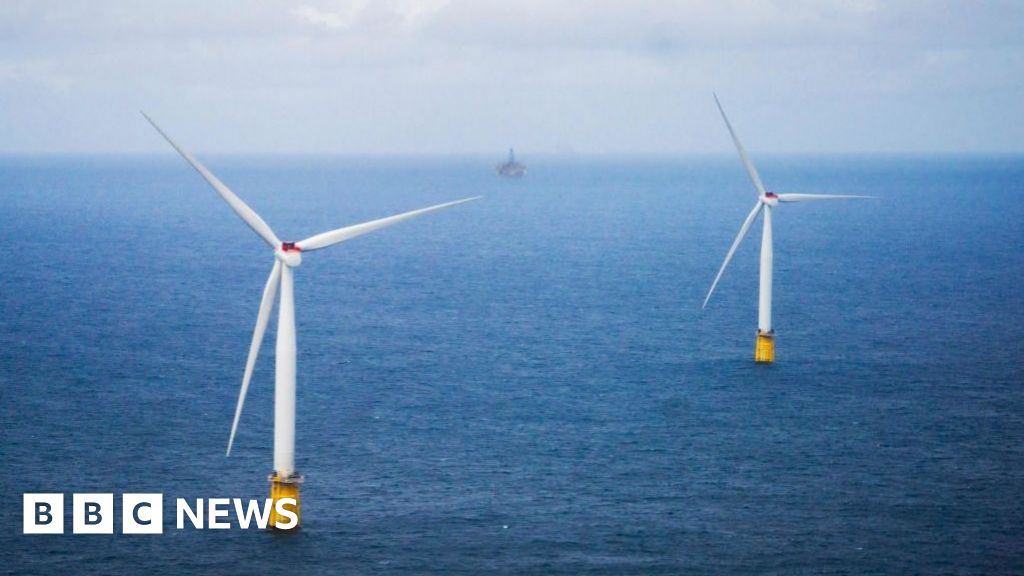
UK to join major wind farm project with eight European countriesImage Credit: BBC News
Key Points
- •HAMBURG – The United Kingdom is set to sign a landmark declaration with eight European nations, committing to a massive expansion of offshore wind power in the North Sea. The agreement aims to build a vast, interconnected network of wind farms designed to bolster Europe's energy security, reduce reliance on volatile fossil fuel markets, and drive down long-term electricity costs for consumers across the region.
- •Project Scale: The nine participating countries—including the UK, Germany, the Netherlands, and Norway—will jointly develop 100GW of offshore wind capacity.
- •Timeline: The comprehensive scheme is targeted for completion by 2050, aligning with long-term net-zero objectives.
- •Interim Target: To ensure momentum, the agreement stipulates that 20GW of this new joint capacity should be under development by 2030.
- •The Upside: Supporters argue this model will enhance grid stability and lower costs. A recent National Grid report suggested it could reduce "constraint payments"—fees paid to wind farms to stop generating power when the grid is congested. Furthermore, by allowing surplus energy to be sold across borders, it can smooth price spikes. UK consumers have already saved a reported £1.6 billion from existing interconnectors since 2023. Jane Cooper, deputy CEO of industry body RenewableUK, stated the deal would "drive down costs for billpayers" and significantly increase "the energy security of the UK and the whole of the North Sea region."
UK to Join Major Wind Farm Project with Eight European Countries
HAMBURG – The United Kingdom is set to sign a landmark declaration with eight European nations, committing to a massive expansion of offshore wind power in the North Sea. The agreement aims to build a vast, interconnected network of wind farms designed to bolster Europe's energy security, reduce reliance on volatile fossil fuel markets, and drive down long-term electricity costs for consumers across the region.
The deal, to be formalized at a summit in Hamburg, Germany, marks a significant step towards transforming the North Sea into a green power plant for Europe. It introduces an innovative "hybrid" model, where new wind farms will be connected to multiple countries simultaneously for the first time, creating a more integrated and resilient energy grid.
A New Era for North Sea Energy
Energy Secretary Ed Miliband will represent the UK in signing the declaration, which outlines an ambitious plan to be completed by 2050. This initiative is part of a broader pledge made three years ago by North Sea countries to develop 300 gigawatts (GW) of offshore wind capacity. This new agreement formalizes a major component of that goal.
The Hamburg declaration solidifies a cooperative framework to jointly develop a substantial portion of this capacity, pooling resources and expertise to accelerate the green transition.
- Project Scale: The nine participating countries—including the UK, Germany, the Netherlands, and Norway—will jointly develop 100GW of offshore wind capacity.
- Timeline: The comprehensive scheme is targeted for completion by 2050, aligning with long-term net-zero objectives.
- Interim Target: To ensure momentum, the agreement stipulates that 20GW of this new joint capacity should be under development by 2030.
Innovation at Sea: The 'Hybrid' Interconnector Model
A core innovation of the project is the planned use of multi-country interconnectors. Currently, undersea cables connect the electricity grids of individual countries in a point-to-point fashion; the UK already has 10 such links. The new model will see offshore wind farms connected directly to the grids of two or more nations.
This "hybrid" approach is intended to create a more efficient and flexible energy market, but it is not without potential trade-offs.
- The Upside: Supporters argue this model will enhance grid stability and lower costs. A recent National Grid report suggested it could reduce "constraint payments"—fees paid to wind farms to stop generating power when the grid is congested. Furthermore, by allowing surplus energy to be sold across borders, it can smooth price spikes. UK consumers have already saved a reported £1.6 billion from existing interconnectors since 2023. Jane Cooper, deputy CEO of industry body RenewableUK, stated the deal would "drive down costs for billpayers" and significantly increase "the energy security of the UK and the whole of the North Sea region."
- The Downside: The model could prove controversial. Critics warn that allowing wind farm operators to sell power to the highest bidder could lead to higher electricity prices in the originating country, especially during periods of tight supply. This has been a significant concern in Norway, which recently introduced rules to restrict electricity exports to protect domestic supply.
Energy Security in an Unstable World
The initiative is framed as a strategic response to the "fossil fuel rollercoaster," providing a stable, domestically controlled energy source insulated from global commodity price shocks. The participation of NATO and the European Commission in the summit underscores the geopolitical significance of the project.
A key focus of the discussions is the protection of critical offshore infrastructure, a concern that has escalated following recent incidents of suspected sabotage in European waters.
- Infrastructure Protection: The summit is expected to include pledges to strengthen security protocols for all offshore energy assets. This reflects a growing consensus that as Europe's reliance on this infrastructure increases, so too does its vulnerability to state and non-state threats.
The Economic and Political Debate
While the strategic goals are widely supported, the project faces economic and political scrutiny. The high upfront investment required for offshore wind development remains a point of contention in the UK.
- Government and Industry View: The government and renewable energy advocates portray the project as a vital long-term investment that will deliver cheaper, cleaner, and more secure energy, ultimately benefiting consumers and the economy.
- Opposition View: Shadow Energy Secretary Claire Countinho cautioned, "we cannot escape the fact that the rush to build wind farms at breakneck speed is pushing up everybody's energy bills." This reflects concerns over the immediate impact of capital-intensive green projects on household finances.
- The Norwegian Precedent: Norway's experience serves as a cautionary tale. Public and political pressure over rising domestic energy prices, partly blamed on exports to Europe, led the government to curb power sales and refuse permission for a new interconnector to Scotland. This highlights the potential for national interests to clash with regional market ambitions.
The Global Race for Offshore Wind
The agreement solidifies the UK's position as a leader in a fiercely competitive global market. While China currently leads the world with 43GW of installed offshore wind capacity, the UK ranks second with nearly 16GW already in operation.
The UK government has already awarded contracts for an additional 20GW of capacity, demonstrating a firm commitment to expansion that this new European partnership will compound. Within the UK, the expansion of renewables is broadly supported by the Liberal Democrats, Greens, SNP, and Plaid Cymru, though the latter two parties continue to argue for devolved control over energy resources in Scotland and Wales.
Outlook and Next Steps
The Hamburg declaration is more than a statement of intent; it is a foundational blueprint for Europe's future energy landscape. The immediate next step is the formal signing, which will trigger a complex, multi-decade process of planning, regulation, and construction.
The primary challenges will be financial and regulatory. The nine nations must harmonize technical standards, establish fair market rules for the new hybrid assets, and secure trillions in public and private investment. Navigating the tension between a free-flowing regional energy market and the sovereign duty of each government to ensure affordable power for its own citizens will be the central political test.
Ultimately, this project represents a strategic pivot, positioning the UK as an integral hub in a continental energy system powered by the winds of the North Sea.
Source: BBC News
Related Articles
ARRY Stock Sinks Despite Market Gains: What to Know
Array Technologies (ARRY) stock declined 2.5% in the latest session, contrasting with market gains. Find out why the solar stock fell and what it means for inve
Jay Vine Wins Tour Down Under 2026 After Kangaroo Crash
Australian cyclist Jay Vine secures the overall victory at the 2026 Tour Down Under despite a dramatic final-stage crash involving a kangaroo.
Trump's New Defense Strategy: Allies Must Fund Own Security
The Trump administration's new National Defense Strategy realigns US policy, demanding allies assume primary responsibility for their own security and defense c
S&P 500's Flawless Forecaster Flashes Major Warning
A market indicator with a perfect 69-year track record, a surge in margin debt, is flashing its most serious warning of a downturn since the 2008 crisis.