“`html
UK’s Historic Tax Burden: A Guide to Protecting Your Finances
Let’s talk about a subject that’s as thrilling as it is crucial: UK tax policy. I promise to make this discussion on the UK tax burden more enlightening than painful.
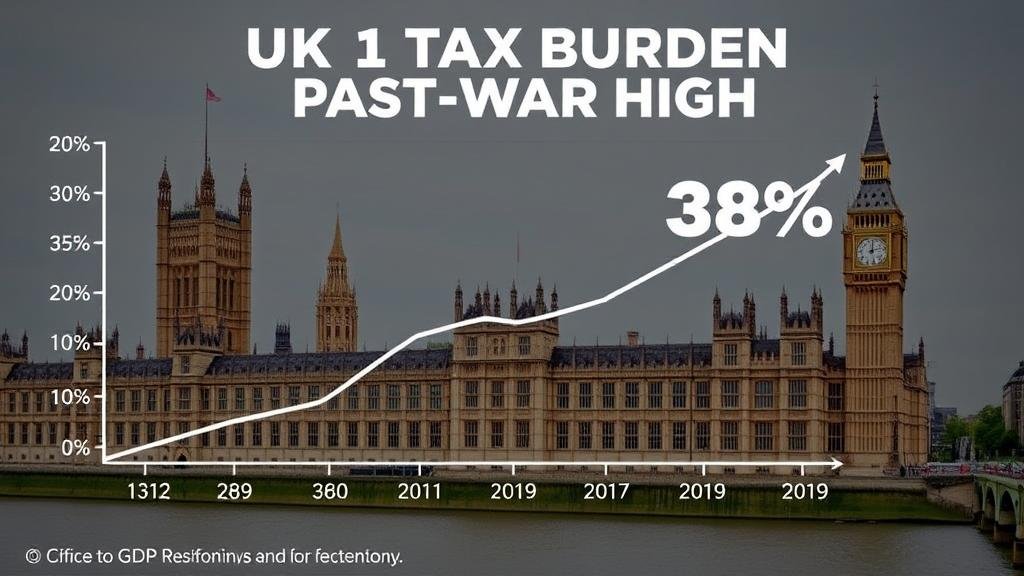
The latest reports indicate that the UK’s tax levels are projected to reach a height not seen in generations, a true fiscal milestone. According to the Office for Budget Responsibility (OBR), the total tax revenue is set to climb to 38% of our GDP. In practical terms, for every £100 of value generated in the UK, £38 will be collected by the government. This change will affect everyone, from individuals reviewing their payslips to businesses evaluating their expenses. Let’s explore the factors leading to this situation and discuss actionable financial planning strategies.
A Tax Burden Echoing the Post-War Era
The last time taxes were this high was in 1948, a period of post-war recovery. Today’s economic pressures are different, but they result in a significant tax pinch.
Economists use the “tax-to-GDP ratio” to measure the portion of the nation’s economic output that goes to the government. This includes income tax, VAT, and council tax. A rising tax-to-GDP ratio means a larger government share, which can impact personal and business finances. The OBR suggests this is not a temporary shift but a long-term trend toward higher taxes.

The Perfect Storm: Causes of the Squeeze
This historic tax squeeze is the result of multiple factors converging into a ‘perfect storm’ of fiscal pressures.
1. The Stealth Tax: Fiscal Drag
“Fiscal drag” is a subtle yet powerful force in tax policy. Here’s how it works:
- Frozen Thresholds: The government freezes income levels for tax brackets.
- Wage Inflation: As wages rise to keep up with the cost of living, more people are pushed into higher tax brackets.
- The Result: A pay raise might result in a higher tax rate, effectively reducing your disposable income. This “stealth tax” has pushed millions more into the 40% tax bracket.
2. The Cost of Crises
The massive government spending during the 2020 pandemic on furlough schemes and business loans, followed by the energy crisis support, added billions to the national debt. The interest on this debt is a significant ongoing cost that needs to be funded through taxes.
3. Funding the NHS
The UK’s commitment to funding the National Health Service, especially with an aging population and rising healthcare costs, is a major driver of public spending and, consequently, taxes.
What the 38% Burden Means for You
This high tax burden has real-world consequences for your finances:
- For Households: Your disposable income is reduced, leaving less for savings, investment advice, or discretionary spending, which is especially challenging during a cost-of-living crisis.
- For Businesses: The increase in corporation tax makes the UK a more expensive place to operate, potentially discouraging investment and slowing job creation. Portfolio management for business assets becomes even more critical.
- For Investors: Higher taxes on dividends and capital gains can reduce the incentive to invest, which is vital for economic growth.
Navigating the Squeeze: Proactive Tax Planning
While you can’t change national tax policy, you can take steps to manage your own financial situation through smart tax planning. Here are some strategies to consider:
- Maximise Your ISA Allowance: An Individual Savings Account (ISA) allows you to save or invest up to £20,000 per year without paying tax on the returns. It’s a powerful tool for wealth creation.
- Boost Your Pension Contributions: Retirement planning is more important than ever. Contributions to your pension receive tax relief from the government, effectively boosting your savings for the future.
- Understand Your Tax Code: An incorrect tax code could mean you are overpaying tax. Always check it to ensure you are paying the right amount.
- Explore Salary Sacrifice Schemes: Many employers offer salary sacrifice schemes for benefits like pensions, electric cars, or childcare. These arrangements can lower your income tax and National Insurance contributions.
The Road Ahead
The UK’s journey to a 38% tax burden signals a critical moment for the nation’s finances. The government faces the challenge of funding public services without stifling economic growth. For individuals, the key is not to despair but to prepare. By understanding the tax landscape and utilizing available financial tools, you can build a more secure financial future. Effective financial planning and tax planning are no longer just for the wealthy; they are essential for everyone.
“`