“`html
The Un-Breakup: Why US-China Trade Is a Paradox of Economic Interdependence
In the grand drama of global economics, the US and China are like that celebrity couple who publicly break up every six months but are still spotted sharing avocado toast. The headlines scream “It’s over!” while a deeper US-China trade analysis whispers, “…or is it?” We’re told they’re “decoupling,” which sounds less like an economic strategy and more like what happens to a train car that’s had enough.
Let’s be real: despite all the political huffing and puffing, their economic interdependence is stickier than a toddler with a lollipop. US exports to China are climbing, proving that money has a funny way of ignoring angry tweets. So how can exports be soaring while diplomatic relations are chilling? Grab a seat. We’re about to unpack this glorious, complicated, and surprisingly funny paradox.

By the Numbers: A Tale of Two (Very Codependent) Economies
Okay, let’s get to the numbers. Before your eyes glaze over like a fresh Krispy Kreme, just think of this as the box score for the world’s weirdest season of “Frenemies.”
According to the stat wizards at USAFacts, we imported about $461.4 billion in goods from China. In return, we sent them $199.3 billion of our own stuff. Yes, that’s a trade deficit of over $262 billion, which means they’re winning the shopping spree, but that’s not the point. Cue dramatic pause. The point is the volume. Hundreds of billions of dollars are zipping back and forth. This isn’t an economic “divorce.” It’s more like a “we need separate checking accounts but we’re still sharing the Netflix password” kind of relationship. And yes, a lot of people’s jobs depend on that password.

The Engine of Interdependence: Why We Can’t Quit Them
The idea that two squabbling giants can’t just walk away from each other seems weird, right? But this relationship wasn’t built in a day. It’s a deeply woven tapestry of global supply chains and consumer habits that have been decades in the making.
1. The IKEA Nightmare of Global Supply Chains
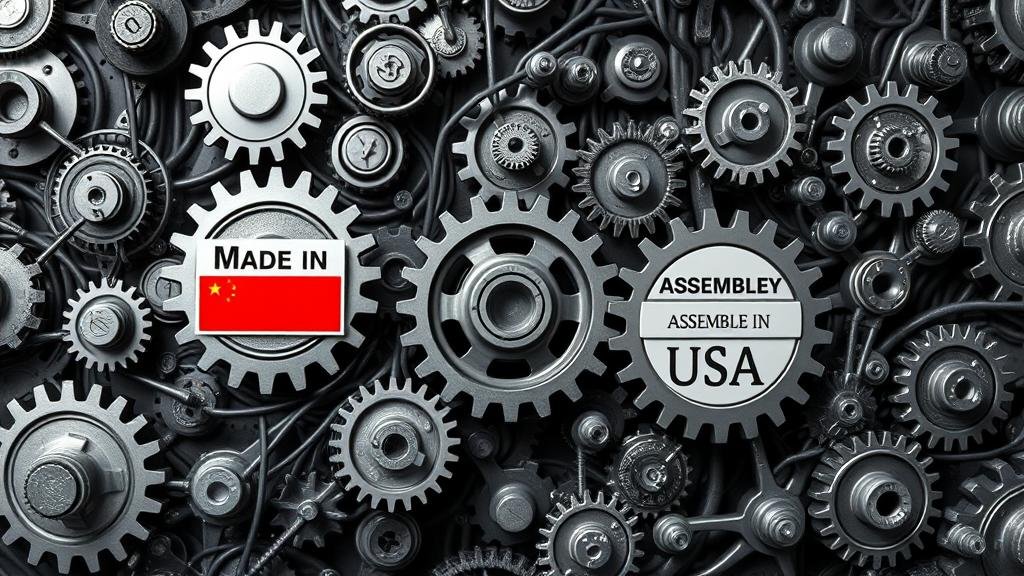
You know that “Made in the USA” label? It’s often telling a little white lie. Many of those products are stuffed with components from China. From your phone’s guts to your car’s widgets, Chinese manufacturing is the secret ingredient. Trying to untangle this web is like trying to build a piece of IKEA furniture backwards, in the dark, without the Allen key. It’s a monumental task. For most businesses, cutting off Chinese suppliers means higher costs and production delays—corporate-speak for “your new gizmo is going to be late and more expensive.” You feel me?
2. China: The Unignorable Shopping Mall
On the flip side, China is a beast of a customer. With a middle class of over 400 million people, they’ve got a serious appetite for American goods. My 7-year-old asked if I was done talking about soybeans. I said, “NEVER!” Because soybeans, corn, and pork from American farms are feeding China’s massive population. They also can’t get enough of our tech, machinery, cars, and airplanes. For thousands of American businesses, the Chinese isn’t just an important part of their market trends; it’s the main event.
A Deeper Look: The States on the Frontline
This whole economic saga gets way more interesting when you zoom in from the national news to your own backyard. Those giant trade numbers? They’re made up of real stuff from real states.
Let’s look at the VIP section of China traders: California, Texas, and Washington.
- California: The cool kid who sells everything from almonds and fancy wine to software that probably runs your life.
- Texas: The bold oil baron, shipping tanker-loads of oil, gas, and chemicals across the Pacific.
- Washington: The airplane nerd, home to Boeing, whose entire year can be made or broken by a big order from a Chinese airline.
For these states, US-China trade isn’t some abstract political talking point; it’s jobs, farm profits, and the money that fixes the potholes. When trade flows, farmers prosper. When tariffs hit, they’re the first ones to feel it. It’s kinda hard to care about political rhetoric when you’re worried about selling your harvest.

De-risking vs. Decoupling: The New Corporate Buzzword
Hot take coming in 3…2…1. While politicians love to talk about “decoupling,” the business world is playing a different, smarter game: “de-risking.”
Decoupling is the dramatic breakup. It’s packing your bags, deleting their number, and telling your friends you’re “so over them.” It’s also wildly expensive and mostly unrealistic.
De-risking is… well, it’s basically deciding not to put all your eggs in one basket. It’s a “China +1” strategy. Companies aren’t ditching China, but they’re setting up shop in places like Vietnam, Mexico, or India, too. It’s less “we’re breaking up” and more “I think we should see other countries.” This explains the paradox perfectly. Businesses can keep selling more to China to cash in on today’s demand while also building factories elsewhere to avoid future drama. It’s the ultimate “have your cake and eat it too” strategy.
The Path Forward: It’s a Balancing Act, Folks
So, what have we learned today? This US-China trade analysis shows that global commerce is a stubborn force that often plows right through political noise.
For you, dear reader (still reading? Wow. You’re officially my favorite), the takeaway is to look past the dramatic headlines. The fundamental data points to a relationship defined more by economic interdependence than mutual animosity. The future won’t be a clean break, but a messy, ongoing balancing act. As long as we make stuff they want and they make stuff we need, the money will continue to flow.
And yes, this will be on the test. 📈
“`