US-China Trade War? The Secret Economic Boom Behind the Breakup
If you only read the headlines, you’d think the US and China are in the middle of a messy, public breakup. We’re talking full-on “unfriending on Facebook,” “giving back the letterman jacket,” and passive-aggressively subtweeting each other about national security. It’s dramatic. It’s tense. It’s… not the whole story.
Because if you peek behind the curtain of political chest-thumping, you’ll find something bizarre. The economic engine between them isn’t just sputtering along; it’s roaring. US-China trade hit record highs even as the rhetoric got spicier.
So, is this whole economic relationship too big to fail? Let’s be real, this is juicier than a reality TV show. Here at Creditnewsinsider, we’re popping the popcorn and diving into the numbers. The truth isn’t a simple split, but something more like a conscious uncoupling that still involves sharing a Netflix password.
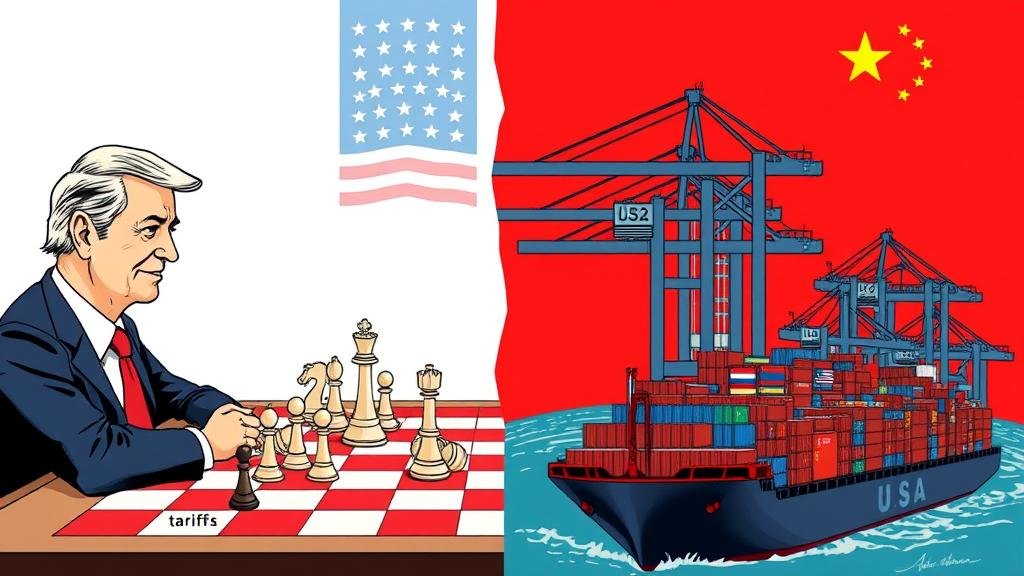
A Tale of Two Narratives: The Rock ‘Em Sock ‘Em Robots Edition
In one corner, you have Politics. It’s angry. It’s throwing around words like “tariffs,” “semiconductor restrictions,” and “strategic competition.” This is the narrative that has companies sweating, wondering if they should pack up their factories and move them to their mom’s basement to be safe.
And in the other corner, you have Commerce. It’s just quietly minding its own business, counting stacks of cash. In 2022, two-way trade in goods between the US and China hit a jaw-dropping $690.6 billion. That’s a new record, folks. We’re talking more money exchanged than in 2018, before the big trade war really kicked off. US exports to China climbed to $153.8 billion, while we imported a cool $536.8 billion from them.
How is this even possible? Are the ships passing each other in the night with a secret handshake? The answer, my friend, is that money is a powerful, stubborn beast that doesn’t always listen to politicians. You feel me?
The Unstoppable Force of Our Shopping Carts
The simplest reason is often the truest one: we, the people, love to buy stuff. And a whole lot of that stuff—from the phone you might be reading this on to the quirky cat-shaped mug on your desk—comes from China.
Even with tariffs making things more expensive, China’s manufacturing machine is just so vast and efficient that it’s hard to quit. My 7-year-old asked if I was done talking about supply chains yet. I told him “never.” For most businesses, choosing where to get their products isn’t a political vote; it’s a spreadsheet decision. And the math, for a long time, has screamed “China.”
The pandemic threw gasoline on this fire. All of us, stuck at home with stimulus checks and a desperate need for a new air fryer, went on a historic online shopping spree. And who was there to fulfill those orders? Cue dramatic pause. You guessed it.

But Wait, They Buy Our Stuff, Too!
Now, before you think this is a completely one-sided shopping binge, let’s look at the other side of the coin. US exports to China are the lifeblood for huge chunks of the American economy. I know, agricultural policy isn’t exactly a Jason Statham movie, but stick with me. This is a clear case of economic interdependence.
A Quick Peek at China’s American Shopping List:
- Soybeans: China is basically the world’s biggest soybean enthusiast, needing them for animal feed. American farmers are more than happy to oblige. China’s need to feed its population often makes policy squabbles seem a little less important.
- Corn and Sorghum: See above. Turns out, a country of 1.4 billion people needs a lot of food. Who knew?
- Semiconductors and Gadgets: Now, here’s a fun one. While the US is blocking the sale of the fanciest, most high-tech chips, China is still a massive customer for all the other American-designed chips and the machines that make them.
- Oil and Gas: America’s booming energy sector found a very, very thirsty customer in China.
This isn’t just business; it’s deep-seated interdependence. It’s the “I can’t quit you” of global economics. Our farmers need their markets, and their industries need our products. It’s a powerful incentive to keep the gravy train rolling, even when the conductors are arguing.
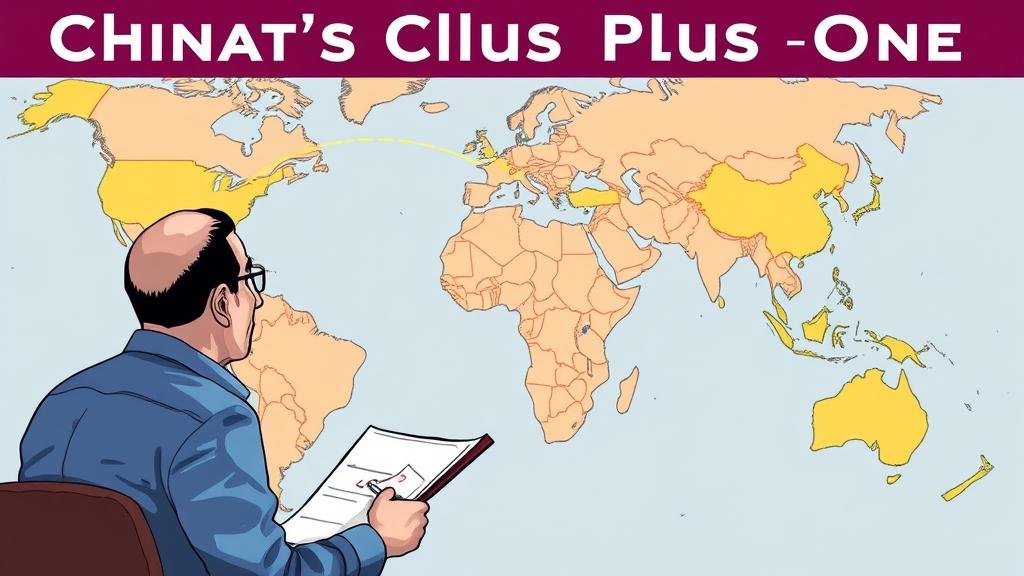
Plot Twist: A New Contender Enters the Ring
Just when you think you have it all figured out, 2023 walked in and said, “Hold my beer.” For the first time in two decades, the United States started buying more stuff from… Mexico!
Hot take coming in 3…2…1… This is proof that years of tariffs and geopolitical drama are finally starting to work. It’s like gravity; it takes a while, but it’s relentless. This doesn’t mean we’ve stopped trading with China, but that businesses are finally adopting the “China Plus One” strategy. It’s the business equivalent of not putting all your eggs in one potentially volatile basket.
Why the change of heart?
- Those Pesky Tariffs: They stuck around, making Chinese goods more expensive and forcing companies to shop around.
- Geopolitical Jitters: Nobody wants their entire business to be a pawn in a superpower chess match. The instability is just bad for business.
- China’s Getting Pricey: Labor and manufacturing costs have gone up, making China less of the bargain it used to be.
- The Post-COVID Hangover: The pandemic showed everyone the danger of having your entire supply chain in one place. Diversifying isn’t just smart; it’s survival.
Mexico, Vietnam, and their neighbors are waving from the sidelines, saying, “Pick me! Pick me!” And companies are listening. This is “friend-shoring” in action.
The “It’s Complicated” Relationship Status
So, are we breaking up or not? The answer is a shrug and a sigh: yes and no. We’re not getting a clean divorce, or a complete economic decoupling. We’re entering a strategic rebalancing. The economic pull between the US and China is just too strong to completely sever ties.
Think about Apple, still assembling most of its iPhones in China, or Tesla, whose Shanghai Gigafactory is a crown jewel. These companies have poured billions into China. Untangling that web is about as easy as explaining blockchain to your grandpa. It’s not happening overnight.
Meanwhile, the US government is trying to have its cake and eat it too with a “small yard, high fence” strategy. The goal is to block off super-sensitive tech (like advanced AI) while letting the regular ol’ trade of sneakers and microwaves continue. It’s a tightrope walk over a canyon filled with economic consequences.
Why You Should Care (Yes, This Will Be on the Test)
The future of US-China trade is going to be messy, contradictory, and honestly, a fascinating story of rivalry and reliance.
- For Businesses: The moral of the story is: diversify! Relying on one country is so 2019. Look into this whole “friend-shoring” thing. It’s all the rage.
- For Consumers: This could be a mixed bag. A more stable supply chain is good, but moving production out of China’s super-efficient factories might mean higher prices. Sorry.
- For Investors: The winners will be the companies nimble enough to navigate these choppy waters. Find the businesses that can balance China’s efficiency with the need to spread their bets.
The story of record-breaking trade during a political cold war reminds us that economics plays by its own rules. While headlines yell “decouple,” the daily decisions of millions of shoppers and thousands of businesses are quietly saying, “It’s complicated.” The connection is changing—getting more strategic and a lot more complex—but it’s not going anywhere.
Still reading? Wow. You’re officially my favorite.