The US-China Trade War Didn’t Stop Trade—It Got Sneakier
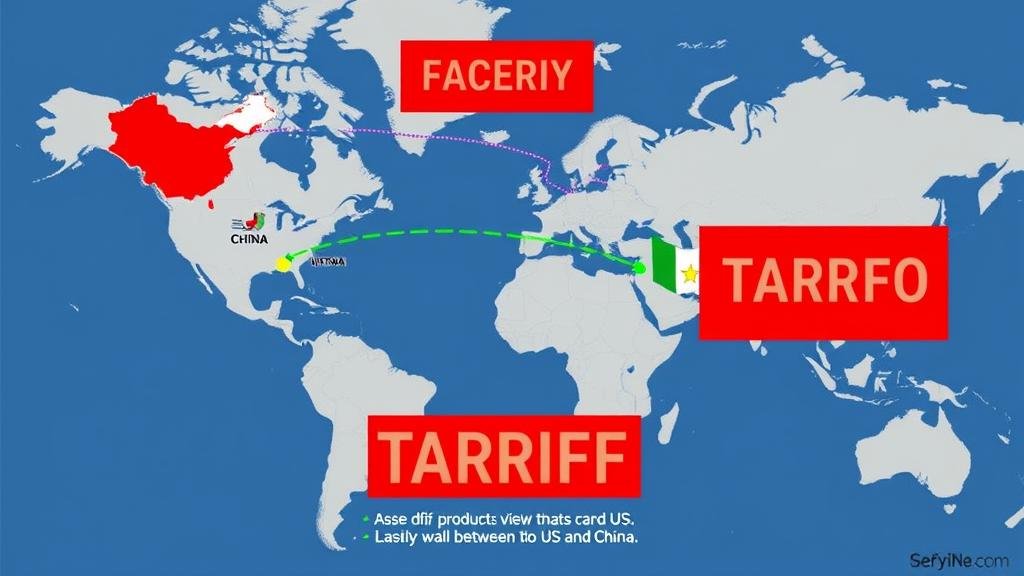
The Great Decoupling That Wasn’t: How US-China Trade Got Creative
Let’s dive into the biggest economic story of our time: the ongoing US-China trade dynamic. You’ve seen the headlines about tariffs, the trade war, and the push for “decoupling.” It sounds like a messy global divorce. The prevailing theory was that this conflict would cripple the trade routes between Washington and Beijing. After all, if you impose heavy taxes on another country’s goods, they should stop selling them to you. Simple economics, right? Well, not quite.
While politicians engaged in a war of words, the global economy adapted. Instead of collapsing, the US-China trade relationship has morphed into something far more complex and interesting. It has found creative workarounds. Let’s look past the political rhetoric and follow the money to see what’s really happening with the global supply chain.
The Expected Story: A Trade War’s Toll
Rewind to 2018. The script we were all given was straightforward. The US, aiming to rebalance its economic relationship with China, implemented a series of tariffs on Chinese goods. The objective was to make these products more expensive, encouraging American companies to shift their manufacturing elsewhere or bring it home. The world expected to see:
- A sharp decline in imports from China.
- An exodus of companies from China, relocating their operations to countries like Vietnam or Mexico.
- A slowdown in the global economy due to the friction between its two largest players.
This all made sense on paper. However, the predicted trade apocalypse never materialized.
By the Numbers: A Tale of Unexpected Resilience
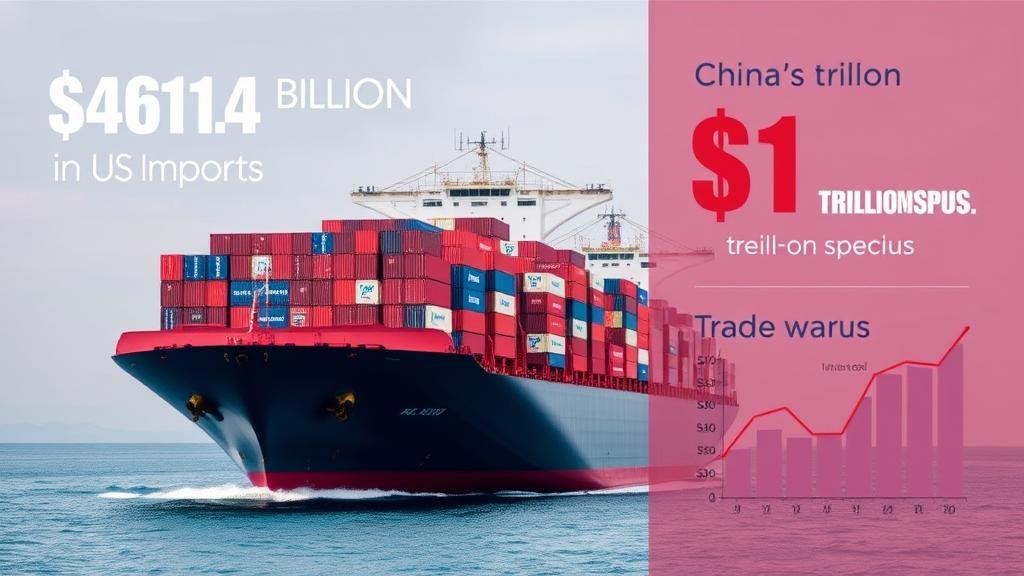
The data tells a surprising story. According to USAFacts, in 2024, US imports from China still totaled a massive $461.4 billion. In return, the US sent about $199.3 billion in goods, resulting in a trade deficit of over $262 billion. This is hardly “decoupling.”
Meanwhile, China’s overall global trade surplus exceeded $1 TRILLION for the first time ever in a single year, as reported by The Straits Times. This wasn’t supposed to happen. If tariffs were the kryptonite to China’s export machine, how is it still running at full speed?
The Strategy Behind the Stats: How It’s Done
This resilience is no accident. It’s the result of several clever strategies that have reshaped the global supply chain.
The Ol’ Switcheroo: The Magic of Transshipment
One of the most effective tactics has been “transshipment.” Instead of shipping a finished product directly from China to the US, companies send components to a third country, like Vietnam or Mexico. There, the parts are assembled, and a new “Made in Vietnam” or “Made in Mexico” label is applied. This allows the final product to bypass the China-specific tariffs. It’s a logistical sleight of hand that keeps the global supply chain flowing.
Market Diversification: The Pivot to New Partners
While the US was implementing tariffs, China was busy cultivating new economic relations. It aggressively expanded its trade with Southeast Asia (ASEAN), Latin America, and Africa. As The Straits Times noted, a significant portion of China’s record-breaking surplus came from increasing its exports to markets outside the US. By diversifying its customer base, China has reduced its reliance on a single market.
The “Can’t Quit You” Factor: Sticky Supply Chains
For decades, the world built its manufacturing ecosystem in China. The country offers an unparalleled combination of factories, infrastructure, and skilled labor. Dismantling and moving this intricate network—the very heart of the global supply chain—is an immense undertaking. For many companies, there is simply no viable alternative that can match China’s scale and efficiency. Despite the tariffs, they remain deeply integrated into this powerful system, creating a codependent economic relationship.
The New Normal: It’s Complicated
So, what does this all mean? We are not witnessing a “decoupling” of the US and Chinese economies. Instead, we are in an era of “re-routing.” The straightforward shipping lanes of the past are being replaced by a more complex and adaptive web of global trade.
This new reality requires businesses to be more agile, navigating a more fragmented global supply chain. For consumers, it means the costs associated with tariffs are likely still embedded in the prices of many goods, even if those goods took a detour through a third country.
Final Thoughts & A Look Ahead
To sum it up:
- Transshipment is key. Companies are using third countries to assemble products and avoid tariffs.
- China has diversified its markets. It is no longer solely reliant on the US consumer.
- The global supply chain is sticky. China’s manufacturing infrastructure is too vast and efficient to be easily replaced.
The story of US-China trade is not about cessation; it’s about adaptation. When trillions of dollars are at stake, the global economy will always find a way.