US Military Caribbean Strike: Self-Defense or a Violation of International Law?
A recent US military operation in the Caribbean has ignited a fierce debate, pitting claims of self-defense against accusations of a blatant violation of international law. The incident, involving targeted strikes on a vessel suspected of drug smuggling, has escalated into a major controversy with reports of a second strike on survivors in the water.
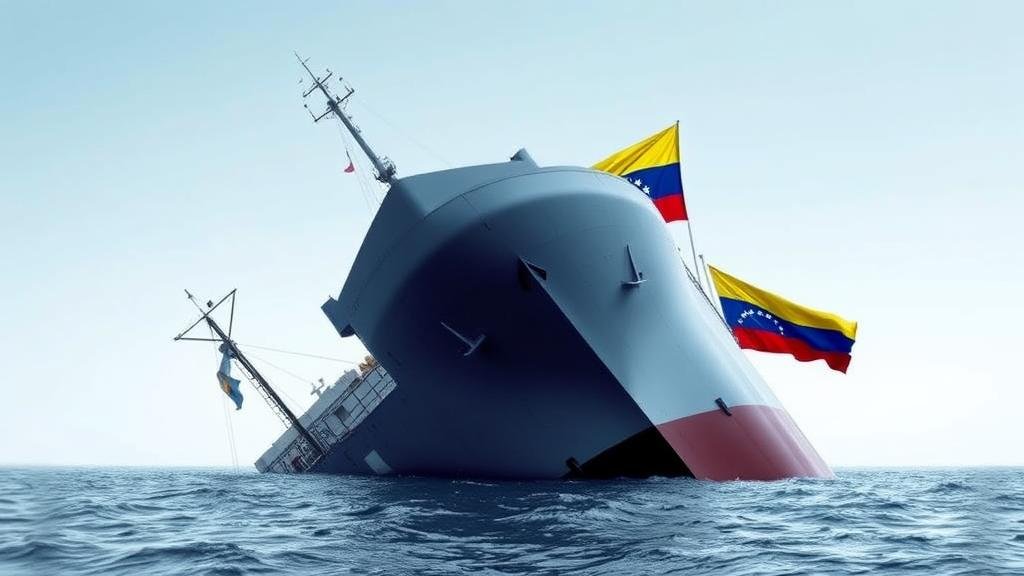
The Caribbean Encounter: A Contentious Engagement
The core of the controversy lies in the alleged second strike. While the initial engagement targeted a boat believed to be involved in illicit activities, the subsequent attack on individuals already in the water has raised serious legal and ethical questions. The fact that the vessel was reportedly Venezuelan adds a complex layer of geopolitical tension to an already volatile situation. This incident goes beyond a standard counter-narcotics operation, stepping into the murky waters of international law and the rules of engagement.
The Official Stance: A Justification of Self-Defense
The White House, led by Defense Secretary Pete Hegseth, has staunchly defended the action as a legitimate act of self-defense. Press Secretary Karoline Leavitt affirmed that the admiral who authorized the strikes acted within legal bounds, asserting that the individuals on the boat posed a direct threat. The administration maintains that the operation was conducted in accordance with both US and international law, a position that is now under intense scrutiny.

A Wave of Dissent: Allegations of a War Crime
The official narrative is being challenged by a chorus of critics, including human rights advocates and legal experts, who argue that the second strike could constitute a war crime. The Geneva Conventions, a cornerstone of international law, expressly forbid targeting individuals who are hors de combat (out of the fight), such as shipwrecked sailors. While the “war on drugs” is a common metaphor, the use of military force brings with it the stringent regulations of armed conflict.
Congress is now demanding answers, focusing on the specific rules of engagement for this operation and the justification for using lethal force against individuals who were seemingly incapacitated. The key question is whether there was a credible threat from people struggling in the water, a question that puts the Secretary of Defense in a difficult position.
Analysis: The Blurring Lines of Modern Conflict
This incident highlights the increasingly ambiguous nature of modern warfare and law enforcement on the high seas.
-
The Precedent for Preemption:
The broad application of “self-defense” as a justification for military action could set a dangerous precedent, potentially eroding the established norms of international law. -
The “War on Drugs” Made Literal:
This event forces a critical examination of whether alleged drug smugglers are treated as criminals entitled to due process or as enemy combatants. The distinction is fundamental to the principles of justice. -
Diplomatic Consequences:
The involvement of a Venezuelan vessel threatens to further strain the already tense relationship between the US and Venezuela, creating significant diplomatic fallout.
The Imperative of Accountability
The situation leaves us grappling with a critical dilemma: the necessity of combating international drug trafficking versus the fundamental principles of humane treatment and the rule of law. A transparent and thorough investigation is not just a political necessity but a moral one. In a democracy, accountability is paramount. The global community is watching, and the response to this incident will have far-reaching implications for the future of international law and military conduct.