US Foreign Policy Pivot: Why the White House Sees Immigration as a Bigger Threat to Europe Than Russia
It appears the White House has decided to become the geopolitical equivalent of that one relative at every family gathering who blames the younger generation’s life choices for the burnt turkey. In a stunning US foreign policy pivot, a new national security document is framing mass immigration as a more significant long-term threat to Europe’s stability than Russia. This isn’t just a controversial opinion; it’s a calculated strategic shift designed to pressure European allies into adopting stricter border controls, with massive implications for NATO and global security.

The White House’s New Threat Assessment
The core of this new strategy is a startling claim: ongoing demographic shifts from mass immigration are leading Europe toward “civilizational erasure,” and the continent could become “unrecognizable in 20 years or less.” This explosive assertion, which critics have linked to far-right rhetoric like the “Great Replacement Theory,” effectively moves immigration from a social issue to a top-tier national security threat, sidelining the long-held consensus that Russia is Europe’s primary aggressor.
For decades, the Russian threat has been the central organizing principle of European security, a reality underscored by the brutal war in Ukraine. But this new doctrine reframes Russia as a secondary concern. The real danger, it argues, is an internal, societal corrosion that poses a greater risk to our allies’ power in the long run.
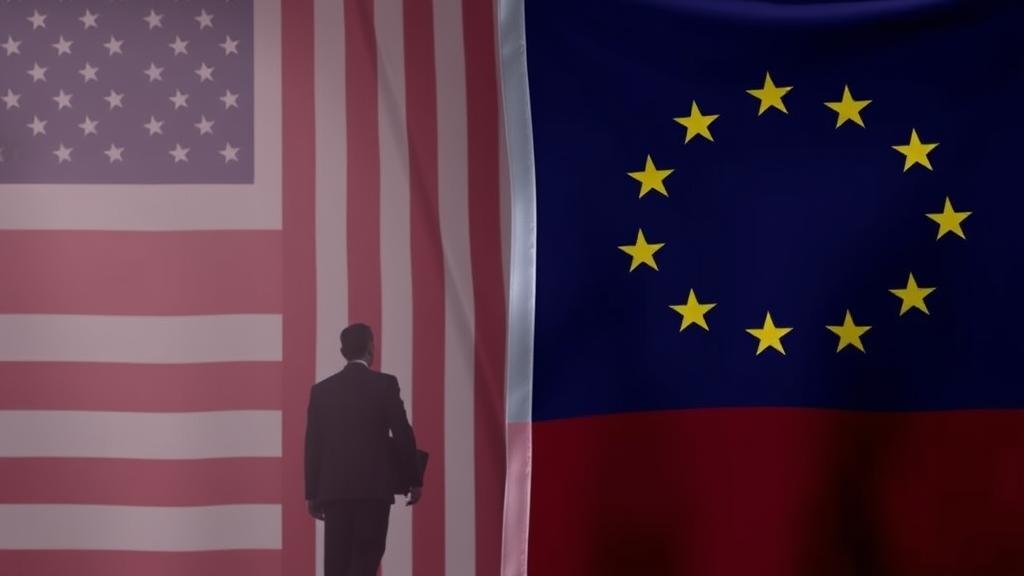
Why the Sudden Shift?
This strategic redirection is no accident. It’s a calculated move with clear motivations.
- Domestic Political Strategy: With immigration a hot-button issue in U.S. politics, this new foreign policy creates an international justification for a domestic agenda. By labeling mass immigration a global crisis, the White House can argue that its push for tighter border controls is part of a necessary, worldwide response.
- Redefining “National Security”: The strategy expands the definition of national security beyond military hardware to include cultural identity and social stability. It posits that an influx of migrants drains economic resources, erodes social cohesion, and ultimately compromises military readiness. A divided, economically strained Europe, the argument goes, cannot be a strong partner in NATO.
A “Friendly” Ultimatum to Europe
This new doctrine is the foundation for a full-court diplomatic press. The message to European governments is a thinly veiled ultimatum: get tough on immigration, or your security alliance could be at risk. This pressure campaign could involve tying future security aid and trade deals to a country’s immigration policies or using American influence to shift NATO’s focus and resources toward treating migration as a primary security threat.
The constant talk of an immigration “crisis” from Washington is designed to empower like-minded political parties in Europe, creating a significant European backlash against more moderate governments.
The Glaring Flaws in the Argument
However, critics are lining up to poke holes in this new strategy, and they’ve brought compelling evidence.
First, the central claim that immigration will make Europe “unrecognizable” is presented without any supporting data. It’s a dire forecast based on ideology, not evidence. Second, the economic argument is highly contested. Many economists assert that immigration is a net positive for aging countries, as immigrants fill critical labor shortages, start businesses, and pay taxes. Shutting the door could lead to economic decline, not strength.
Finally, and most critically, downplaying the Russian threat is seen by many experts as dangerously naive. As one former senior British intelligence officer bluntly stated:
“Migration is a challenge. Russia is a threat.”
One is a complex social issue; the other is a nuclear-armed power that invades sovereign nations. To suggest that Europe should divert its attention from the immediate fire on its eastern flank to address a less tangible internal issue is, in the eyes of many, strategic madness.
The Future of the Western Alliance
This leaves the Western alliance at a precarious crossroads. The White House is pressuring its allies to reprioritize their security concerns, creating a high-stakes gamble. While immigration is a valid concern for many European nations, their leaders are unlikely to welcome a directive from their most powerful ally that dismisses their own security assessments.
The world is now watching to see if Europe will align with this new US foreign policy or push back. The outcome will undoubtedly shape the future of NATO and the global balance of power, proving that the very definition of “security” has become the new ideological battleground.