US vs. China: The High-Stakes Race for AI Chip Supremacy
Remember when the biggest tech rivalry was Mac vs. PC? Adorable. Now, it’s a full-blown global staring contest over Artificial Intelligence, and the U.S. and China are locked in a “who blinks first” death match. And right on cue, the U.S. government is sliding a new set of US export controls across the table. Let’s be real, international policy isn’t exactly a barrel of laughs, but this new “digital cold war” has more drama than a season finale of Succession.
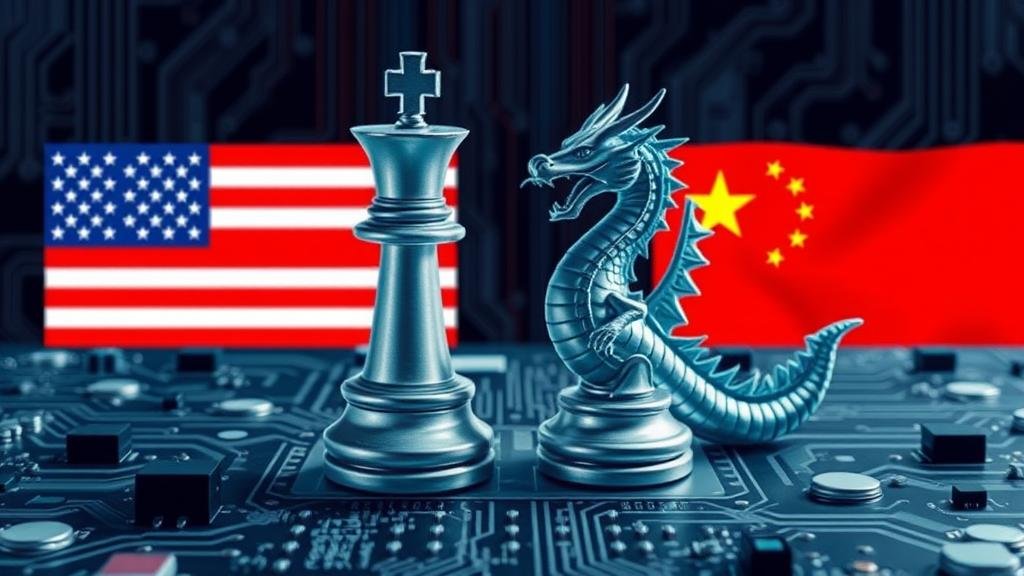
A United Front? In This Economy?
In what can only be described as a political miracle, a bipartisan group of senators has actually agreed on something. I’ll give you a moment to recover from the shock. They’ve introduced a bill to stop China from getting its hands on top-tier U.S. AI chips and advanced semiconductors. Why? Because they’re worried the executive branch might get a little soft and loosen the rules.
This is a big deal for a couple of reasons. First, it’s Washington officially saying, “Yeah, we see what you’re doing over there.” For years, experts have been yelling about Beijing’s “military-civil fusion” strategy. It’s a fancy term for China’s “what’s yours is mine” policy, where cool new tech from a private company can suddenly find its way into a military drone. Cue dramatic pause. The U.S. wants to slow that roll, big time.
Second, seeing Democrats and Republicans hold hands on an issue sends a message clearer than a 4K TV: this isn’t a political fad that’ll change next Tuesday. This is the new long-term reality of geopolitical competition, so businesses better start paying attention. You feel me?

Tightening the Screws (Because Apparently, They Were Loose)
The government has been trying to play whack-a-mole with tech exports for a while now, putting companies like Huawei on a high-tech naughty list. But like a toddler finding a way around a baby gate, a surprising amount of tech keeps slipping through, threatening national security.
Just recently, the Justice Department busted some folks for illegally exporting powerful NVIDIA AI chips to China. I imagine the conversation was something like, “No, officer, these aren’t cutting-edge components that could shift the global balance of power, they’re… uh… very advanced paperweights.” This new bill is basically Congress stepping in to say, “Cute. Now let us see the receipts.” It aims to patch the holes and give lawmakers more control over who gets what.
The Economic Double-Edged Sword
Okay, let’s talk money. Now, before your eyes glaze over like a Krispy Kreme, let’s break this down. Slapping “DO NOT SHIP TO CHINA” stickers on our best tech has a teensy, tiny little downside: American companies make a ton of money selling things to China. We’re talking billions, and it’s a critical part of the global semiconductor supply chain.
This is the tightrope Washington is walking. It’s like trying to ground your kid but also needing them to do their chores to keep the house running. On one hand, you want to stop China from using your own toys against you. On the other hand, you don’t want to bankrupt the very companies that are inventing the next generation of said toys. The White House seems a bit nervous about going too hard, preferring a scalpel to a sledgehammer. Hot take: this argument is far from over.
So, What’s This Mean for Your Wallet?
Still reading? Wow. You’re officially my favorite. So, how does this global technology race affect your investments? Well, companies that get a huge chunk of their allowance from the Chinese market might be in for a rough ride. If you’re invested in them, it might be time to take a peek under the hood and see just how exposed you are to all this geopolitical drama.
But wait, there’s a flip side! This push for tech independence could be a gold rush for certain U.S.-based companies. With programs like the CHIPS Act, the government is basically throwing money at domestic firms and yelling, “BUILD IT HERE!” This could be a massive boost for the right players in the advanced semiconductor industry. Here at Creditnewsinsider, we think that understanding this stuff is just as important as reading a balance sheet. Or maybe I’ve just been doing this too long.
The Road Ahead
The bipartisan bill is still just a bill, probably sitting on Capitol Hill feeling a little lonely. But the direction of travel is crystal clear: the U.S. is strapping in for a tech showdown with China. This isn’t just a headline; it’s a seismic shift that will ripple through, well, everything.
As the battle lines are drawn in this geopolitical competition, the winners will be the ones who can read the geopolitical tea leaves… without spilling the tea. Those who don’t adapt might just get left in the dust. One thing is certain: the technology race is on, and everyone’s watching. And yes, this will be on the test.