Venezuela Amnesty Bill Could Free Political Prisoners
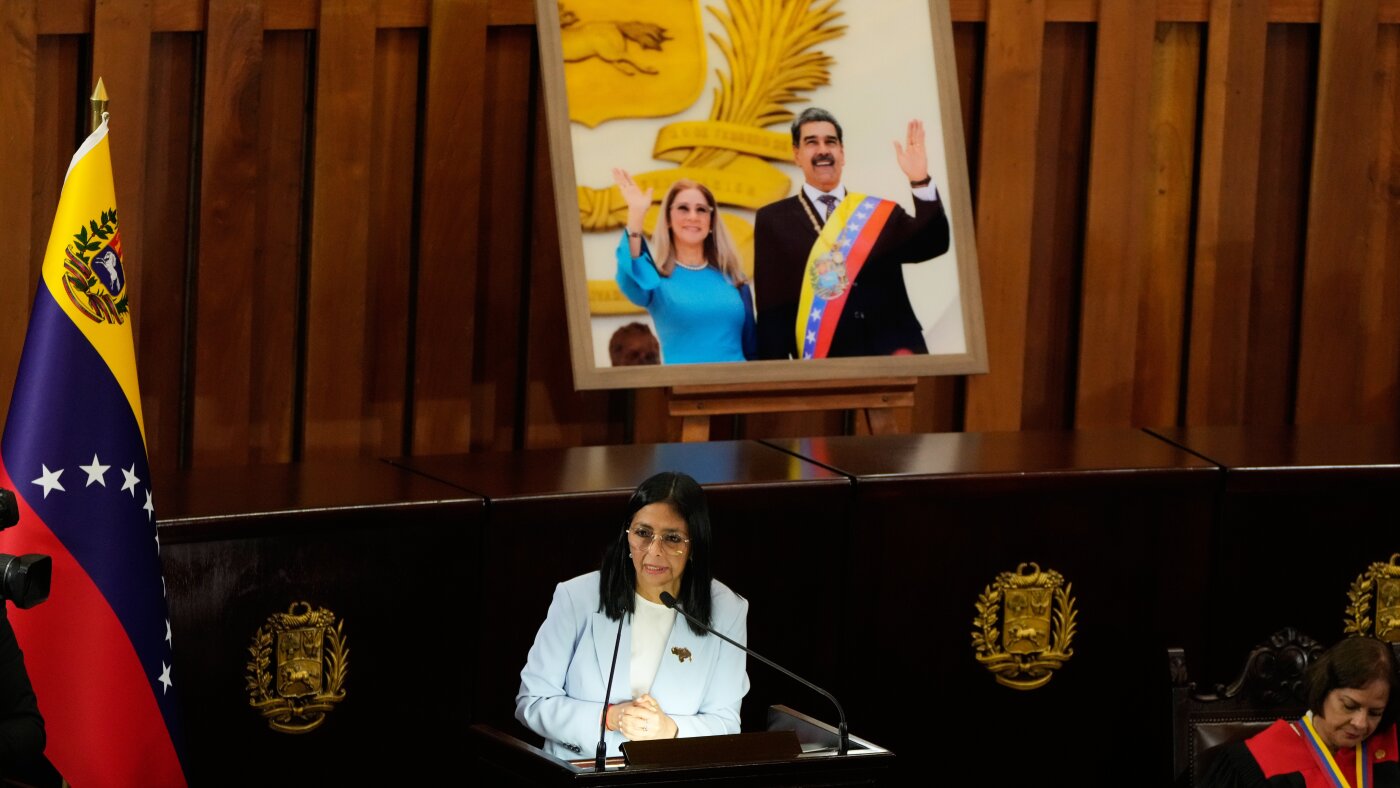
Venezuela announces amnesty bill that could lead to release of political prisonersImage Credit: NPR News
Key Points
- •CARACAS, Venezuela – In a move signaling a potential turning point for Venezuela's turbulent political landscape, acting President Delcy Rodríguez on Friday announced an amnesty bill aimed at releasing hundreds of political prisoners. The proposal, a key demand of the U.S.-backed opposition, represents the most significant concession yet from the new government, which assumed power following the dramatic ouster of Nicolás Maduro in a U.S. military operation earlier this year.
- •The Proposal: A "general amnesty law" that would apply to individuals detained for political reasons during the period of "political violence from 1999 to the present."
- •Key Exclusions: The amnesty will not be extended to individuals convicted of serious crimes, including murder, drug trafficking, large-scale corruption, or human rights violations. This leaves significant room for interpretation by the state.
- •Symbolic Closure: Rodríguez also announced the permanent shutdown of the Helicoide, a notorious Caracas prison synonymous with torture and human rights abuses. The facility is slated to be converted into a cultural and community center.
- •Urgent Timeline: The government has stressed its intent to fast-track the legislation, suggesting a desire to demonstrate swift action to both domestic and international audiences.
Venezuela's Amnesty Bid Signals Political Shift, Economic Implications Watched Closely
CARACAS, Venezuela – In a move signaling a potential turning point for Venezuela's turbulent political landscape, acting President Delcy Rodríguez on Friday announced an amnesty bill aimed at releasing hundreds of political prisoners. The proposal, a key demand of the U.S.-backed opposition, represents the most significant concession yet from the new government, which assumed power following the dramatic ouster of Nicolás Maduro in a U.S. military operation earlier this year.
The announcement is being closely watched by international observers and financial markets for signs of genuine political reform, which is seen as a prerequisite for any potential easing of economic sanctions and the eventual recovery of the nation's shattered economy.
Why It Matters
This is more than a prisoner release; it's a calculated political maneuver by a government still consolidating its power. For a nation crippled by years of political strife, hyperinflation, and international isolation, the amnesty could be the first step in a long process of national reconciliation and reintegration into the global community. However, deep skepticism remains about the government's motives and the bill's ultimate scope.
The Details of the Proposal
Rodríguez, addressing a gathering of top government and military officials, outlined a plan designed to "heal the wounds" of political conflict. The ruling party-controlled National Assembly has been tasked with passing the bill with urgency.
-
The Proposal: A "general amnesty law" that would apply to individuals detained for political reasons during the period of "political violence from 1999 to the present."
-
Key Exclusions: The amnesty will not be extended to individuals convicted of serious crimes, including murder, drug trafficking, large-scale corruption, or human rights violations. This leaves significant room for interpretation by the state.
-
Symbolic Closure: Rodríguez also announced the permanent shutdown of the Helicoide, a notorious Caracas prison synonymous with torture and human rights abuses. The facility is slated to be converted into a cultural and community center.
-
Urgent Timeline: The government has stressed its intent to fast-track the legislation, suggesting a desire to demonstrate swift action to both domestic and international audiences.
The Backdrop: A New Political Landscape
The context for this announcement is critical. Rodríguez's ascension to acting president on January 3 came directly after the stunning seizure of former President Nicolás Maduro. Her government, while comprised of ruling party stalwarts, is operating in a new reality defined by intense international pressure and a fractured domestic power base.
This amnesty is not viewed as a voluntary act of goodwill. Nobel Peace Prize laureate and opposition leader María Corina Machado stated the move was made "in response to pressure from the US government," not from a genuine change of heart within the regime. "When repression disappears and fear is lost, it will be the end of tyranny," she added, framing the concession as a sign of the government's weakness.
By the Numbers: The Scale of Political Detention
The scope of political imprisonment in Venezuela is extensive, according to independent monitors. The data underscores the high stakes of the amnesty bill.
-
Total Detainees: The Venezuelan prisoners' rights group Foro Penal estimates 711 people are currently detained for political activities.
-
Sentenced: Of those held, only 183 have been formally sentenced, with the majority held in a state of legal limbo.
-
Recent Releases: Since a preliminary announcement on January 8, the government has released 302 prisoners, a pace critics have condemned as a "trickle."
-
Prominent Prisoners: High-profile opposition figures still behind bars include former lawmaker Freddy Superlano, Machado's lawyer Perkins Rocha, and former governor Juan Pablo Guanipa. Their inclusion or exclusion from the final amnesty list will be a major test of the government's sincerity.
A Skeptical Reception
Human rights organizations and relatives of the detained have reacted with a mixture of hope and profound caution, warning against a "cloak of impunity" and demanding full transparency.
Emotions ran high outside the Helicoide, where families who had been gathered for weeks wept and chanted "Freedom!" upon hearing the news. Yet, rights groups were quick to temper the celebration with stern reminders.
-
Transparency Call: The full text of the bill has not been released, leaving unclear the precise criteria for release. Alfredo Romero, president of Foro Penal, warned that the amnesty must "include all of civil society, without discrimination."
-
No 'Clemency': The human rights group Provea stressed that the announcement should not be seen as a "pardon or act of clemency," reminding the public that "these people were arbitrarily imprisoned for exercising rights protected by international human rights instruments."
The U.S. Angle: Diplomacy in Motion
Washington's role is central to the unfolding events. The U.S. has been the primary backer of the opposition and the architect of the economic sanctions that have isolated Venezuela. Recent developments indicate a potential shift toward diplomatic engagement.
-
Diplomatic Thaw: The U.S. State Department confirmed Friday that all American citizens known to have been held in Venezuelan prisons have now been released.
-
New Envoy: In a clear signal of a new chapter, Laura Dogu, the top U.S. diplomat for Venezuela, is scheduled to arrive in Caracas on Saturday. Her presence will establish a direct, high-level channel of communication.
The Bottom Line: What to Watch Next
The amnesty announcement has opened the door to a new political dynamic, but the path forward is fraught with uncertainty.
The most critical next step is the publication of the amnesty bill itself. The fine print will determine its true impact. Observers will be watching to see if the exclusion clauses are used to keep influential opposition figures imprisoned.
For the economy, this is a pivotal moment. While a full recovery is years away, a successful and comprehensive amnesty could build the political stability necessary for the U.S. and its allies to begin reviewing sanctions. The arrival of a new U.S. diplomat suggests these conversations may already be underway.
Ultimately, the implementation of this law will be the true test. A transparent and inclusive amnesty could mark the beginning of Venezuela's long road back from political and economic collapse. A failed or cynical execution, however, would only deepen the nation's wounds and prolong its crisis.
Source: NPR News
Related Articles
Nationwide Protests Against ICE Enforcement Erupt in U.S.
Thousands are protesting ICE after the DOJ declined to investigate a fatal agent-involved shooting in Minneapolis, fueling a national movement and public anger.
Pokémon Cancels Yasukuni Shrine Event After Backlash
The Pokémon Company has canceled an event at Tokyo's controversial Yasukuni Shrine after facing international backlash from China and South Korea.
US to Lose Measles Elimination Status: What It Means
The U.S. is poised to lose its measles elimination status due to escalating outbreaks. Learn what this downgrade means for public health and the economy.
Rybakina Stuns Sabalenka in Australian Open 2026 Final
Elena Rybakina stages a remarkable comeback to defeat Aryna Sabalenka in a dramatic three-set thriller, capturing the Australian Open 2026 women's title.