Why luxury carmakers are now building glitzy skyscrapers
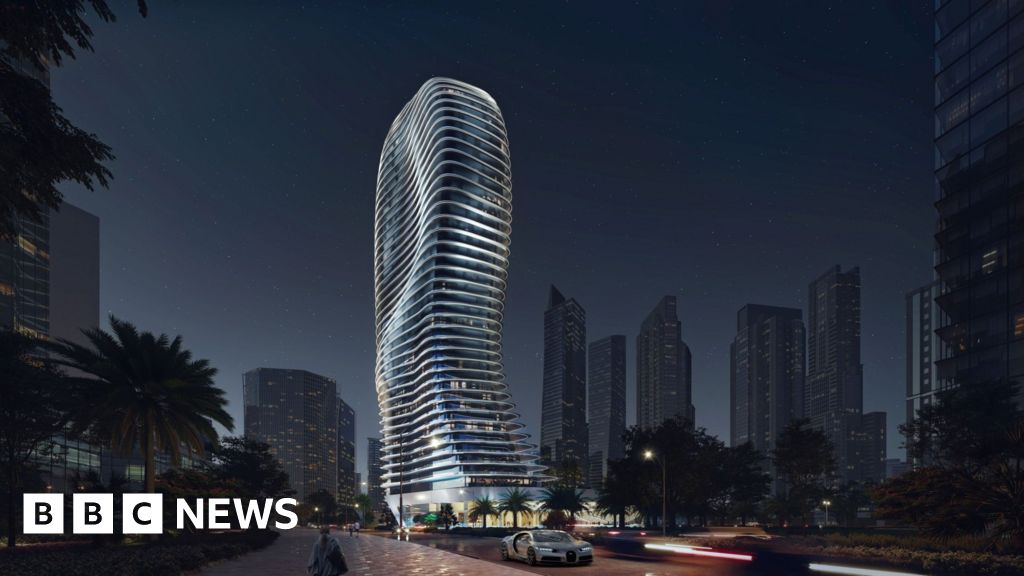
Why luxury carmakers are now building glitzy skyscrapersImage Credit: BBC Business (Finance)
Key Points
- •Target Audience: The project caters to what developer Muhammed BinGhatti calls "enthusiasts" who wish to "experience the brand in their everyday life through real estate."
- •High-Profile Buyers: The buyer list already includes prominent figures such as Brazilian football star Neymar Junior, who reportedly purchased a penthouse for $54 million, and world-renowned opera singer Andrea Bocelli.
- •A Growing Field: Bugatti is not alone. It joins a growing cohort of non-hotel luxury brands staking a claim in real estate, including fellow carmakers Aston Martin and Porsche, Swiss watch firm Jacob & Co, and Italian fashion houses Fendi and Missoni.
- •New Revenue Streams: Licensing fees and a share of the sales premium create a high-margin income source that exists outside the brands' traditional product cycles.
- •Minimal Capital Risk: By partnering with established developers, brands like Bugatti and Aston Martin avoid the colossal upfront costs and inherent risks of large-scale construction.
Why luxury carmakers are now building glitzy skyscrapers
Luxury brands, long defined by the high-performance products you can drive, wear, or own, are embarking on a dramatic and lucrative pivot. Automakers like Bugatti and Porsche are no longer just competing on the racetrack; they are racing to the sky, transforming urban skylines with opulent residential towers. This move into real estate is not a mere marketing gimmick but a calculated expansion into a fast-growing, multi-billion dollar market: branded residences.
This trend signals a fundamental shift in the nature of luxury, where the ultimate status symbol is not just owning a brand's product, but living inside its world. For the globe's wealthiest individuals, homeownership is becoming the ultimate expression of brand loyalty.
The New Blueprint: Bugatti in Dubai
At the forefront of this movement is Bugatti, a name synonymous with record-breaking speed and eight-figure price tags. In partnership with UAE-based developer Binghatti Properties, the French automaker is constructing its first-ever residential tower in the heart of Dubai.
The Bugatti Residences by Binghatti is a monument to the brand's ethos of performance and exclusivity. The 43-storey skyscraper will offer apartments starting at $5.2 million, with its most lavish penthouses featuring private elevators large enough to transport a resident's supercar directly into their living space.
- Target Audience: The project caters to what developer Muhammed BinGhatti calls "enthusiasts" who wish to "experience the brand in their everyday life through real estate."
- High-Profile Buyers: The buyer list already includes prominent figures such as Brazilian football star Neymar Junior, who reportedly purchased a penthouse for $54 million, and world-renowned opera singer Andrea Bocelli.
- A Growing Field: Bugatti is not alone. It joins a growing cohort of non-hotel luxury brands staking a claim in real estate, including fellow carmakers Aston Martin and Porsche, Swiss watch firm Jacob & Co, and Italian fashion houses Fendi and Missoni.
The Economics of Exclusivity
For these prestigious brands, venturing into property development offers a powerful combination of new revenue and brand amplification with relatively low financial exposure. The business model is a strategic partnership that leverages the strengths of both parties.
The luxury firm licenses its name, design DNA, and marketing power, lending an immediate air of prestige and desirability to the project. The property developer, in turn, handles the immense capital investment, construction logistics, and sales process.
This symbiotic relationship is built on a clear financial logic.
- New Revenue Streams: Licensing fees and a share of the sales premium create a high-margin income source that exists outside the brands' traditional product cycles.
- Minimal Capital Risk: By partnering with established developers, brands like Bugatti and Aston Martin avoid the colossal upfront costs and inherent risks of large-scale construction.
- Significant Price Premium: The power of the brand name commands a substantial markup. According to Binghatti Properties, branded apartments are typically 30% to 40% more expensive than comparable non-branded luxury homes in the same area.
A Market in Hyper-Growth
The global appetite for branded residences has surged, transforming it from a niche segment into a major force in the luxury property market. According to a recent report from estate agent company Knight Frank, the sector's growth has "accelerated" dramatically over the past decade.
The data illustrates a market on a steep upward trajectory.
- Explosive Growth: The number of branded residence schemes worldwide has expanded from 169 in 2011 to 611 today.
- Future Projections: Knight Frank forecasts this number will climb to over 1,000 schemes by 2030, signaling sustained and robust demand.
While the United States, particularly Miami and New York, pioneered the concept and still holds the highest number of completed projects, the center of gravity for new development is shifting eastward.
- The New Epicenter: The Middle East is now the world's fastest-growing region for branded residences, "driven largely by rapid expansion in the United Arab Emirates (UAE) and Saudi Arabia," states Knight Frank.
- Dubai Leads the World: On a city-by-city basis, a separate report from property firm Savills identifies Dubai as the global leader for branded residence projects currently in development, fueled by a continuous influx of high-net-worth individuals.
- Relative Value: Faisal Durrani, Head of Research at Knight Frank Middle East, notes that prices for these properties in low-tax Dubai are often "extremely affordable compared with cities like New York and London," further boosting its appeal.
The Evolution of an Asset Class
Until recently, the branded residence landscape was dominated by world-class hotel chains such as Four Seasons, Mandarin Oriental, and Ritz-Carlton, which extended their hospitality services to permanent residents.
Now, non-hospitality brands are driving the sector's next phase of innovation and growth, with the automotive industry leading the charge. This evolution can be seen in a clear timeline of landmark projects.
- 2017: The Porsche Design Tower opened in Miami, featuring a patented car elevator system and establishing a new benchmark for automotive-branded living.
- 2024: Aston Martin Residences launched its 66-story waterfront tower in Miami, further cementing the trend of hypercar brands entering the luxury skyline.
- 2027 (Projected): The Jacob & Co "Billionaire Tower" in the UAE is set to be one of the tallest residential structures in the world, translating the intricate precision of high-end watchmaking into architectural form.
The Bottom Line: Living the Brand
The future of this sector is moving beyond simply placing a logo on a building. The next wave of branded residences is being marketed around shared passions and highly specialized lifestyles, creating curated communities for the ultra-wealthy.
These developments are less about an address and more about an all-encompassing experience.
- Wellness and Longevity: In London, the forthcoming Six Senses Residences will include a state-of-the-art biohacking center offering therapies like cryotherapy, appealing to a clientele focused on health and human optimization.
- Niche Lifestyle: In Texas, Discovery Land Company's Austin Surf Club is centered around a vast, man-made surf lagoon, catering specifically to enthusiasts of the sport.
- Integrated Services: Across the board, these projects are defined by an ecosystem of exclusive services, including private members' clubs, chauffeured cars, yacht access, and partnerships with private jet providers.
For luxury firms, the move into real estate is a masterful strategic play. It deepens brand immersion, builds unparalleled loyalty, and unlocks a lucrative revenue stream with manageable risk. For their discerning clients, it redefines the concept of home, transforming it from a mere asset into the ultimate, livable brand statement. The skyline is officially the new frontier for luxury.
Source: BBC Business (Finance)
Related Articles
ARRY Stock Sinks Despite Market Gains: What to Know
Array Technologies (ARRY) stock declined 2.5% in the latest session, contrasting with market gains. Find out why the solar stock fell and what it means for inve
India and the EU clinch the 'mother of all deals' in a histo
Jay Vine Wins Tour Down Under 2026 After Kangaroo Crash
Australian cyclist Jay Vine secures the overall victory at the 2026 Tour Down Under despite a dramatic final-stage crash involving a kangaroo.
Trump's New Defense Strategy: Allies Must Fund Own Security
The Trump administration's new National Defense Strategy realigns US policy, demanding allies assume primary responsibility for their own security and defense c