Why the US is Buying Finnish Icebreakers for the Arctic
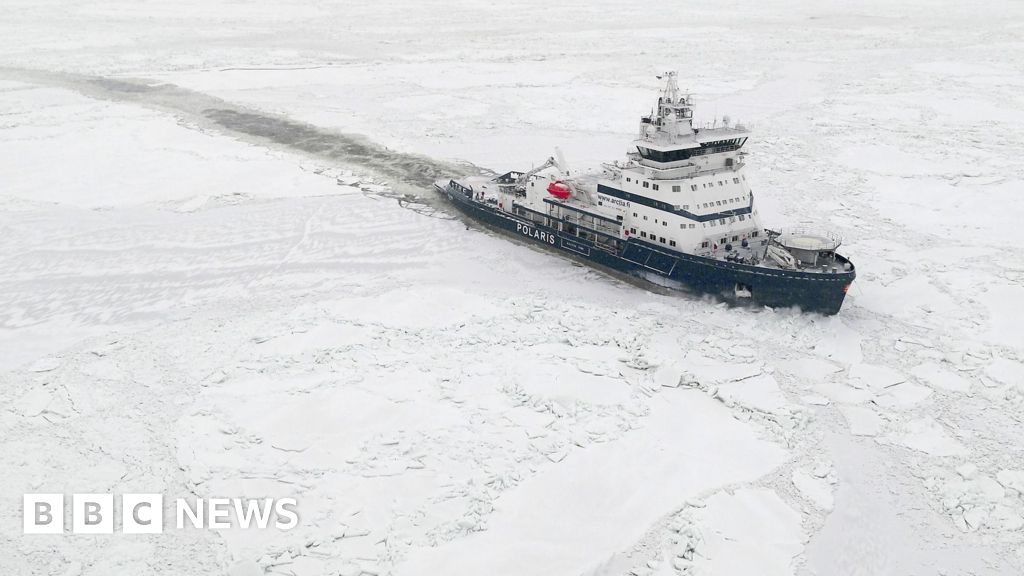
Why the US is buying icebreakers from FinlandImage Credit: BBC Business (Finance)
Key Points
- •Why it Matters: Washington is playing a high-stakes game of catch-up. As new sea lanes like the Northern Sea Route and the Northwest Passage become more viable, the ability to project power, ensure safe navigation, and protect sovereign interests in the Arctic has become a national security imperative.
- •The Official Rationale: The procurement was framed in stark geopolitical terms by the White House. President Donald Trump cited the need to counter "aggressive military posturing, and economic encroachment by foreign adversaries," a clear reference to the expanding Arctic presence of Russia and China.
- •The Strategic Order: The U.S. Coast Guard plans to acquire a total of 11 new icebreakers. In a notable departure from standard practice, a portion of this fleet will be built abroad to accelerate deployment, with the remainder constructed domestically using licensed Finnish technology.
- •A Nation Dependent on the Sea: "Finland is the only country in the world where all the harbours may freeze during wintertime," explains Maunu Visuri, CEO of the state-owned icebreaker operator Arctia. With 97% of the nation's trade arriving by sea, keeping these ports open is a matter of economic life and death.
- •Market Dominance: This deep-seated need has translated into global market leadership. Finnish firms have designed an estimated 80% of all icebreakers currently in operation worldwide, and Finnish shipyards have built 60% of them.
Why the US is buying icebreakers from Finland
In a significant move to bolster its strategic capabilities in the increasingly contested Arctic, the United States is turning to an unlikely ally for critical hardware: Finland. The decision to procure a new fleet of advanced icebreakers, dubbed "Arctic Security Cutters," from the Nordic nation underscores a major American policy shift toward the High North, driven by climate change and escalating geopolitical competition with Russia and China.
This multibillion-dollar initiative represents a direct admission of a critical capability gap in the U.S. fleet and a powerful endorsement of Finland's unparalleled expertise in polar vessel technology.
The Arctic's New Geopolitical Chessboard
The melting of Arctic sea ice has unlocked a new frontier for global commerce and resource extraction, transforming the once-impenetrable region into a focal point of strategic interest. The U.S. move to rapidly expand its icebreaker fleet is a direct response to this new reality.
-
Why it Matters: Washington is playing a high-stakes game of catch-up. As new sea lanes like the Northern Sea Route and the Northwest Passage become more viable, the ability to project power, ensure safe navigation, and protect sovereign interests in the Arctic has become a national security imperative.
-
The Official Rationale: The procurement was framed in stark geopolitical terms by the White House. President Donald Trump cited the need to counter "aggressive military posturing, and economic encroachment by foreign adversaries," a clear reference to the expanding Arctic presence of Russia and China.
-
The Strategic Order: The U.S. Coast Guard plans to acquire a total of 11 new icebreakers. In a notable departure from standard practice, a portion of this fleet will be built abroad to accelerate deployment, with the remainder constructed domestically using licensed Finnish technology.
Finland: The Unrivaled Icebreaking Superpower
For the United States, the choice of partner was clear. Finland's dominance in the design and construction of ice-capable vessels is absolute, an expertise forged by geographic necessity and decades of innovation.
"We're buying the finest icebreakers in the world, and Finland is known for making them," President Trump stated, justifying the decision.
Expertise Forged by Necessity
Finland's leadership is not accidental. It is a core component of its economic survival.
-
A Nation Dependent on the Sea: "Finland is the only country in the world where all the harbours may freeze during wintertime," explains Maunu Visuri, CEO of the state-owned icebreaker operator Arctia. With 97% of the nation's trade arriving by sea, keeping these ports open is a matter of economic life and death.
-
Market Dominance: This deep-seated need has translated into global market leadership. Finnish firms have designed an estimated 80% of all icebreakers currently in operation worldwide, and Finnish shipyards have built 60% of them.
The Technology of the Ice
At the heart of Finland's success is a unique design philosophy, honed in specialized facilities like Aker Arctic Technology's ice laboratory in Helsinki.
-
It's About Bending, Not Breaking: "You have to have a hull form that breaks ice by bending it downwards," notes Mika Hovilainen, CEO of Aker Arctic. "It's not cutting, it's not slicing." This method is far more energy-efficient and effective, requiring a sophisticated combination of hull shape, structural integrity, and immense engine power.
-
State-of-the-Art Testing: In Aker's 70-meter simulation tank, engineers test scale models against manufactured ice sheets to refine designs for the next generation of vessels, ensuring they meet punishing performance standards.
A Landmark Transatlantic Contract
Following the President's announcement last fall, the first contracts were formally awarded on December 29, 2025, setting the ambitious project in motion.
-
Key Players: The initial build contract was awarded to Finland's Rauma Marine Constructions (RMC). The advanced vessel design comes from Aker Arctic Technology, working in partnership with Canadian naval architect Seaspan Shipyards.
-
The Production Plan: RMC will construct the first two icebreakers at its shipyard in Rauma, Finland. A subsequent four vessels from this initial six-ship order will be built at a shipyard in Louisiana, leveraging the Finnish design and expertise. The long-term plan calls for a total of 11 ships.
-
Timeline: The first Finnish-built vessel is scheduled for delivery to the U.S. Coast Guard in 2028, marking a rapid acquisition timeline for a major naval asset.
-
A Legal Workaround: The deal required a rare presidential waiver. Under U.S. law, naval and coastguard vessels must be built in domestic shipyards. Citing urgent national security needs, the administration bypassed this requirement for the initial ships to close the capability gap more quickly.
Closing the "Icebreaker Gap"
The urgency behind the U.S. procurement becomes clear when comparing its current fleet to those of its Arctic rivals. The numbers reveal a stark strategic imbalance that Washington is now scrambling to correct.
-
By the Numbers: The U.S. currently operates only three icebreakers, only one of which is a heavy-duty vessel. This pales in comparison to Russia, which commands a fleet of approximately 40 icebreakers, including a growing number of nuclear-powered giants that can operate year-round in the thickest ice.
-
China's Growing Ambitions: While not a traditional Arctic nation, China has aggressively expanded its polar presence, operating around five polar-capable vessels. According to Peter Rybski, a Helsinki-based icebreaker expert and retired U.S. Navy officer, these "research" ships are increasingly active in the Arctic, including in areas the U.S. considers its "exclusive economic zone."
-
A Limited Response: "With limited means to respond, this becomes a problem [for the U.S.]," Rybski notes. The lack of a persistent, ice-capable presence hampers America's ability to monitor activity, enforce maritime law, and project influence in its own northern territories.
The Bottom Line: Implications and Next Steps
The decision to buy Finnish icebreakers is more than a simple procurement deal; it is a powerful geopolitical signal and a cornerstone of America's emerging Arctic strategy.
-
Projecting Power: As researcher Lin Mortensgaard of the Danish Institute of International Studies assesses, the move goes beyond practicalities and is fundamentally about "projecting power" into a region of growing importance.
-
Economic Impact: For Finland, the contract is a major economic boon, cementing the global prestige of its shipbuilding and maritime technology sectors and providing a significant workload for companies like RMC and Aker Arctic.
-
What's Next: All eyes will be on the shipyards in Rauma and Louisiana as construction begins. The 2028 delivery date is ambitious but critical. In the meantime, the strategic posturing in the Arctic is set to intensify, as Russia and China will undoubtedly take note of America's renewed commitment and respond with their own moves. This transatlantic deal is not an endpoint, but the opening gambit in a long-term strategic competition for the future of the High North.
Source: BBC Business (Finance)
Related Articles
ARRY Stock Sinks Despite Market Gains: What to Know
Array Technologies (ARRY) stock declined 2.5% in the latest session, contrasting with market gains. Find out why the solar stock fell and what it means for inve
India and the EU clinch the 'mother of all deals' in a histo
Jay Vine Wins Tour Down Under 2026 After Kangaroo Crash
Australian cyclist Jay Vine secures the overall victory at the 2026 Tour Down Under despite a dramatic final-stage crash involving a kangaroo.
Trump's New Defense Strategy: Allies Must Fund Own Security
The Trump administration's new National Defense Strategy realigns US policy, demanding allies assume primary responsibility for their own security and defense c