The Yen Carry Trade Unwind: A Threat to the Global Economy?
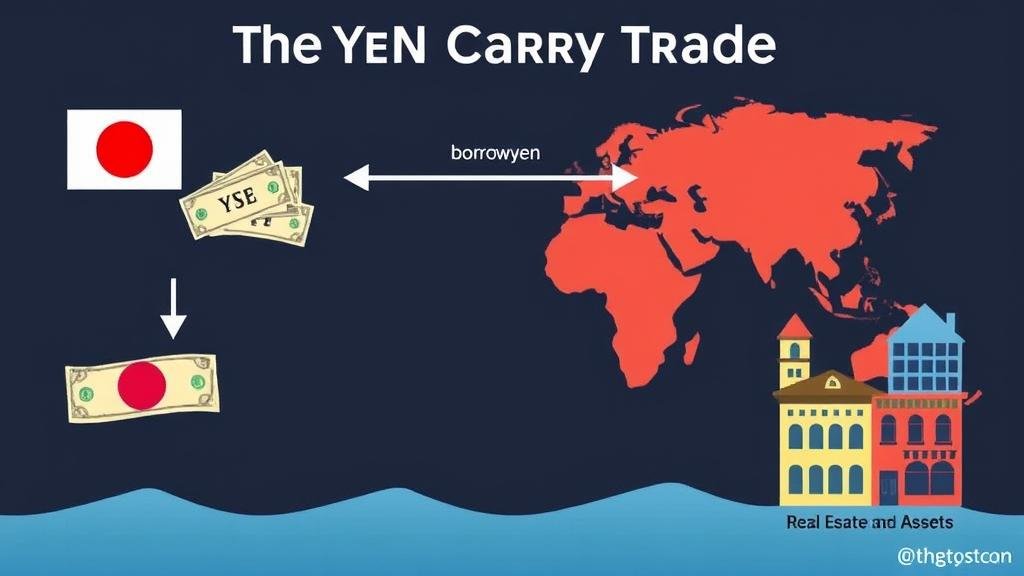
The Yen Carry Trade: A Multi-Trillion Dollar Strategy Unwinding
The yen carry trade, a long-standing financial strategy, is showing signs of unwinding, sending ripples of concern through the global economy. Recent signals from the Bank of Japan (BoJ) suggest an end to its era of ultra-low interest rates, a move that could dismantle the foundation of this multi-trillion dollar trade. This article explores the mechanics of the yen carry trade, the implications of its potential collapse, and what it means for investors and markets worldwide.
Understanding the Yen Carry Trade
The concept of the yen carry trade is straightforward. Investors borrow Japanese yen at a low-interest rate, convert it into a currency with a higher yield (like the US dollar), and invest in assets such as stocks, government bonds, and real estate. The profit, or “carry,” is the difference between the return on these investments and the low cost of borrowing the yen.
For decades, the Bank of Japan’s monetary policy, characterized by zero or negative interest rates to combat deflation, has made the yen the primary funding currency for this trade. This has fueled asset prices globally, with everyone from large hedge funds to individual traders participating in this strategy.

The Unwinding: Why the BoJ is Changing Course
After years of battling deflation, Japan is now experiencing inflation. This economic shift is compelling the Bank of Japan to consider raising interest rates for the first time in many years. Even a minor rate hike could make borrowing yen more expensive, eroding the profitability of the carry trade and forcing a rapid unwind.
This unwinding process would involve:
- Massive Asset Sell-Offs: Investors would need to sell their assets (US stocks, bonds, etc.) to generate cash.
- Repatriation into Yen: The cash would then be used to buy back yen and repay their loans, driving up the value of the Japanese currency.
This sudden rush for the exits is what experts refer to as a “financial dam breaking,” a scenario that could have severe consequences for the global economy.
Global Economic Fallout: A Multi-Faceted Threat
The unwinding of the yen carry trade is not a localized event. Its impact could be felt across various sectors of the global economy:
1. Stock Market Volatility
A significant portion of the capital that has propped up global stock markets, particularly the tech-heavy Nasdaq, has come from the yen carry trade. A sudden unwind would trigger widespread selling, potentially leading to a sharp market correction.
2. Bond Market Disruption
US Treasuries have been a popular destination for carry trade funds. A mass sell-off would cause bond prices to fall and yields to spike, making it more expensive for governments and corporations to borrow money and slowing down economic growth.
3. Currency Chaos
The most immediate consequence would be a surge in the value of the yen. While beneficial for Japanese tourists, a strong yen would hurt Japan’s major exporters, such as Toyota and Sony, by making their products more expensive for international consumers.
4. Emerging Market Crises
Many investors have funneled yen carry trade money into emerging markets in pursuit of higher returns. A sudden capital exodus could trigger financial crises in these more vulnerable economies.

Expert Analysis and Investor Guidance
Financial experts, including Robert Kiyosaki, author of “Rich Dad Poor Dad,” have warned that the unwinding of the yen carry trade could be a precursor to a major market bubble panic. While the Bank of Japan is expected to proceed with caution to avoid a full-blown crisis, investors should not be complacent.
As the era of “easy money” appears to be drawing to a close, here’s how you can prepare:
- Stay Informed: Monitor announcements from the Bank of Japan regarding interest rate policies.
- Diversify Your Portfolio: Diversification is key to mitigating risk. Avoid concentrating your investments in a single asset class.
- Avoid Panic Decisions: Stick to your long-term investment strategy and avoid making rash decisions based on fear.
By understanding the dynamics of the yen carry trade and its potential implications, investors can better navigate the evolving landscape of the global economy.