US Government Partially Shuts Down Despite Funding Deal
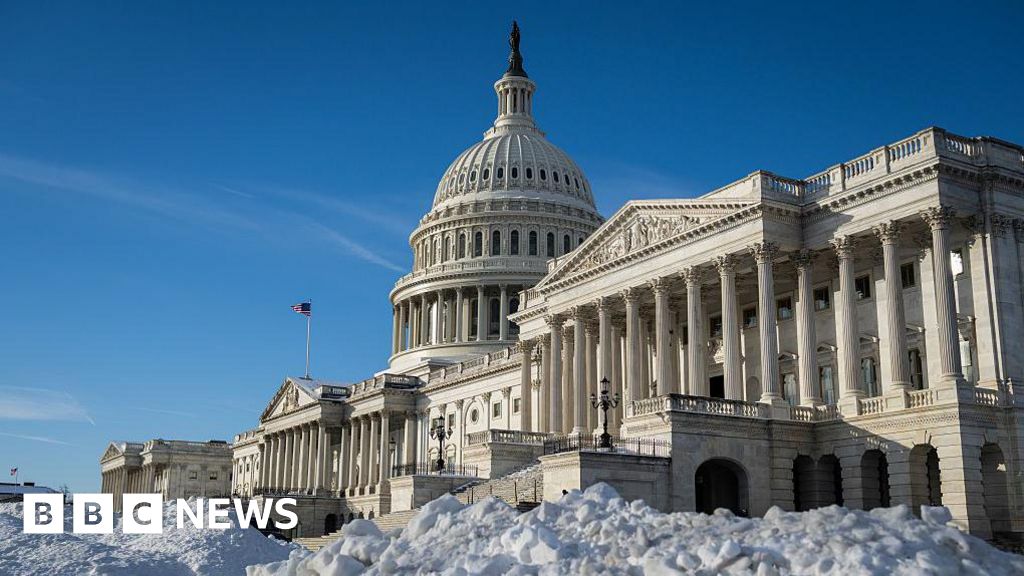
US government partially shuts down despite funding dealImage Credit: BBC News
Key Points
- •Washington, D.C. – The U.S. government entered a partial shutdown at midnight Friday, furloughing hundreds of thousands of federal workers despite congressional leaders announcing a bipartisan funding agreement hours earlier. The procedural breakdown marks an extraordinary moment of dysfunction, plunging the government into chaos over a legislative technicality rather than a fundamental policy disagreement.
- •The Agreement: The bipartisan deal included full-year funding for the Departments of Homeland Security, Justice, State, and Interior, among others. It contained compromises on contentious issues and was broadly expected to pass with bipartisan support in both chambers.
- •The Obstruction: A lone senator placed a "hold" on the bill, a procedural tactic that blocks swift passage. The objection was not related to the substance of the funding deal itself but was used as leverage to force a vote on a separate political issue. This tactic, while common, is rarely deployed when a government shutdown hangs in the balance.
- •The Deadline: Despite frantic, last-ditch negotiations on the Senate floor to persuade the senator to lift the hold, no resolution was found. At 12:01 AM ET, the Office of Management and Budget (OMB) was legally required to order affected agencies to initiate their shutdown procedures.
- •Federal Workforce: Furloughed employees face immediate financial uncertainty. Those working without pay must still report for duty, effectively providing the government an involuntary, interest-free loan of their labor.
US Government Partially Shuts Down Despite Funding Deal
Washington, D.C. – The U.S. government entered a partial shutdown at midnight Friday, furloughing hundreds of thousands of federal workers despite congressional leaders announcing a bipartisan funding agreement hours earlier. The procedural breakdown marks an extraordinary moment of dysfunction, plunging the government into chaos over a legislative technicality rather than a fundamental policy disagreement.
The shutdown is the second to hit the nation in the past year. It comes just 11 weeks after the conclusion of a crippling 43-day funding impasse—the longest in U.S. history—underscoring a persistent pattern of fiscal instability and legislative gridlock.
While the previous shutdown was born from a deep-seated dispute over border security funding, this latest closure was triggered by a last-minute procedural hold in the Senate, which prevented a final vote on a spending package that both parties had already agreed to in principle.
The Big Picture: A Deal Derailed
The core of this shutdown is the frustrating paradox of its cause. Unlike most previous shutdowns, which stemmed from intractable partisan warfare over policy, this event was triggered by procedural friction after a compromise was already forged.
Negotiators from the House and Senate had worked for weeks to craft a series of appropriations bills to fund the remaining unfunded federal agencies through the end of the fiscal year. An agreement was announced late Friday afternoon, with leaders from both parties expressing relief that a shutdown had been averted.
However, the legislative process requires unanimous consent in the Senate to fast-track a vote. A single senator objected, demanding a vote on an unrelated amendment, effectively running out the clock before the midnight deadline. As the deadline passed, funding authority for several key departments officially lapsed.
How We Got Here: Anatomy of a Breakdown
The final hours on Capitol Hill were a case study in legislative fragility. The carefully constructed timeline to pass the funding package and send it to the President's desk collapsed at the final hurdle.
-
The Agreement: The bipartisan deal included full-year funding for the Departments of Homeland Security, Justice, State, and Interior, among others. It contained compromises on contentious issues and was broadly expected to pass with bipartisan support in both chambers.
-
The Obstruction: A lone senator placed a "hold" on the bill, a procedural tactic that blocks swift passage. The objection was not related to the substance of the funding deal itself but was used as leverage to force a vote on a separate political issue. This tactic, while common, is rarely deployed when a government shutdown hangs in the balance.
-
The Deadline: Despite frantic, last-ditch negotiations on the Senate floor to persuade the senator to lift the hold, no resolution was found. At 12:01 AM ET, the Office of Management and Budget (OMB) was legally required to order affected agencies to initiate their shutdown procedures.
The Economic and Human Cost
Even a brief shutdown carries significant and measurable costs. The immediate impact is on the federal workforce and the public services they provide, but the economic ripple effects extend much further.
This partial shutdown directly impacts approximately 800,000 federal employees. About 350,000 are being furloughed—sent home without pay—while another 450,000 in roles deemed "essential," such as law enforcement and airport security, will be forced to work without receiving a paycheck until the shutdown ends.
-
Federal Workforce: Furloughed employees face immediate financial uncertainty. Those working without pay must still report for duty, effectively providing the government an involuntary, interest-free loan of their labor.
-
Public Services: Americans will see an immediate suspension of some government functions. This includes the closure of national parks and museums, delays in processing passports and visas, and a halt to certain regulatory and research activities at agencies like the Environmental Protection Agency (EPA).
-
Economic Ripple Effects: The Congressional Budget Office (CBO) estimated that the 43-day shutdown earlier this year reduced GDP by $11 billion, of which $3 billion was permanently lost. Shutdowns disrupt government contractors, hurt local economies reliant on federal facilities, and erode business and consumer confidence.
A Familiar Pattern of Fiscal Brinkmanship
This latest episode continues a troubling trend of governing by crisis. The regular appropriations process, designed to fund the government in an orderly fashion, has been consistently abandoned in favor of last-minute deals, stopgap funding measures known as "continuing resolutions" (CRs), and the ever-present threat of a shutdown.
This cycle of fiscal brinkmanship has become a defining feature of Washington in the last decade. The use of funding deadlines as leverage points for unrelated political battles has damaged institutional trust and created profound uncertainty for the U.S. economy.
Credit rating agencies have repeatedly warned that this political volatility, even if it results in only short-term shutdowns, could negatively impact the United States' credit rating by demonstrating an inability to manage its basic fiscal responsibilities.
What Happens Next?
The path to reopening the government is, in theory, simple. Because a deal is already in place, the shutdown should be relatively short-lived. Leaders expect to resolve the procedural standoff over the weekend, pass the legislation, and have it signed by the President early next week.
However, the damage—both economic and to public trust—has already been done.
-
Immediate Resolution: Senate leaders will likely hold the necessary procedural votes over the weekend or on Monday to overcome the objection, pass the funding package, and send it to the President. Federal employees could be back to work within days.
-
Lingering Damage: The economic losses from lost productivity and suspended services, though smaller than in a prolonged shutdown, are not recoverable. Furthermore, the incident reinforces the perception of a dysfunctional government, both domestically and internationally.
-
The Next Fight: This event will intensify calls for reforming the congressional budget process. However, with deep partisan divides, the prospect of another fiscal cliff—whether over the budget or the debt ceiling—remains a persistent threat on the horizon. For now, Washington is once again in cleanup mode, addressing a crisis of its own making.
Source: BBC News
Related Articles
Nationwide Protests Against ICE Enforcement Erupt in U.S.
Thousands are protesting ICE after the DOJ declined to investigate a fatal agent-involved shooting in Minneapolis, fueling a national movement and public anger.
Venezuela Amnesty Bill Could Free Political Prisoners
Learn about Venezuela's proposed amnesty bill to release political prisoners. The move could signal a major political shift and affect future economic sanctions
ARRY Stock Sinks Despite Market Gains: What to Know
Array Technologies (ARRY) stock declined 2.5% in the latest session, contrasting with market gains. Find out why the solar stock fell and what it means for inve