Women's DIY Workshops in Berkshire Boost Skills & Savings
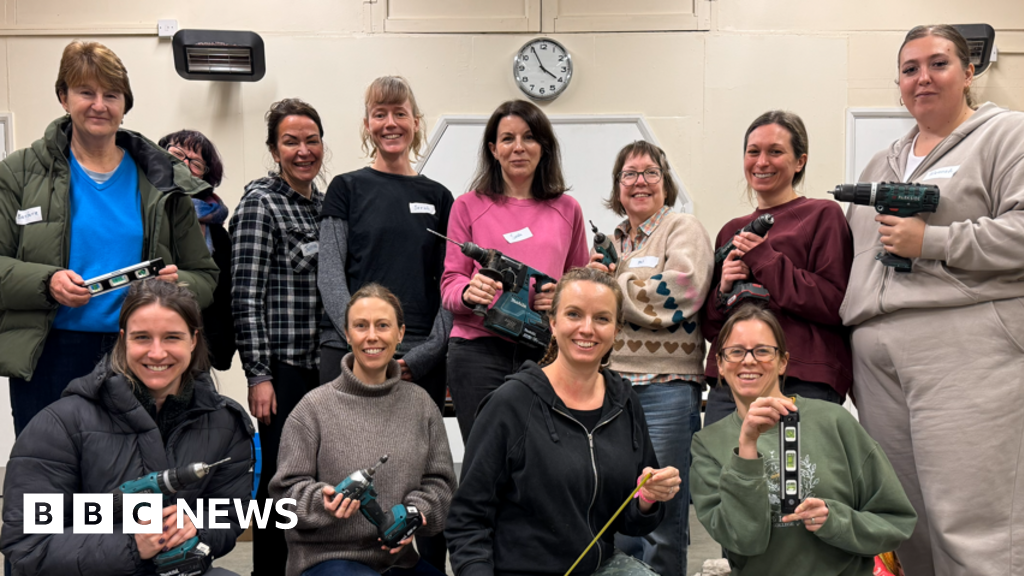
The friends helping to boost women's DIY skills across BerkshireImage Credit: BBC News
Key Points
- •READING, UK – Against a backdrop of soaring living costs and a shortage of affordable trade professionals, a Berkshire-based social enterprise is capitalizing on a growing demand for self-reliance. By offering hands-on DIY workshops exclusively for women, the initiative is directly addressing a skills gap that leaves many financially vulnerable to routine home repairs, empowering a new generation to take control of their domestic finances and asset maintenance.
- •The Cost of Services: A combination of inflation, supply chain issues, and a skilled labor shortage has driven the cost of hiring tradespeople to record highs. A simple emergency call-out for a plumber or electrician can now run into hundreds of pounds, placing significant strain on household finances.
- •The Property Ladder: For new homeowners, many of whom have stretched their finances to secure a mortgage, the ongoing cost of property maintenance can be an unexpected and crippling expense. Learning to handle minor repairs independently is no longer a hobby but a crucial financial management strategy.
- •The Gender Skills Gap: Societal norms have historically discouraged women from engaging with trade skills. This has created a knowledge disparity that can lead to a lack of confidence in dealing with contractors, an inability to assess the fairness of quotes, and a dependency on others for basic tasks.
- •Core Curriculum: Workshops focus on the most common and costly domestic issues. This includes fixing leaky taps and toilets (basic plumbing), safely replacing sockets and light fittings (basic electrics), and using power tools for shelving and minor repairs (basic carpentry).
The friends helping to boost women's DIY skills across Berkshire
READING, UK – Against a backdrop of soaring living costs and a shortage of affordable trade professionals, a Berkshire-based social enterprise is capitalizing on a growing demand for self-reliance. By offering hands-on DIY workshops exclusively for women, the initiative is directly addressing a skills gap that leaves many financially vulnerable to routine home repairs, empowering a new generation to take control of their domestic finances and asset maintenance.
The initiative, co-founded by a group of friends, provides a structured, supportive environment for women to learn practical skills—from basic plumbing to electrical work and carpentry—that have been traditionally male-dominated. This model not only fosters confidence but also delivers tangible economic benefits.
The Economic Backdrop: A Market for Self-Reliance
The surge in interest for such programs is not accidental. It is a direct response to several converging economic pressures that are reshaping household budgets across the United Kingdom.
-
The Cost of Services: A combination of inflation, supply chain issues, and a skilled labor shortage has driven the cost of hiring tradespeople to record highs. A simple emergency call-out for a plumber or electrician can now run into hundreds of pounds, placing significant strain on household finances.
-
The Property Ladder: For new homeowners, many of whom have stretched their finances to secure a mortgage, the ongoing cost of property maintenance can be an unexpected and crippling expense. Learning to handle minor repairs independently is no longer a hobby but a crucial financial management strategy.
-
The Gender Skills Gap: Societal norms have historically discouraged women from engaging with trade skills. This has created a knowledge disparity that can lead to a lack of confidence in dealing with contractors, an inability to assess the fairness of quotes, and a dependency on others for basic tasks.
Berkshire Women's Workshop: The Local Solution
In response to these challenges, a local initiative is providing a direct and effective solution. The workshops are designed to be accessible, demystifying complex tasks and creating a collaborative learning space.
The program's accessibility is a core tenet of its operational model. Co-founder Sarah Bolger highlighted the low barrier to entry in a recent interview.
"We have all the kit so you don't need to bring anything, but if you do have things at home that you want to get your head around and you're not sure what to do with it, then people are bringing these to our sessions," Bolger said in an interview with BBC Radio Berkshire.
This dual approach ensures that participants can learn on professional-grade equipment before applying those skills to the specific tools they own, bridging the gap between the classroom and the home.
The Operational Model
The organization's success is built on a clear and replicable structure.
-
Core Curriculum: Workshops focus on the most common and costly domestic issues. This includes fixing leaky taps and toilets (basic plumbing), safely replacing sockets and light fittings (basic electrics), and using power tools for shelving and minor repairs (basic carpentry).
-
Hands-On Learning: Theory is kept to a minimum. The vast majority of session time is dedicated to practical application, allowing participants to build muscle memory and genuine confidence in their abilities.
-
Safe-Space Environment: By offering women-only sessions, the initiative removes potential intimidation factors, encouraging attendees to ask questions freely and make mistakes without judgment—a critical component of effective learning.
The Bottom Line: Quantifying the Financial Impact
The return on investment for attending such a workshop is both immediate and long-term. The financial benefits extend far beyond the cost of a single avoided call-out fee.
Consider a common scenario: a constantly dripping tap. The cost of a workshop might be £75-£150. The cost of hiring a plumber for the same job could easily exceed £120, depending on the time and parts required. The workshop, therefore, often pays for itself with the very first repair.
-
Direct Cost Savings: Participants gain the ability to perform dozens of small jobs over a lifetime, representing thousands of pounds in cumulative savings. This includes tasks like bleeding radiators, patching drywall, unblocking drains, and assembling flat-pack furniture correctly the first time.
-
Asset Preservation: A well-maintained property retains and often increases its value. The ability to proactively manage minor issues prevents them from escalating into major, costly structural problems, thereby protecting what is for most people their single largest financial asset.
-
Enhanced Consumer Power: Armed with knowledge, participants become more discerning customers when they do need to hire a professional for a larger job. They can better understand quotes, question unnecessary work, and identify fair pricing, reducing the risk of being overcharged.
-
Human Capital Development: These skills represent an investment in personal human capital. They are transferable, valuable, and contribute to overall financial resilience and independence.
What's Next: Scaling the Model
The success of the Berkshire initiative is a strong indicator of a wider, national trend. The model is ripe for expansion, and its future development could follow several strategic paths.
-
Geographic Expansion: The social enterprise could franchise its model or develop a "toolkit" for community leaders in other counties to establish similar workshops, creating a national network of skill-building hubs.
-
Corporate and Retail Partnerships: There is significant potential for partnerships with large DIY retailers. These companies could sponsor workshops, provide equipment, or integrate the training into their customer outreach programs, driving brand loyalty while fulfilling corporate social responsibility (CSR) objectives.
-
Advanced Curriculum: As the initial wave of participants masters the basics, there will be demand for more advanced courses, such as tiling, basic plastering, or more complex woodworking. This provides a clear path for revenue growth and deeper skill development.
Ultimately, the rise of initiatives like the one in Berkshire signals a fundamental shift. In an uncertain economic climate, the value of practical, self-sufficient skills is being recognized not as a quaint hobby, but as an essential component of modern financial literacy and empowerment.
Source: BBC News
Related Articles
Nationwide Protests Against ICE Enforcement Erupt in U.S.
Thousands are protesting ICE after the DOJ declined to investigate a fatal agent-involved shooting in Minneapolis, fueling a national movement and public anger.
Venezuela Amnesty Bill Could Free Political Prisoners
Learn about Venezuela's proposed amnesty bill to release political prisoners. The move could signal a major political shift and affect future economic sanctions
Pokémon Cancels Yasukuni Shrine Event After Backlash
The Pokémon Company has canceled an event at Tokyo's controversial Yasukuni Shrine after facing international backlash from China and South Korea.
US to Lose Measles Elimination Status: What It Means
The U.S. is poised to lose its measles elimination status due to escalating outbreaks. Learn what this downgrade means for public health and the economy.