US to Lose Measles Elimination Status: What It Means
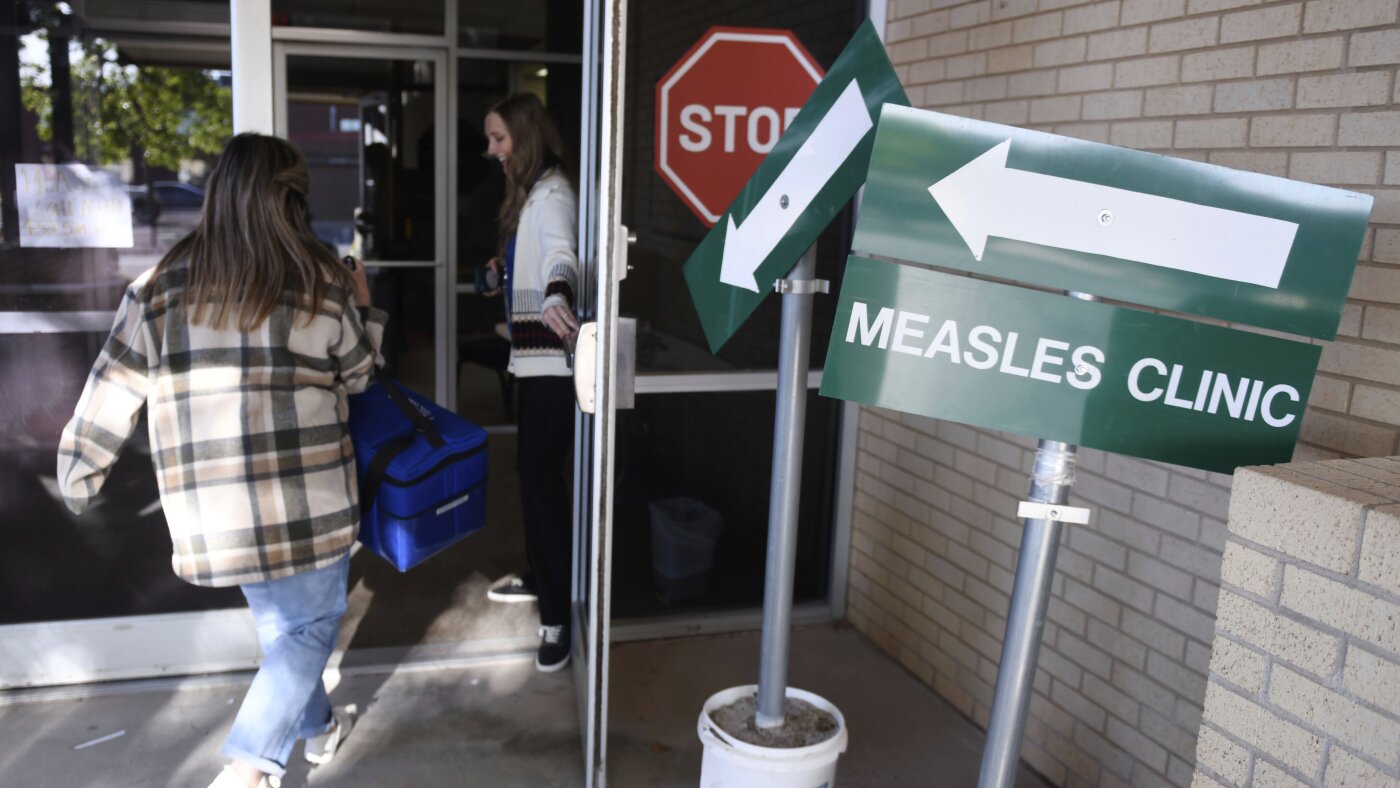
The U.S. will likely lose its measles elimination status. Here's what that meansImage Credit: NPR News
Key Points
- •The Definition: A country is considered to have "eliminated" measles when it has gone for more than 12 months without a continuous chain of domestic transmission. The virus can still be imported from other countries, but the public health system must be able to prevent it from spreading widely.
- •The Deciding Body: The Pan American Health Organization (PAHO) is responsible for granting and revoking this status. A special verification commission reviews extensive evidence, including epidemiological data and genomic analyses, to make its determination.
- •The Timeline: The clock for the U.S. began in January 2025 with the start of the Texas outbreak. PAHO has announced its plan to formally review the United States' status this spring.
- •Direct Financial Cost: Each individual measles case costs the public health system an average of $43,000 to manage, track, and contain.
- •Large Outbreak Costs: The expenses escalate dramatically with the size of an outbreak. A cluster of 50 or more cases can easily cost a state or locality well over $1 million in total.
The U.S. will likely lose its measles elimination status. Here's what that means
The United States is on the verge of losing a critical public health designation it has held for a quarter-century: its status as a country that has eliminated measles. Escalating, uncontained outbreaks, most notably a rapidly spreading cluster in South Carolina, are forcing a formal review that could revoke the title. This potential downgrade is more than symbolic, signaling a strained public health system and carrying significant, quantifiable economic consequences.
The Immediate Crisis: An Accelerating Outbreak
South Carolina is now the epicenter of the nation's struggle with a resurgent measles virus. The state’s outbreak has surpassed 847 confirmed cases since its first report in October, eclipsing a major outbreak in Texas that began over a year ago.
The speed of the transmission is particularly alarming to health officials. "This is a milestone that we have reached in a relatively short period of time, very unfortunately," Dr. Linda Bell, South Carolina's state epidemiologist, stated at a recent press briefing. She noted that while Texas's case count grew over seven months, South Carolina's has surged past it in just 16 weeks.
With 58 new cases reported between a recent Tuesday and Friday alone, Dr. Bell added, "it's just disconcerting to consider what our final trajectory will look like for measles in South Carolina."
Understanding "Elimination Status"
The potential loss of "measles elimination status" hinges on a technical definition and a formal verification process. It is a benchmark the U.S. first achieved in the year 2000.
-
The Definition: A country is considered to have "eliminated" measles when it has gone for more than 12 months without a continuous chain of domestic transmission. The virus can still be imported from other countries, but the public health system must be able to prevent it from spreading widely.
-
The Deciding Body: The Pan American Health Organization (PAHO) is responsible for granting and revoking this status. A special verification commission reviews extensive evidence, including epidemiological data and genomic analyses, to make its determination.
-
The Timeline: The clock for the U.S. began in January 2025 with the start of the Texas outbreak. PAHO has announced its plan to formally review the United States' status this spring.
A System Under Strain
While the official review is pending, many infectious disease experts argue that, for all practical purposes, the battle for elimination has already been lost. They point to the nation's diminished capacity to contain the virus quickly.
"We do not have the capability to actually control measles, whether or not this is demonstrated through continuous measles transmission for 12 months," said Dr. Demetre Daskalakis, an infectious disease specialist and former top official with the Centers for Disease Control and Prevention (CDC). "So I'm going to say that elimination is already lost."
This expert consensus contrasts sharply with the position of some federal officials. When asked about the significance of losing the status, Dr. Ralph Abraham, the principal deputy director of the CDC, replied, "Not really." He stated that the administration supports the measles vaccine but also respects "health freedom" and "personal freedom" for communities that "choose to go a somewhat of a different route."
However, epidemiologists argue this "different route"—the choice not to vaccinate, often fueled by misinformation—is the direct cause of the resurgence.
"I think it's really a comment on the state of the public health system," said Caitlin Rivers, an epidemiologist at the Johns Hopkins Bloomberg School of Public Health. "We maintained elimination for 25 years. And so now, to be facing its loss, it really points to the cycle of panic and neglect, where I think that we have forgotten what it's like to face widespread measles."
The Economic and Public Health Costs
The failure to contain measles imposes a significant financial burden on the healthcare system and taxpayers, diverting critical resources from other public health priorities.
According to Dr. William Moss of the International Vaccine Access Center at Johns Hopkins, the financial fallout is substantial and well-documented.
-
Direct Financial Cost: Each individual measles case costs the public health system an average of $43,000 to manage, track, and contain.
-
Large Outbreak Costs: The expenses escalate dramatically with the size of an outbreak. A cluster of 50 or more cases can easily cost a state or locality well over $1 million in total.
-
Resource Diversion: Responding to a measles outbreak is labor-intensive. It pulls public health staff, investigators, and laboratory resources away from other essential functions, such as monitoring foodborne illnesses, managing chronic disease programs, and preparing for other infectious threats.
-
Human Cost: Beyond the financial ledger, rising case counts translate directly into more hospitalizations and, tragically, an increase in preventable deaths.
Key Terminology: Elimination vs. Eradication
The terms are often used interchangeably, but they represent two vastly different public health achievements.
-
Elimination: This refers to the absence of continuous domestic transmission of a disease in a specific geographic area, such as a country. The U.S. achieved measles elimination in 2000 because its vaccination program and public health infrastructure were strong enough to stop imported cases from sparking large, sustained outbreaks.
-
Eradication: This is the permanent, worldwide reduction to zero of a specific pathogen. The smallpox virus, declared eradicated by the World Health Organization, is the primary example. Measles is not eradicated globally and remains endemic in many parts of the world.
The Bottom Line
The impending review by the Pan American Health Organization is poised to formalize a reality that public health officials are already confronting: the United States can no longer consistently and quickly stop the spread of measles within its borders.
While the official designation is technical, the consequences are tangible. They are measured in the millions of dollars spent to contain preventable outbreaks, the diversion of finite public health resources, and the erosion of a public health victory that was 25 years in the making. The loss of elimination status serves as a stark indicator of a weakened public health defense system and a warning of the real-world costs—both human and financial—of declining vaccination rates.
Source: NPR News
Related Articles
Nationwide Protests Against ICE Enforcement Erupt in U.S.
Thousands are protesting ICE after the DOJ declined to investigate a fatal agent-involved shooting in Minneapolis, fueling a national movement and public anger.
Venezuela Amnesty Bill Could Free Political Prisoners
Learn about Venezuela's proposed amnesty bill to release political prisoners. The move could signal a major political shift and affect future economic sanctions
Pokémon Cancels Yasukuni Shrine Event After Backlash
The Pokémon Company has canceled an event at Tokyo's controversial Yasukuni Shrine after facing international backlash from China and South Korea.
Rybakina Stuns Sabalenka in Australian Open 2026 Final
Elena Rybakina stages a remarkable comeback to defeat Aryna Sabalenka in a dramatic three-set thriller, capturing the Australian Open 2026 women's title.