Activists Deliver Aid to Palestinians Besieged by Settlers
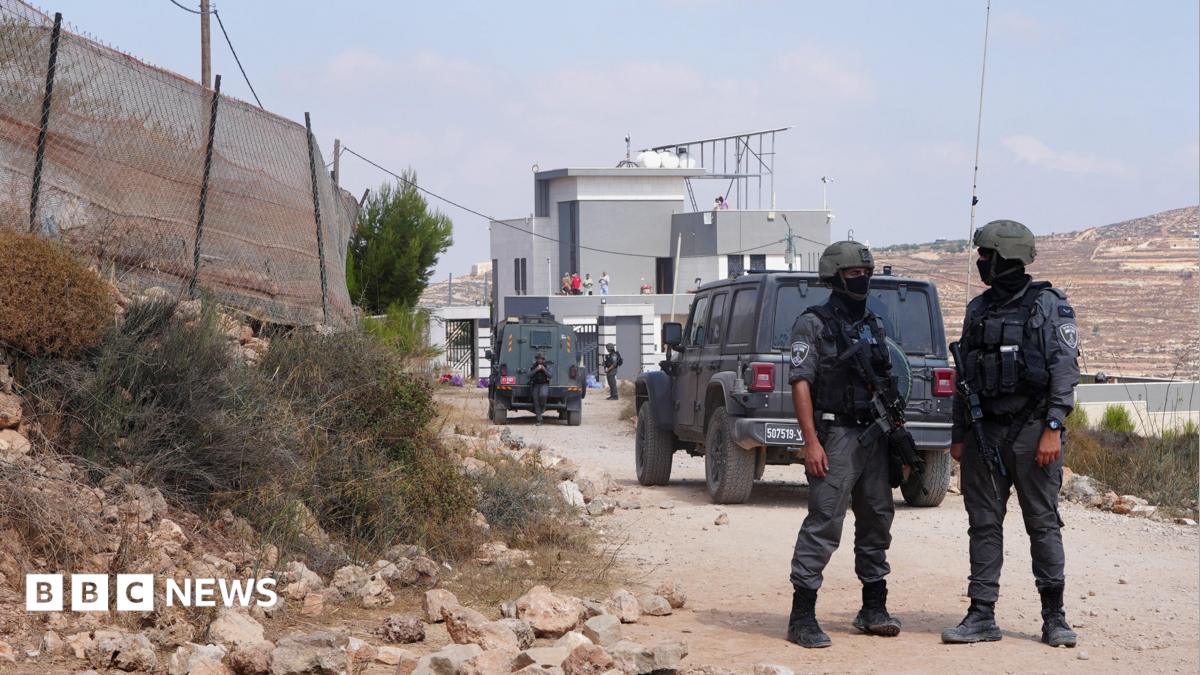
Activists deliver aid to Palestinians in homes besieged by Israeli settlersImage Credit: BBC News
Key Points
- •QUSRA, OCCUPIED WEST BANK – A tense standoff in the occupied West Bank saw activists attempt to deliver essential supplies Friday to Palestinian families who say they have been trapped in their homes for days by Israeli settlers, creating a complex humanitarian and security challenge for Israeli forces in the area.
- •Closed Military Zone: The IDF designated Qusra as a "closed military zone," which legally restricts the entry of Israeli civilians. This order was cited as the reason activists, among whom were Israelis, could not enter the village proper.
- •Aid Transfer: Despite the zone designation, an IDF spokesperson stated that activists "weren't prevented from transferring aid to the Palestinian homes in Qusra." This suggests a distinction between allowing individuals to enter and allowing the passage of goods.
- •Settler Removal: The military confirmed it conducted an operation on Thursday to disperse settlers. In a further statement, it said "IDF soldiers operated to remove" a tent erected by Israeli civilians on Friday, adding that these actions were taken "while protecting the local residents."
- •Condemnation of Actions: A military spokesperson had previously described the initial actions by the settlers as "deplorable" and "unacceptable." The government has pledged to investigate the incidents and arrest those responsible for the siege.
Activists Deliver Aid to Palestinians in Homes Besieged by Israeli Settlers
QUSRA, OCCUPIED WEST BANK – A tense standoff in the occupied West Bank saw activists attempt to deliver essential supplies Friday to Palestinian families who say they have been trapped in their homes for days by Israeli settlers, creating a complex humanitarian and security challenge for Israeli forces in the area.
The delivery of food and water highlights the escalating volatility in the region, where confrontations between settlers and Palestinians have become increasingly frequent and severe. The incident in the village of Qusra underscores the fragile security situation and the conflicting narratives that define the conflict.
A Tense Aid Delivery
Human rights activists managed to leave provisions near one of the properties in Qusra where two Palestinian families, including members of the Abu Ridi and Hassan families, have reportedly been confined since Sunday.
Residents stated that their power and water supplies had been cut off during the siege. They also claimed that Israeli forces on the scene prevented the activists from delivering the aid directly to their homes, forcing the supplies to be left outside.
The Israel Defense Forces (IDF) has denied this specific allegation, stating that while the area was restricted, the transfer of aid itself was not blocked.
Renewed Settler Presence
The situation remained fluid throughout Friday. A number of settlers returned to the vicinity of the besieged homes to erect a tent, just one day after an IDF operation had dispersed them from the same location.
Israeli forces later intervened to remove the tent. The brief re-establishment of a settler presence indicates a persistent effort to maintain a foothold in the area, contributing to the ongoing tension.
The Official Israeli Position
The IDF has issued several statements addressing the complex events in Qusra, outlining its operational constraints and objectives. The military's response reflects the dual challenge of managing settler activity while maintaining security in a Palestinian village.
-
Closed Military Zone: The IDF designated Qusra as a "closed military zone," which legally restricts the entry of Israeli civilians. This order was cited as the reason activists, among whom were Israelis, could not enter the village proper.
-
Aid Transfer: Despite the zone designation, an IDF spokesperson stated that activists "weren't prevented from transferring aid to the Palestinian homes in Qusra." This suggests a distinction between allowing individuals to enter and allowing the passage of goods.
-
Settler Removal: The military confirmed it conducted an operation on Thursday to disperse settlers. In a further statement, it said "IDF soldiers operated to remove" a tent erected by Israeli civilians on Friday, adding that these actions were taken "while protecting the local residents."
-
Condemnation of Actions: A military spokesperson had previously described the initial actions by the settlers as "deplorable" and "unacceptable." The government has pledged to investigate the incidents and arrest those responsible for the siege.
Background: A Surge in West Bank Violence
The events in Qusra are not isolated. They occur against a backdrop of a significant surge in settler violence across the West Bank, particularly since the Hamas attacks of October 7th.
United Nations figures and human rights organizations have documented hundreds of attacks by settlers against Palestinians, leading to displacement, property damage, and casualties. This recent siege is emblematic of a broader pattern of intimidation and land pressure.
Qusra, located south of Nablus, has long been a flashpoint for friction due to its proximity to several hardline Israeli settlements and unauthorized outposts. Clashes over land and resources are a recurring feature of life for the village's residents.
Conflicting Accounts on the Ground
The narrative from local Palestinian leadership starkly contrasts with the IDF's official statements.
Qusra Mayor Abdul Azim Wadi told the BBC that during the IDF's operation to disperse settlers on Thursday, about a dozen Palestinian households were instructed to leave their properties. He further alleged that Israeli forces were now using some of these vacated Palestinian houses as military barracks.
This claim is disputed by the Israeli military. An IDF statement insisted the goal of its presence was "to protect the residents," and that soldiers had been "instructed that the Qusra residents will remain in their homes." The evacuation of some homes on Thursday, it appears, was a temporary measure during the dispersal operation.
The discrepancy highlights the deep mistrust between the Palestinian population and the Israeli military, with each side offering a fundamentally different interpretation of the army's actions and intent.
Implications and Next Steps
The standoff in Qusra encapsulates the precarious state of the West Bank. While the immediate humanitarian need was partially met by the activists' aid delivery, the underlying conflict remains unresolved and highly combustible.
Key challenges moving forward include:
-
Enforcement: The Israeli government's ability to follow through on its promise to investigate and prosecute violent settlers will be a critical test of its commitment to re-establishing rule of law in the territory.
-
Military Conduct: The IDF is under intense scrutiny. Its forces are tasked with preventing friction, a role complicated by accusations of either inaction or complicity in settler activities, alongside its own direct security operations.
-
Humanitarian Stability: For the Palestinian families in Qusra and elsewhere, the immediate future is uncertain. The threat of recurring sieges, displacement, and loss of access to basic utilities poses a significant and ongoing humanitarian risk.
The situation remains fragile. The settlers, though dispersed, have shown their determination to return. The Palestinian residents remain vulnerable, and the Israeli military is caught in the middle of a volatile, deeply entrenched conflict that shows no signs of abating.
Source: BBC News
Related Articles
Nationwide Protests Against ICE Enforcement Erupt in U.S.
Thousands are protesting ICE after the DOJ declined to investigate a fatal agent-involved shooting in Minneapolis, fueling a national movement and public anger.
Venezuela Amnesty Bill Could Free Political Prisoners
Learn about Venezuela's proposed amnesty bill to release political prisoners. The move could signal a major political shift and affect future economic sanctions
Pokémon Cancels Yasukuni Shrine Event After Backlash
The Pokémon Company has canceled an event at Tokyo's controversial Yasukuni Shrine after facing international backlash from China and South Korea.
US to Lose Measles Elimination Status: What It Means
The U.S. is poised to lose its measles elimination status due to escalating outbreaks. Learn what this downgrade means for public health and the economy.