Afghan Women's Rights & Economic Crisis Under Taliban
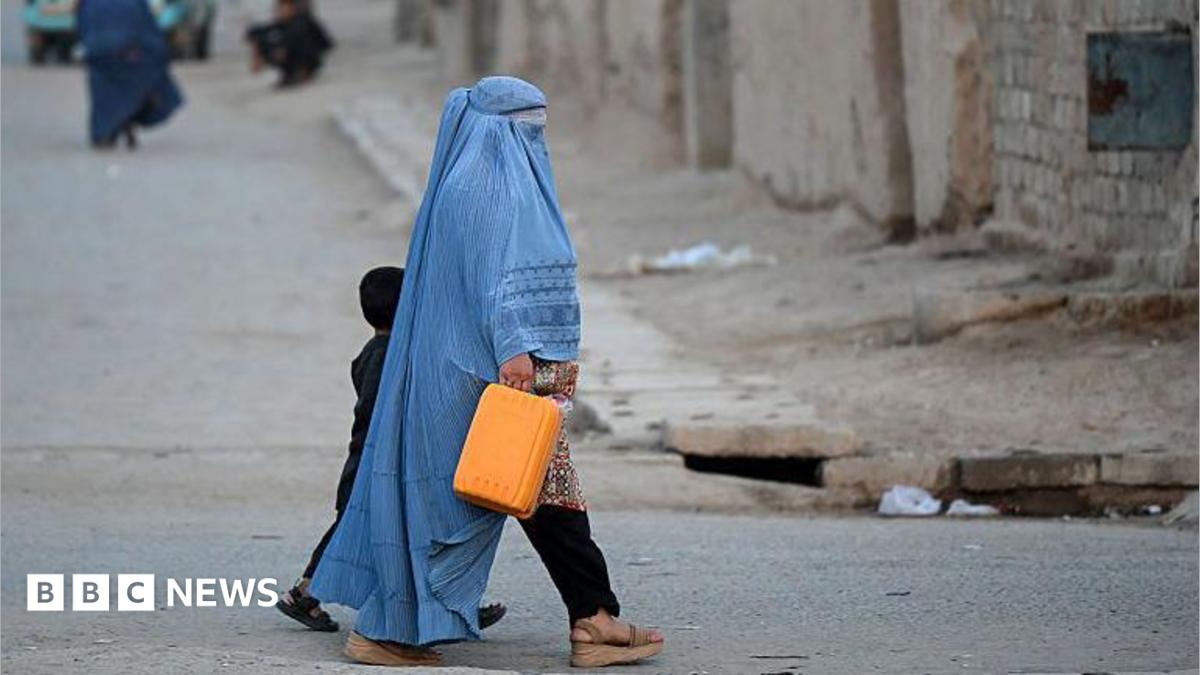
Afghan women tell the BBC their lives are unrecognisable after five years of Taliban ruleImage Credit: BBC News
Key Points
- •KABUL – Nearly three years after the Taliban's dramatic return to power, Afghanistan is mired in a profound economic and humanitarian crisis, a collapse directly exacerbated by the regime's systematic dismantling of women's rights and their exclusion from public and economic life. Reports from within the country, including new testimony gathered by the BBC, paint a grim picture of a nation where the economic potential of half its population has been deliberately extinguished, with devastating consequences for national stability and household survival.
- •Education and Workforce Ban: The closure of secondary schools and universities to girls and women has vaporised the country's future female human capital. This ban extends to most forms of employment, including work with non-governmental organisations (NGOs), severing a vital income stream for countless families and crippling the humanitarian response. The UN estimates this exclusion could cost Afghanistan's economy up to $1 billion annually, or 5% of its GDP.
- •Restrictions on Movement: Decrees requiring women to have a male chaperone (mahram) for long-distance travel and encouraging them to stay home have severely limited their ability to seek work, conduct business, or even access markets and healthcare. This effectively places them under house arrest, stifling female entrepreneurship and labour mobility.
- •Exclusion from Public Life: Women are barred from public parks, gyms, and bathhouses. The closure of beauty salons in 2023 eliminated an estimated 60,000 jobs held by women, often the sole breadwinners for their families. These measures dismantle the female-led service economy and further isolate women from commercial and social networks.
- •Erosion of Legal Status: The regime has also implemented policies that observers believe implicitly endorse child marriage, a practice that correlates directly with higher rates of maternal mortality, lower educational attainment, and intergenerational poverty.
Afghanistan's Economic Collapse Deepens as Taliban Solidifies Curbs on Women
KABUL – Nearly three years after the Taliban's dramatic return to power, Afghanistan is mired in a profound economic and humanitarian crisis, a collapse directly exacerbated by the regime's systematic dismantling of women's rights and their exclusion from public and economic life. Reports from within the country, including new testimony gathered by the BBC, paint a grim picture of a nation where the economic potential of half its population has been deliberately extinguished, with devastating consequences for national stability and household survival.
The hard-line Islamist group, which regained control in August 2021, has systematically reversed two decades of progress for the country's 22 million women and girls. This social regression is not just a human rights tragedy; it is a primary driver of Afghanistan's economic implosion, a self-inflicted wound that has crippled any prospect of sustainable recovery.
The Human Cost of Economic Exclusion
For women across Afghanistan, from the once-bustling streets of Kabul to remote rural provinces, life is unrecognisable. The Taliban has enacted a series of decrees that effectively erase women from the public sphere, creating insurmountable barriers to their economic participation and personal autonomy.
The BBC, one of the few international media organisations maintaining a presence in the country, spoke with women who describe a daily struggle for existence. "Today, survival has become the priority, and many of us no longer have the time or energy to think about the future," a woman named Ela from Kabul told reporters. Her sentiment reflects a nationwide shift from aspiration to subsistence, a clear indicator of plummeting household economic security.
Key Edicts and Their Economic Impact:
-
Education and Workforce Ban: The closure of secondary schools and universities to girls and women has vaporised the country's future female human capital. This ban extends to most forms of employment, including work with non-governmental organisations (NGOs), severing a vital income stream for countless families and crippling the humanitarian response. The UN estimates this exclusion could cost Afghanistan's economy up to $1 billion annually, or 5% of its GDP.
-
Restrictions on Movement: Decrees requiring women to have a male chaperone (mahram) for long-distance travel and encouraging them to stay home have severely limited their ability to seek work, conduct business, or even access markets and healthcare. This effectively places them under house arrest, stifling female entrepreneurship and labour mobility.
-
Exclusion from Public Life: Women are barred from public parks, gyms, and bathhouses. The closure of beauty salons in 2023 eliminated an estimated 60,000 jobs held by women, often the sole breadwinners for their families. These measures dismantle the female-led service economy and further isolate women from commercial and social networks.
-
Erosion of Legal Status: The regime has also implemented policies that observers believe implicitly endorse child marriage, a practice that correlates directly with higher rates of maternal mortality, lower educational attainment, and intergenerational poverty.
A Self-Inflicted Economic Catastrophe
The Taliban's policies toward women are inseparable from the country's broader economic collapse. Upon their takeover, the international community responded by freezing approximately $9 billion in Afghan central bank assets held abroad and halting the foreign aid that had propped up 75% of the previous government's public spending.
This sudden financial shock, combined with the removal of women from the workforce, created a perfect storm:
- Banking Sector Paralysis: A severe liquidity crisis has left the financial system unable to function, impeding trade and the payment of salaries.
- Hyper-Inflation and Unemployment: The prices of basic goods have soared while formal employment has plummeted, pushing millions into destitution. The World Food Programme estimates that 15 million Afghans—more than a third of the population—face acute food insecurity.
- Brain Drain: The exodus of educated and skilled professionals, including many women, has stripped the country of the expertise needed to run a functional economy or government.
When questioned by the BBC about the severe constraints, the Taliban's foreign minister claimed, "Women are not totally restricted on all walks of life." This official narrative stands in stark contrast to the reality on the ground, where women's lives are circumscribed at every turn. Fear of reprisal is so pervasive that most women who speak to the media must do so anonymously.
Outlook: A Future Mortgaged
For international observers, investors, and policymakers, the economic trajectory of Afghanistan is clear and deeply troubling. Without a fundamental reversal of the Taliban's policies on women and girls, there is no viable path to economic stability or growth.
The regime's ideology has locked the nation out of the global economy. No country has formally recognised the Taliban government, precluding access to development loans from institutions like the World Bank and the IMF. Foreign direct investment is non-existent, and the economy remains almost entirely dependent on a fragile stream of humanitarian aid.
The implications are stark. Afghanistan is caught in a vicious cycle where social repression fuels economic isolation, which in turn deepens poverty and humanitarian need. The international community faces the difficult dilemma of providing life-saving assistance to the Afghan people without legitimising a regime whose policies are the primary cause of their suffering.
For financial analysts, the lesson from Afghanistan is a brutal one: a nation's prosperity is inextricably linked to the empowerment and inclusion of its entire population. By choosing to systematically marginalise 50% of its citizens, the Taliban has not only engineered a human rights catastrophe but has also guaranteed Afghanistan's status as a failed economy for the foreseeable future.
Source: BBC News
Related Articles
Nationwide Protests Against ICE Enforcement Erupt in U.S.
Thousands are protesting ICE after the DOJ declined to investigate a fatal agent-involved shooting in Minneapolis, fueling a national movement and public anger.
Venezuela Amnesty Bill Could Free Political Prisoners
Learn about Venezuela's proposed amnesty bill to release political prisoners. The move could signal a major political shift and affect future economic sanctions
Pokémon Cancels Yasukuni Shrine Event After Backlash
The Pokémon Company has canceled an event at Tokyo's controversial Yasukuni Shrine after facing international backlash from China and South Korea.
US to Lose Measles Elimination Status: What It Means
The U.S. is poised to lose its measles elimination status due to escalating outbreaks. Learn what this downgrade means for public health and the economy.