Amazon's Big AI Bet Causes Share Slump, Spooks Investors
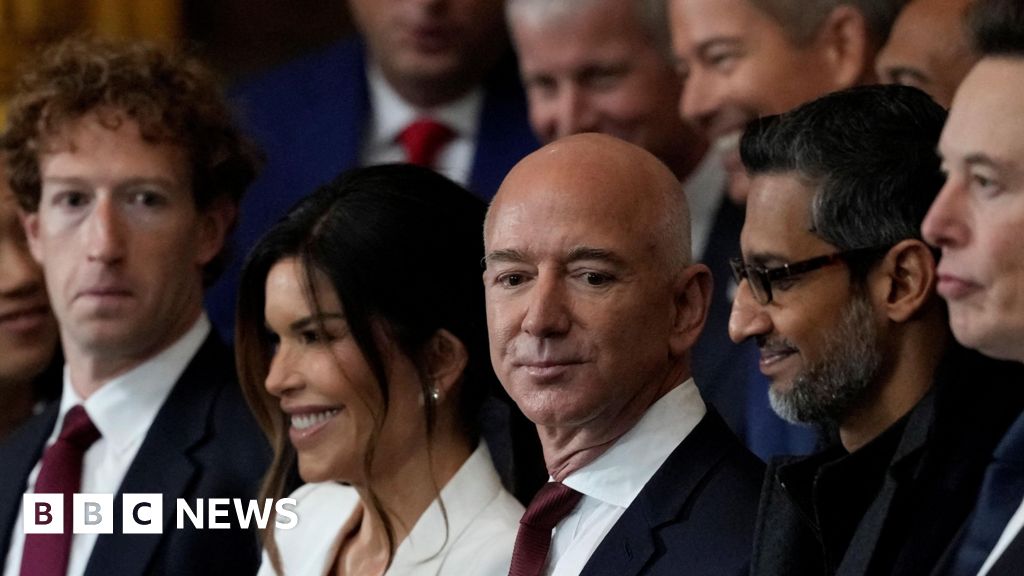
Amazon plans to spend big on AI but shares slumpImage Credit: BBC Business (Finance)
Key Points
- •LONDON – Amazon sent a clear message to Wall Street this week: the future is artificial intelligence, and it will be expensive. Despite beating quarterly earnings expectations, the tech giant saw its shares tumble after outlining a massive increase in capital expenditure dedicated to AI, a move that has investors weighing the promise of long-term dominance against the reality of short-term margin pressure.
- •Q1 Earnings Beat: Amazon reported earnings per share of $0.98, comfortably ahead of the $0.83 consensus estimate. Revenue for the quarter reached $143.3 billion, also topping analyst expectations of $142.5 billion.
- •AWS Slowdown: The engine of Amazon's profitability, AWS, reported revenue of $25 billion. While a staggering figure, its 17% year-over-year growth rate represents a continued slowdown from the 20-30% growth seen in previous years, reflecting increased competition and a more cautious spending environment from its corporate customers.
- •Cautious Guidance: For the upcoming second quarter, Amazon projected revenue between $144 billion and $149 billion. The midpoint of this range fell slightly below Wall Street's expectations, suggesting that near-term headwinds, particularly in the cloud sector, persist.
- •The Capex Commitment: The most significant announcement was the planned surge in capital expenditure. CFO Brian Olsavsky confirmed on the earnings call that spending would ramp up throughout the year to support AWS growth, with a primary focus on generative AI projects.
Amazon Plans to Spend Big on AI, But Shares Slump
LONDON – Amazon sent a clear message to Wall Street this week: the future is artificial intelligence, and it will be expensive. Despite beating quarterly earnings expectations, the tech giant saw its shares tumble after outlining a massive increase in capital expenditure dedicated to AI, a move that has investors weighing the promise of long-term dominance against the reality of short-term margin pressure.
The market reaction highlights a central tension facing big tech. While AI is seen as the most significant technological shift since the cloud itself, the enormous upfront investment required is causing concern among shareholders, who are simultaneously grappling with a slowdown in the growth of Amazon's traditionally unstoppable cloud division, Amazon Web Services (AWS).
The Big Picture
Amazon's first-quarter results presented a classic "good news, bad news" scenario. The company surpassed analyst projections on both profit and revenue, a testament to its operational efficiency and the resilience of its e-commerce and advertising businesses.
However, the market's focus quickly shifted to two critical data points: the decelerating growth in AWS and a forward-looking statement from CEO Andy Jassy indicating that the company's 2023 capital spending of $50 billion would be "meaningfully" higher in 2024, driven almost entirely by AI infrastructure.
This combination spooked investors, pushing the stock down by as much as 3% in after-hours trading and signaling a period of cautious observation for one of the world's most valuable companies.
Diving Into the Numbers
The earnings report revealed a company in transition, successfully managing its core businesses while preparing for a costly technological arms race.
-
Q1 Earnings Beat: Amazon reported earnings per share of $0.98, comfortably ahead of the $0.83 consensus estimate. Revenue for the quarter reached $143.3 billion, also topping analyst expectations of $142.5 billion.
-
AWS Slowdown: The engine of Amazon's profitability, AWS, reported revenue of $25 billion. While a staggering figure, its 17% year-over-year growth rate represents a continued slowdown from the 20-30% growth seen in previous years, reflecting increased competition and a more cautious spending environment from its corporate customers.
-
Cautious Guidance: For the upcoming second quarter, Amazon projected revenue between $144 billion and $149 billion. The midpoint of this range fell slightly below Wall Street's expectations, suggesting that near-term headwinds, particularly in the cloud sector, persist.
-
The Capex Commitment: The most significant announcement was the planned surge in capital expenditure. CFO Brian Olsavsky confirmed on the earnings call that spending would ramp up throughout the year to support AWS growth, with a primary focus on generative AI projects.
The AI Spending Spree
Amazon's leadership is framing the spending not as a cost, but as a fundamental investment in the company's next decade of growth. The capital is being deployed to build the foundational infrastructure required to compete with rivals like Microsoft and Google.
In the earnings call, CEO Andy Jassy emphasized that the "vast majority" of the spending is to support AWS's AI initiatives, which he believes will drive "tens of billions of dollars" in revenue over the next several years.
Key Investment Areas
-
Cloud Infrastructure: The bulk of the funds will be used to acquire and deploy tens of thousands of specialized processors, including Nvidia's highly sought-after H100 GPUs. Amazon is also investing heavily in its own custom-designed silicon, the Trainium and Inferentia chips, to provide cost-effective alternatives for training and running AI models.
-
Proprietary Models: Amazon is developing its own family of foundation models, known as "Titan," and is aggressively expanding its "Bedrock" service. Bedrock acts as a platform, offering AWS customers access to a wide range of leading AI models from companies like Anthropic, AI21 Labs, and Stability AI, in addition to its own.
-
Product Integration: The company plans to embed generative AI features across its consumer-facing businesses. This includes a more capable and conversational Alexa, enhanced product search and recommendations on its e-commerce site, and new tools for its third-party sellers.
The Investor's Dilemma
The negative stock reaction underscores the market's current focus on immediate profitability over long-term strategic positioning.
For investors, the dilemma is clear. On one hand, failing to invest heavily in AI would be a strategic blunder, risking the loss of AWS's dominant market share to Microsoft's Azure (backed by OpenAI) and Google Cloud. The AI revolution is happening, and Amazon cannot afford to be left behind.
On the other hand, the scale of the investment will compress profit margins in the short-to-medium term. With AWS growth already slowing, shareholders are concerned that the high costs of the AI transition will arrive before the revenue benefits are fully realized. This creates a "show-me" story, where investors will need to see tangible results from the AI spend before rewarding the stock.
What to Watch Next
Amazon has entered a critical investment cycle. The company's performance and stock valuation over the next 18-24 months will likely be determined by its execution on the AI front. Key metrics to monitor include:
-
AWS Growth Rate: The single most important indicator will be whether these AI investments can re-accelerate AWS revenue growth. Success will be measured by a return to growth rates above 20%.
-
AI Monetization: Investors will look for clear evidence of how Amazon is monetizing its AI services. This includes uptake of its Bedrock platform, demand for its custom chips, and any new, high-margin AI-native products.
-
Margin Performance: Analysts will closely track operating margins to see how effectively Amazon can manage the massive capex increase without severely damaging its bottom line.
-
Competitive Landscape: The market will continue to compare AWS's AI progress directly against Microsoft Azure and Google Cloud. Any perceived loss of ground in capabilities or customer acquisition will weigh heavily on sentiment.
Ultimately, Amazon is making a calculated, multi-billion-dollar bet that being a leader in the AI era is worth the short-term financial pain. Wall Street has signaled its skepticism, setting the stage for a period where the tech giant must prove its most ambitious investment in years can, and will, pay off.
Source: BBC Business (Finance)
Related Articles
Nationwide Protests Against ICE Enforcement Erupt in U.S.
Thousands are protesting ICE after the DOJ declined to investigate a fatal agent-involved shooting in Minneapolis, fueling a national movement and public anger.
Venezuela Amnesty Bill Could Free Political Prisoners
Learn about Venezuela's proposed amnesty bill to release political prisoners. The move could signal a major political shift and affect future economic sanctions
Pokémon Cancels Yasukuni Shrine Event After Backlash
The Pokémon Company has canceled an event at Tokyo's controversial Yasukuni Shrine after facing international backlash from China and South Korea.
US to Lose Measles Elimination Status: What It Means
The U.S. is poised to lose its measles elimination status due to escalating outbreaks. Learn what this downgrade means for public health and the economy.