Appeals Court Halts Trump's White House Ballroom Project
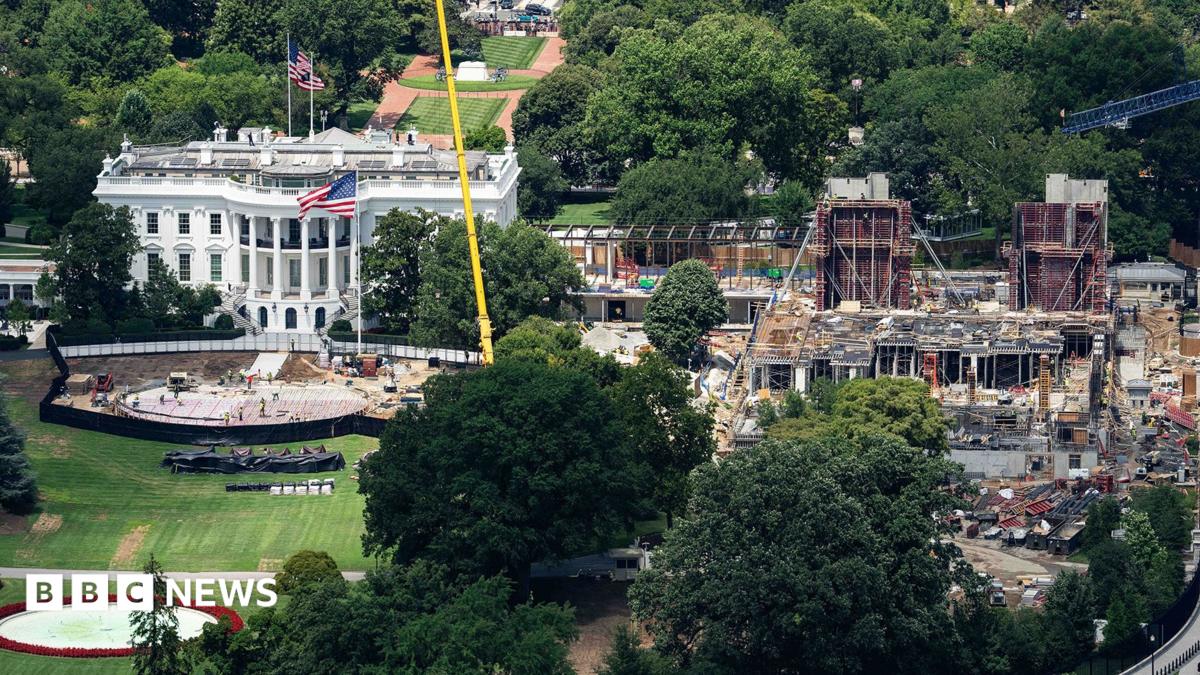
Appeals court halts Trump's ballroom project paving way for Supreme Court showdownImage Credit: BBC News
Key Points
- •WASHINGTON – A federal appeals court on Friday delivered a significant blow to President Trump's ambitious plan to reshape the White House, issuing an emergency injunction that halts all construction on a controversial new ballroom and subterranean security complex. The ruling sets the stage for a high-stakes constitutional confrontation over executive power, historic preservation, and the future of America's most iconic residence.
- •The Core Mandate: The court clarified the immediate effect of its injunction. "What it does mean is that the Defendants may not do so during the district court's expeditious litigation without securing Congress's authorization, as the Constitution and laws require," the order read.
- •Demolition of the East Wing: In October, the project ignited a firestorm when the administration demolished the historic East Wing to clear the site. The structure, originally built in 1902 under President Theodore Roosevelt, was a key part of the White House's architectural heritage. Critics noted that President Trump had initially claimed the project would be built "near" the East Wing, not that it would require its complete removal.
- •Project Components: The administration has outlined a vast and costly undertaking.
- •Above Ground: A large, modern entertaining space designed to "accommodate people for grand parties, State Visits."
Appeals court halts Trump's ballroom project paving way for Supreme Court showdown
WASHINGTON – A federal appeals court on Friday delivered a significant blow to President Trump's ambitious plan to reshape the White House, issuing an emergency injunction that halts all construction on a controversial new ballroom and subterranean security complex. The ruling sets the stage for a high-stakes constitutional confrontation over executive power, historic preservation, and the future of America's most iconic residence.
The decision by a three-judge panel of the D.C. Circuit Court of Appeals freezes a project the President has championed as "vital for National Security," forcing the administration to cease work until it obtains explicit authorization from Congress. This legal victory for preservationists could escalate the dispute to the Supreme Court, while simultaneously thrusting the politically charged project into the legislative arena.
The Court's Decisive Order
The court's order was narrow but firm. It did not rule on the merits or desirability of the ballroom itself. Instead, it focused on the process, finding that the Trump administration had likely overstepped its authority by proceeding with such a monumental alteration to a national landmark without legislative approval.
In its sharply worded decision, the panel stated that its ruling "has nothing at all to do with whether the proposed ballroom is desirable."
- The Core Mandate: The court clarified the immediate effect of its injunction. "What it does mean is that the Defendants may not do so during the district court's expeditious litigation without securing Congress's authorization, as the Constitution and laws require," the order read.
This procedural checkmate effectively sides with plaintiffs who argue that the executive branch cannot unilaterally demolish and rebuild major portions of the White House complex, which is held in the public trust.
A Project Mired in Controversy
President Trump first unveiled his vision for the grand ballroom in July 2025, billing it as the most significant structural change to the presidential residence in over 70 years. The project's stated purpose was twofold: to create a modern, expansive venue for state functions and to house a state-of-the-art underground security facility.
The plan, however, quickly became a flashpoint for legal and public opposition.
-
Demolition of the East Wing: In October, the project ignited a firestorm when the administration demolished the historic East Wing to clear the site. The structure, originally built in 1902 under President Theodore Roosevelt, was a key part of the White House's architectural heritage. Critics noted that President Trump had initially claimed the project would be built "near" the East Wing, not that it would require its complete removal.
-
Project Components: The administration has outlined a vast and costly undertaking.
- Above Ground: A large, modern entertaining space designed to "accommodate people for grand parties, State Visits."
- Below Ground: A sprawling security complex that, according to the President, includes bomb shelters, a full hospital and advanced medical facilities, and top-secret military installations.
Dueling Arguments: Security vs. Preservation
The legal battle has pitted the administration's claims of urgent national security needs against the impassioned arguments of preservationists dedicated to protecting a national symbol.
The Administration's Case
Government lawyers have argued the project is an essential modernization required to protect the presidency. They contend the new security features are critical for defending the White House complex from a new generation of threats.
- Key Justifications:
- Modern Threats: The underground complex is designed to counter drones, ballistic missiles, biohazards, and other sophisticated attacks.
- Presidential Security: The administration frames the project as essential to protecting the president, his family, and White House staff.
- Post-Attack Imperative: President Trump has repeatedly invoked a recent assassination attempt at the White House Correspondents' Association dinner in April as proof that existing security is inadequate, doubling down on the project's necessity.
The National Trust's Opposition
The lawsuit was spearheaded by the National Trust for Historic Preservation, which celebrated Friday's ruling as a victory for the American people. The Trust argues that while security is important, it does not provide the President with a blank check to demolish and remake a revered historical site.
"The White House, a global landmark that symbolizes American identity and the ideals of democracy, belongs to the American people," said Brent Leggs, President and CEO of the National Trust. "The National Trust for Historic Preservation and its partners are proud to defend this irreplaceable monument on behalf of all Americans."
- Core Counterargument: The Trust's legal position is that there is no basis to "disturb" the White House in such a drastic manner and that the desire for a new ballroom does not constitute a national security emergency that justifies bypassing Congress.
What Comes Next: A Two-Front Battle
The appeals court ruling pushes the White House into a difficult position, forcing it to fight on two fronts: in the courts and in Congress.
-
The Legal Path: The administration's most likely next step is an immediate appeal. It could request a review by the full D.C. Circuit Court or, more probable given the high-profile nature of the case, file an emergency petition directly with the Supreme Court. A showdown at the nation's highest court would center on the separation of powers and the scope of executive authority over federal property.
-
The Political Path: Simultaneously, the administration could now turn to Congress to seek the authorization the court demands. This would trigger an intense political battle, forcing lawmakers to take a public stance on a project with significant financial and historical implications. The process would involve committee hearings, public debate, and a recorded vote, placing the project's fate in the hands of a potentially divided legislature.
For now, the construction site at 1600 Pennsylvania Avenue falls silent. The court's injunction ensures that no further above-ground work can proceed "unless and until" Congress acts, leaving the future of the White House's landscape hanging in the balance.
Source: BBC News
Related Articles
Nationwide Protests Against ICE Enforcement Erupt in U.S.
Thousands are protesting ICE after the DOJ declined to investigate a fatal agent-involved shooting in Minneapolis, fueling a national movement and public anger.
Venezuela Amnesty Bill Could Free Political Prisoners
Learn about Venezuela's proposed amnesty bill to release political prisoners. The move could signal a major political shift and affect future economic sanctions
Pokémon Cancels Yasukuni Shrine Event After Backlash
The Pokémon Company has canceled an event at Tokyo's controversial Yasukuni Shrine after facing international backlash from China and South Korea.
US to Lose Measles Elimination Status: What It Means
The U.S. is poised to lose its measles elimination status due to escalating outbreaks. Learn what this downgrade means for public health and the economy.