Tees Valley Mayor Ben Houchen Rules Out Reform UK Move
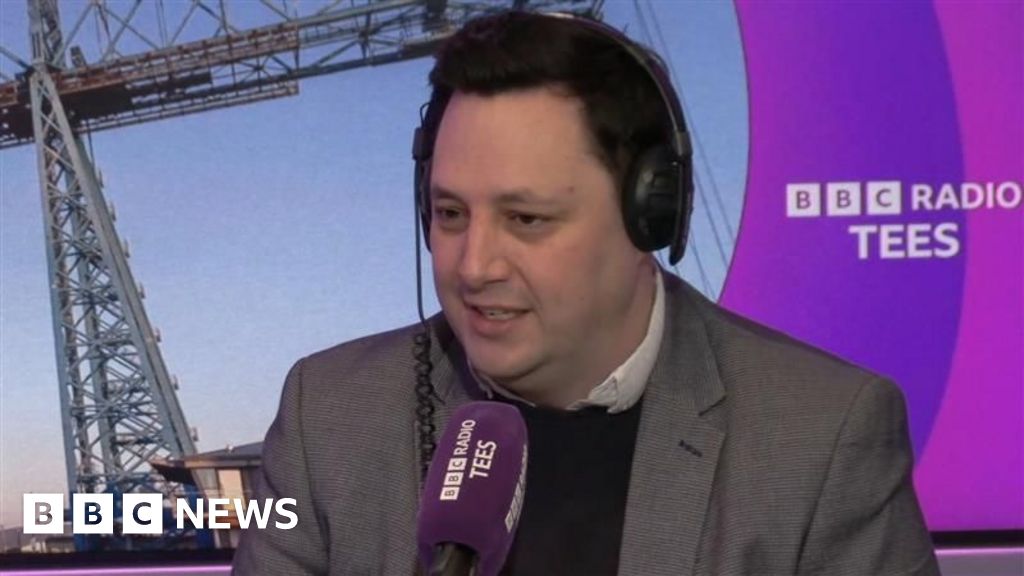
Tees Valley Mayor Ben Houchen insists he is not joining Reform UKImage Credit: BBC Politics
Key Points
- •LONDON – Conservative Tees Valley Mayor Ben Houchen has moved to quash escalating speculation about his political future, categorically ruling out a defection to Reform UK. His statement comes after he claimed to have been approached by Nigel Farage to join the insurgent right-wing party, a move that would have sent shockwaves through the Conservative Party and destabilised the economic agenda of a key "levelling up" region.
- •Houchen's Stance: The mayor insists his commitment to the Conservative Party is unwavering. His public identity and the delivery of his regional projects are tied to his role within the party, which provides the access to central government funding and legislative support necessary for initiatives like the Freeport.
- •Reform's Position: The party's interest in Mr. Houchen is clear. His brand of economically interventionist, locally-focused conservatism aligns with the profile of voters Reform is seeking to attract from the Tories. The public speculation alone serves their purpose by highlighting divisions within the Conservative camp.
- •The Disputed "Approach": The conflicting accounts of the contact between Farage and Houchen add a layer of political theatre. Whether a formal offer was made or not, the narrative that Reform is actively courting senior Tories is one the party is happy to cultivate.
- •Investor Confidence: International firms that have committed capital to the Tees Valley did so with the assurance of a stable political framework. A high-profile political rupture would introduce significant uncertainty, potentially pausing or jeopardizing future investment decisions.
Tees Valley Mayor Ben Houchen insists he is not joining Reform UK
LONDON – Conservative Tees Valley Mayor Ben Houchen has moved to quash escalating speculation about his political future, categorically ruling out a defection to Reform UK. His statement comes after he claimed to have been approached by Nigel Farage to join the insurgent right-wing party, a move that would have sent shockwaves through the Conservative Party and destabilised the economic agenda of a key "levelling up" region.
In a firm declaration of loyalty, Mr. Houchen dismissed the prospect of switching allegiances, stating that while "lots of people" believe he should make the move, his core principles of "loyalty and trust" make it an impossibility.
The denial aims to draw a line under rumours that have intensified in the volatile pre-election political climate, particularly following the high-profile defection of former Conservative deputy chairman Lee Anderson to Reform UK earlier this year.
Reform UK has since issued a response, noting that Mr. Farage had previously denied "reaching out" to the mayor. The party did not offer a comment on whether a private lunch between the two men had taken place, leaving a degree of ambiguity hanging over the nature of their contact.
The Political Stakes
Ben Houchen is not just another local politician. He is arguably the most prominent symbol of the Conservative Party's 2019 general election success, a figure who has built a powerful personal brand by winning successive elections in a traditional Labour heartland.
His mayoralty is intrinsically linked to the government's "levelling up" agenda, with the Tees Valley serving as a flagship for regeneration projects, most notably the Teesside Freeport. A defection would have been a catastrophic blow to Prime Minister Rishi Sunak, signifying that even the party's most successful "Red Wall" champion had lost faith.
For Reform UK, securing a figure of Mr. Houchen's stature would have been a monumental coup, lending significant credibility to its campaign and potentially triggering further defections from anxious Conservative MPs watching their poll numbers collapse.
A Firm Rejection
Mr. Houchen framed his decision not in purely political terms, but in the deeply personal language of local identity and loyalty. He compared the hypothetical party switch to a betrayal of his beloved football club, Middlesbrough FC, for their regional rivals, Newcastle United—an analogy designed to resonate powerfully with his local electorate.
This underscores his strategy: positioning himself as loyal to his region and the people who elected him, above the fray of Westminster's political games.
- Houchen's Stance: The mayor insists his commitment to the Conservative Party is unwavering. His public identity and the delivery of his regional projects are tied to his role within the party, which provides the access to central government funding and legislative support necessary for initiatives like the Freeport.
- Reform's Position: The party's interest in Mr. Houchen is clear. His brand of economically interventionist, locally-focused conservatism aligns with the profile of voters Reform is seeking to attract from the Tories. The public speculation alone serves their purpose by highlighting divisions within the Conservative camp.
- The Disputed "Approach": The conflicting accounts of the contact between Farage and Houchen add a layer of political theatre. Whether a formal offer was made or not, the narrative that Reform is actively courting senior Tories is one the party is happy to cultivate.
The Economic Context: Stability vs. Uncertainty
As a senior financial correspondent, the core of this story lies in the economic implications for the Tees Valley. The region has become a test case for post-Brexit industrial strategy, attracting significant international investment based on the promise of political stability and a pro-business environment championed by Mayor Houchen.
The Teesside Freeport, one of the largest in the UK, is central to this vision. It aims to create thousands of jobs in green energy, advanced manufacturing, and logistics. The entire project hinges on a stable and cooperative relationship between local and national government.
A defection by the mayor would have thrown this into turmoil:
- Investor Confidence: International firms that have committed capital to the Tees Valley did so with the assurance of a stable political framework. A high-profile political rupture would introduce significant uncertainty, potentially pausing or jeopardizing future investment decisions.
- Government Funding: While the mayor's office has devolved powers, major infrastructure and regeneration projects remain heavily reliant on treasury funding and cross-departmental government support. A move to an opposition party would have severely strained, if not severed, these crucial financial pipelines.
- Project Delivery: The complex, multi-year delivery of projects like the South Tees Development Corporation's remediation of the former steelworks site requires seamless political alignment. Mr. Houchen's effectiveness is magnified by his position within the governing party.
What Comes Next
Mr. Houchen's declaration of loyalty provides a moment of relief for a beleaguered Conservative Party headquarters. It shores up a critical flank and allows the government to continue pointing to the Tees Valley as a success story.
However, the episode leaves lingering questions. The very fact that a defection was considered a plausible scenario highlights the fragility of the Conservative coalition and the existential threat posed by Reform UK. The party's challenge now is to ensure that other key figures on its right flank feel similarly valued and committed.
For Reform UK, this is a battle lost but a strategic point scored. The party has demonstrated its ambition and its ability to unsettle its main rival. Its leadership will undoubtedly continue to seek out and cultivate disillusioned Conservative figures as the general election approaches.
Ultimately, for the businesses and residents of the Tees Valley, the mayor's statement is a vote for continuity. The focus, for now, remains on turning ambitious economic blueprints into concrete reality. Mr. Houchen has gambled that his loyalty to the Conservative Party remains the most effective vehicle for delivering on his promises to the region.
Source: BBC Politics
Related Articles
Nationwide Protests Against ICE Enforcement Erupt in U.S.
Thousands are protesting ICE after the DOJ declined to investigate a fatal agent-involved shooting in Minneapolis, fueling a national movement and public anger.
Venezuela Amnesty Bill Could Free Political Prisoners
Learn about Venezuela's proposed amnesty bill to release political prisoners. The move could signal a major political shift and affect future economic sanctions
Pokémon Cancels Yasukuni Shrine Event After Backlash
The Pokémon Company has canceled an event at Tokyo's controversial Yasukuni Shrine after facing international backlash from China and South Korea.
US to Lose Measles Elimination Status: What It Means
The U.S. is poised to lose its measles elimination status due to escalating outbreaks. Learn what this downgrade means for public health and the economy.