Better Motors: The Key to Affordable Robot Automation
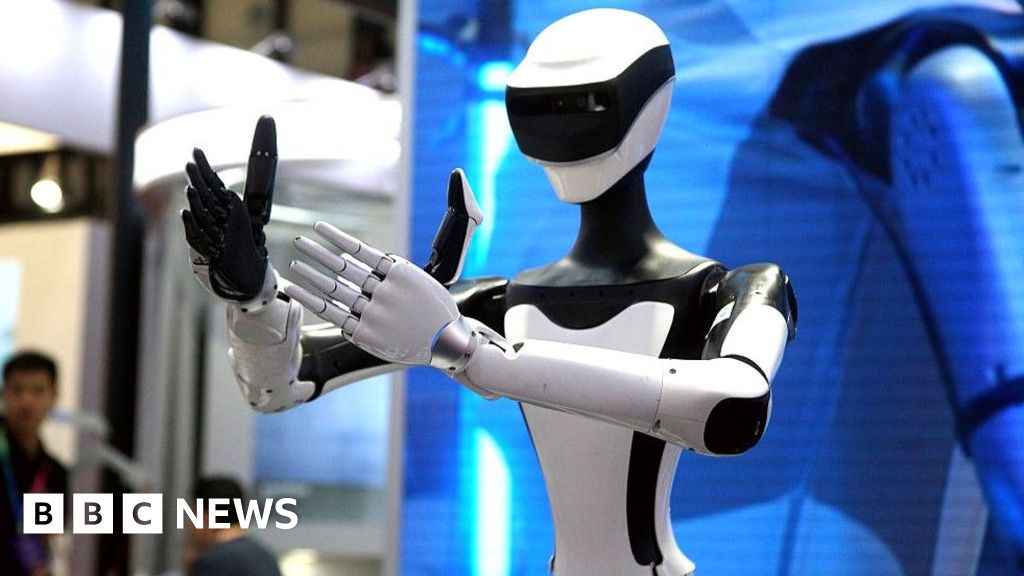
Making robots useful and affordable will need better motorsImage Credit: BBC Business (Finance)
Key Points
- •London – The long-promised future of widespread robotic automation, a world where intelligent machines boost productivity in factories, warehouses, and even small businesses, is facing a significant and often-overlooked bottleneck. While advancements in artificial intelligence and sensor technology grab headlines, the revolution is quietly being held back by the humble electric motor and its associated gearing—the very components that give robots their strength and precision.
- •The Human Element: The focus on retraining underscores a crucial aspect of the modern automation strategy. Companies are finding that integrating robots allows them to redeploy human workers to more complex, cognitive tasks like quality control, machine maintenance, and process optimization, ultimately increasing overall productivity and employee engagement.
- •The Status Quo: Complex Gearboxes: Most high-precision industrial robots rely on highly specialized gear systems, primarily strain wave (also known as harmonic) or cycloidal drives. These intricate mechanisms act as transmissions, converting the high-speed, low-torque output of a small motor into the low-speed, high-torque force needed to lift heavy objects with sub-millimeter accuracy.
- •The Cost Barrier: These gear systems are marvels of mechanical engineering, but they are exceptionally difficult and expensive to manufacture. They can account for a substantial portion of a robot's total cost, often running into thousands of dollars per joint. A standard six-axis robotic arm requires six of these units, quickly escalating the base cost of the hardware.
- •The Performance Trade-off: Beyond cost, these gearboxes add weight, complexity, and potential points of failure. They can suffer from backlash (a slight "slop" in the gearing) that can compromise precision and require regular maintenance, adding to the total cost of ownership.
Making Robots Useful and Affordable Will Need Better Motors
London – The long-promised future of widespread robotic automation, a world where intelligent machines boost productivity in factories, warehouses, and even small businesses, is facing a significant and often-overlooked bottleneck. While advancements in artificial intelligence and sensor technology grab headlines, the revolution is quietly being held back by the humble electric motor and its associated gearing—the very components that give robots their strength and precision.
The challenge is simple: the high-performance motors and gear systems that enable a robot to move with fluid, human-like accuracy are prohibitively expensive. This cost barrier is confining advanced automation to large corporations with deep pockets, leaving a vast segment of the global economy waiting on the sidelines. The key to unlocking the next wave of automation lies in developing a new generation of motors that are both powerful and affordable.
The Driving Force: A Global Labor Crunch
The urgency to solve this engineering problem is being amplified by powerful macro-economic headwinds. Across developed nations, a perfect storm of aging populations, shifting worker expectations, and persistent labor shortages is forcing companies to automate not as a luxury, but as a necessity for survival.
This pressure is palpable on the factory floors of industrial giants. Schaeffler, a leading German automotive and industrial supplier, is actively looking to deploy robots for repetitive tasks, such as loading newly manufactured parts from conveyor belts into washing machines before packaging.
The motivation is clear. "We are already experiencing a labour shortage," says a company spokesperson. This statement reflects a widespread reality where finding and retaining staff for physically demanding or monotonous roles is becoming increasingly difficult and expensive.
For Schaeffler, automation is a strategic response to this operational challenge. Critically, the company stresses that this is a move to augment its human workforce, not replace it. When asked if employees currently performing these tasks will be retrained for higher-value roles, the response is unequivocal: "Absolutely."
- The Human Element: The focus on retraining underscores a crucial aspect of the modern automation strategy. Companies are finding that integrating robots allows them to redeploy human workers to more complex, cognitive tasks like quality control, machine maintenance, and process optimization, ultimately increasing overall productivity and employee engagement.
The Technical Bottleneck: Precision at a Price
To understand why robots remain so expensive, one must look inside their joints. The fluid, precise movements of a typical robotic arm are not the product of a simple motor alone.
-
The Status Quo: Complex Gearboxes: Most high-precision industrial robots rely on highly specialized gear systems, primarily strain wave (also known as harmonic) or cycloidal drives. These intricate mechanisms act as transmissions, converting the high-speed, low-torque output of a small motor into the low-speed, high-torque force needed to lift heavy objects with sub-millimeter accuracy.
-
The Cost Barrier: These gear systems are marvels of mechanical engineering, but they are exceptionally difficult and expensive to manufacture. They can account for a substantial portion of a robot's total cost, often running into thousands of dollars per joint. A standard six-axis robotic arm requires six of these units, quickly escalating the base cost of the hardware.
-
The Performance Trade-off: Beyond cost, these gearboxes add weight, complexity, and potential points of failure. They can suffer from backlash (a slight "slop" in the gearing) that can compromise precision and require regular maintenance, adding to the total cost of ownership.
This reliance on expensive, complex gearing is the primary reason why the cost of industrial robots has not fallen as rapidly as other technologies, like computing power.
The Search for a Solution: The Rise of Direct Drive
The industry is now intensely focused on a new paradigm: direct drive technology. The goal is to create powerful, high-torque motors that can connect directly to a robot's joints without the need for a complex gearbox.
These "torque motors" promise a cascade of benefits. By eliminating the gearbox, they can offer superior precision, zero backlash, faster response times, and quieter operation. Furthermore, with fewer moving parts, they are inherently more reliable and require less maintenance.
The challenge, however, has been manufacturing these motors with the required power density and at a cost that can compete with traditional solutions. This is where industrial heavyweights like Schaeffler are uniquely positioned to make a difference.
-
A Path to Mass Production: As a world leader in precision bearings and advanced manufacturing, Schaeffler possesses the core competencies needed to produce high-performance torque motors at scale. The company's expertise in materials science, precision engineering, and mass production could be pivotal in driving down the cost of these next-generation components.
-
Synergistic Strategy: Schaeffler's internal need for automation (to solve its labor shortage) creates a powerful incentive to innovate in the components that enable it. By developing and perfecting affordable torque motors for its own factories, the company could simultaneously create a highly lucrative new business line, supplying the entire robotics industry.
Implications and The Road Ahead
The successful development of affordable, high-torque direct drive motors would represent a watershed moment for automation, with far-reaching economic implications.
-
Market Expansion: A significant drop in robot hardware costs would democratize automation, making it accessible to small and medium-sized enterprises (SMEs) for the first time. This could trigger a "Cambrian explosion" of new applications in logistics, agriculture, healthcare, food service, and construction.
-
Investment Landscape: The race to build the definitive next-generation robotic motor is on. This will create significant investment opportunities, not only in established players like Schaeffler but also in a host of innovative startups focused on novel motor architectures and magnetic materials.
-
Productivity and Growth: For the broader economy, the impact would be profound. Widespread, affordable automation could unlock a new wave of productivity growth, mitigate the impact of labor shortages, strengthen supply chain resilience by enabling reshoring, and help control inflationary pressures.
The bottom line is clear: the future of useful, ubiquitous robotics depends on this fundamental hardware innovation. The companies that crack the code of building a better, cheaper motor will not only solve a pressing internal need but will also be positioned to power the next industrial revolution. For investors and business leaders, the evolution of the robotic motor is no longer a niche engineering topic—it is a critical indicator of the future pace of economic change.
Source: BBC Business (Finance)
Related Articles
Nationwide Protests Against ICE Enforcement Erupt in U.S.
Thousands are protesting ICE after the DOJ declined to investigate a fatal agent-involved shooting in Minneapolis, fueling a national movement and public anger.
Venezuela Amnesty Bill Could Free Political Prisoners
Learn about Venezuela's proposed amnesty bill to release political prisoners. The move could signal a major political shift and affect future economic sanctions
Pokémon Cancels Yasukuni Shrine Event After Backlash
The Pokémon Company has canceled an event at Tokyo's controversial Yasukuni Shrine after facing international backlash from China and South Korea.
US to Lose Measles Elimination Status: What It Means
The U.S. is poised to lose its measles elimination status due to escalating outbreaks. Learn what this downgrade means for public health and the economy.