UK to Repatriate Britons from Virus-Hit Cruise Ship
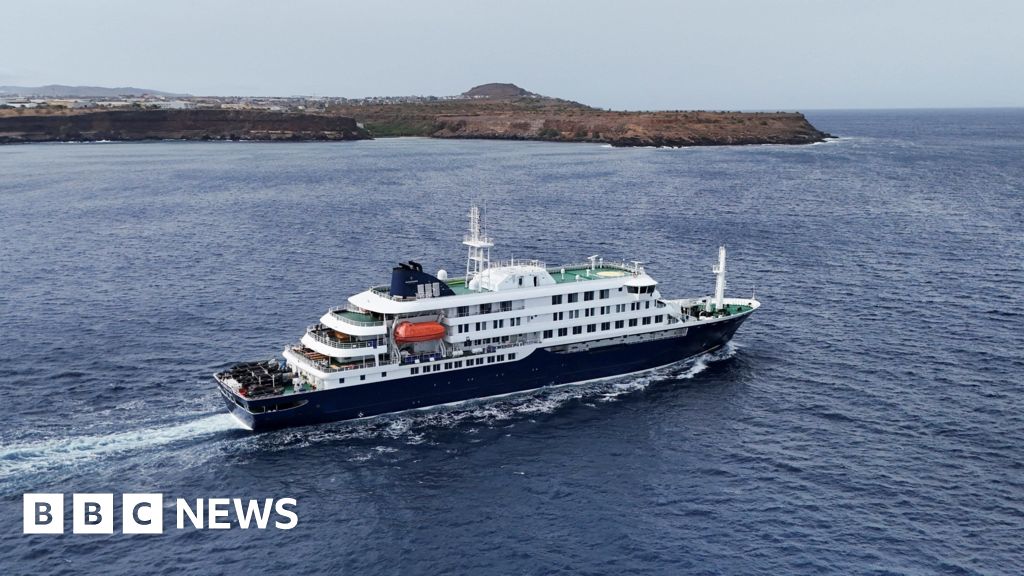
Britons on virus-hit cruise ship will be tested before charter flight back to UKImage Credit: BBC News
Key Points
- •Britons on virus-hit cruise ship will be tested before charter flight back to UK
- •Coordination: The operation involves collaboration between the FCO, the Department of Health and Social Care (DHSC), Public Health England (PHE), and authorities in the port country where the cruise ship is currently docked.
- •Medical Screening: A team of medical professionals will administer the tests on or near the vessel. Only individuals who are asymptomatic and test negative will be cleared for the charter flight.
- •Logistical Support: The government is handling all aspects of the transfer from the cruise ship to the aircraft and the subsequent flight to the UK, ensuring the group remains isolated from the general public throughout the journey.
- •Duration: A 45-day period, far exceeding typical quarantine timelines, suggesting concerns about a potentially long incubation or viral shedding period.
Britons on virus-hit cruise ship will be tested before charter flight back to UK
A charter flight organised by the UK government is being prepared to repatriate dozens of British nationals stranded on a virus-stricken cruise ship, officials have confirmed. In a meticulously planned operation, all passengers will undergo testing for the novel virus before being permitted to board the flight home. Upon arrival in the United Kingdom, they will be asked to enter a highly precautionary 45-day period of voluntary self-isolation, a measure that highlights the significant public health concerns surrounding the vessel's unique situation.
The Repatriation Operation
The Foreign and Commonwealth Office (FCO) is spearheading the complex logistical effort to bring the remaining British citizens home. The decision follows days of diplomatic negotiations and growing anxiety among family members in the UK.
The evacuation is contingent on a negative test result for the virus. This pre-flight screening is designed to prevent the transfer of active infections onto the aircraft, which would create a high-risk environment for all on board and complicate their arrival in the UK. Officials have not yet confirmed the precise location of the UK landing, but it is expected to be a secure airbase to facilitate a controlled and discreet disembarkation.
- Coordination: The operation involves collaboration between the FCO, the Department of Health and Social Care (DHSC), Public Health England (PHE), and authorities in the port country where the cruise ship is currently docked.
- Medical Screening: A team of medical professionals will administer the tests on or near the vessel. Only individuals who are asymptomatic and test negative will be cleared for the charter flight.
- Logistical Support: The government is handling all aspects of the transfer from the cruise ship to the aircraft and the subsequent flight to the UK, ensuring the group remains isolated from the general public throughout the journey.
An Unprecedented Isolation Protocol
Upon their return, the Britons will not be placed in a government-mandated quarantine facility, a departure from protocols used in previous repatriation flights from other global hotspots. Instead, public health officials have outlined a plan for voluntary self-isolation.
This protocol asks the returning individuals to remain at home or in other private accommodation for 45 days. During this period, they will be provided with self-testing kits and asked to monitor for any symptoms. The 45-day duration is significantly longer than the standard 14-day quarantine period recommended by the World Health Organization and used by most countries, indicating an exceptional level of caution from UK health authorities.
Crucially, compliance with this self-isolation is a request, not a legal requirement. A DHSC spokesperson clarified that "no legislation will be used to impose self-isolation," placing the responsibility on the individuals to adhere to the public health guidance.
Key Elements of the Self-Isolation Plan
- Duration: A 45-day period, far exceeding typical quarantine timelines, suggesting concerns about a potentially long incubation or viral shedding period.
- Location: Individuals can choose to isolate at their own homes or arrange for other suitable accommodation where they can remain separated from others.
- Monitoring: The individuals will be responsible for self-testing and reporting any onset of symptoms immediately to NHS 111 for further instructions.
- Voluntary Nature: The success of the measure hinges on the full cooperation of the returning passengers, as there are no legal penalties for non-compliance.
Background: A Floating Quarantine
The repatriation marks the end of a gruelling ordeal for those aboard the cruise liner, which has been anchored for weeks after an outbreak of the virus was identified on board. The ship was quickly transformed into a floating quarantine zone, with thousands of passengers and crew confined to their cabins.
The situation onboard has presented immense challenges, with reports of difficulties in delivering food, medicine, and other essential supplies. The spread of the virus among those on the ship, even under quarantine conditions, has become a case study for epidemiologists on the complexities of viral transmission in enclosed environments.
Several other nations, including the United States, Canada, and Australia, have already carried out similar repatriation missions for their citizens, often utilising government-chartered aircraft and enforcing mandatory two-week quarantines upon arrival.
Implications and Next Steps
The UK's decision to pursue a voluntary and extended self-isolation period will be closely watched by public health experts globally. The strategy relies heavily on civic duty and personal responsibility, a model that carries both opportunities and risks.
For the returning Britons, the end of their ordeal at sea is only the beginning of a new, albeit less restrictive, period of isolation. Their adherence to the 45-day guidance will be critical to preventing any potential onward transmission within the UK.
Looking ahead, this repatriation serves as a significant real-world test of the UK's pandemic response strategy. The effectiveness of its pre-flight testing and voluntary isolation protocol will likely inform government policy for managing future public health crises and the repatriation of citizens from high-risk zones. The primary focus for health authorities now shifts from extraction to monitoring, ensuring this final chapter of the cruise ship saga concludes without compromising public health at home.
Source: BBC News
Related Articles
Nationwide Protests Against ICE Enforcement Erupt in U.S.
Thousands are protesting ICE after the DOJ declined to investigate a fatal agent-involved shooting in Minneapolis, fueling a national movement and public anger.
Venezuela Amnesty Bill Could Free Political Prisoners
Learn about Venezuela's proposed amnesty bill to release political prisoners. The move could signal a major political shift and affect future economic sanctions
Pokémon Cancels Yasukuni Shrine Event After Backlash
The Pokémon Company has canceled an event at Tokyo's controversial Yasukuni Shrine after facing international backlash from China and South Korea.
US to Lose Measles Elimination Status: What It Means
The U.S. is poised to lose its measles elimination status due to escalating outbreaks. Learn what this downgrade means for public health and the economy.