Gordon Brown Escalates Mandelson-Epstein Scandal to Police
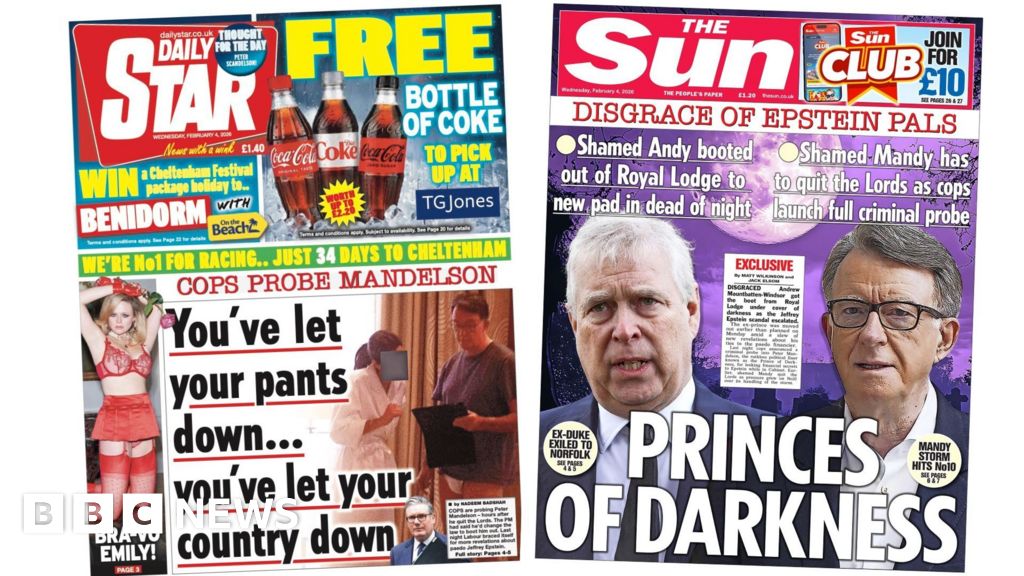
Newspaper headlines: 'Cops probe Mandelson' and 'Princes of Darkness'Image Credit: BBC News
Key Points
- •LONDON – A simmering political scandal has erupted into a full-blown confrontation, with former Prime Minister Gordon Brown taking the extraordinary step of referring information about his former cabinet minister, Lord Peter Mandelson, to the police. The move, centered on leaked emails reportedly detailing Lord Mandelson's communications with the late convicted sex offender Jeffrey Epstein, directly challenges the UK's most senior civil servant and places immense pressure on the current government.
- •Police Referral: Mr. Brown has confirmed he passed what his office terms "relevant" information to the Metropolitan Police. This forces the police to assess the material and decide whether a formal criminal investigation into Lord Mandelson is warranted.
- •Questioning the Cabinet Office: In a highly unusual move for a former Prime Minister, Mr. Brown has challenged Simon Case, the Cabinet Secretary and head of the Civil Service. He has demanded to know why Mr. Case did not launch an inquiry in the autumn of last year when the email leaks were first reported.
- •Government Under Pressure: The intervention drags the current administration into the affair. By questioning Mr. Case, Mr. Brown is implicitly asking why No. 10 and the Cabinet Office did not deem the allegations serious enough for an internal investigation, raising questions about procedural integrity.
- •Clarifying Intent: Allies of the former Prime Minister have been quick to manage the political fallout. Sources close to Mr. Brown told the BBC that he was "in no ways... seeking to accuse No10 of a cover up." They insist his goal is to ensure due process is followed, not to wage a partisan war against the current government.
Brown Escalates Mandelson Affair, Pressuring Government and Police Over Epstein Emails
LONDON – A simmering political scandal has erupted into a full-blown confrontation, with former Prime Minister Gordon Brown taking the extraordinary step of referring information about his former cabinet minister, Lord Peter Mandelson, to the police. The move, centered on leaked emails reportedly detailing Lord Mandelson's communications with the late convicted sex offender Jeffrey Epstein, directly challenges the UK's most senior civil servant and places immense pressure on the current government.
The dramatic escalation was splashed across newspaper front pages, with the Daily Telegraph leading with the headline, "Cops probe Mandelson," signaling a potentially serious new phase in the affair. Mr. Brown's intervention transforms the controversy from a media story into a matter for law enforcement and a test of government accountability.
At the heart of the issue are allegations surrounding Lord Mandelson's contact with Epstein. Mr. Brown, who was Prime Minister when Lord Mandelson served as his Business Secretary, has now publicly questioned why the government machine failed to act when these allegations first surfaced last year.
The Core of the Controversy
Mr. Brown's actions have brought several critical elements of the scandal into sharp focus. He has not only engaged law enforcement but has also directly questioned the inaction of the civil service leadership, creating a multi-front political battle.
-
Police Referral: Mr. Brown has confirmed he passed what his office terms "relevant" information to the Metropolitan Police. This forces the police to assess the material and decide whether a formal criminal investigation into Lord Mandelson is warranted.
-
Questioning the Cabinet Office: In a highly unusual move for a former Prime Minister, Mr. Brown has challenged Simon Case, the Cabinet Secretary and head of the Civil Service. He has demanded to know why Mr. Case did not launch an inquiry in the autumn of last year when the email leaks were first reported.
-
Government Under Pressure: The intervention drags the current administration into the affair. By questioning Mr. Case, Mr. Brown is implicitly asking why No. 10 and the Cabinet Office did not deem the allegations serious enough for an internal investigation, raising questions about procedural integrity.
-
Clarifying Intent: Allies of the former Prime Minister have been quick to manage the political fallout. Sources close to Mr. Brown told the BBC that he was "in no ways... seeking to accuse No10 of a cover up." They insist his goal is to ensure due process is followed, not to wage a partisan war against the current government.
Context: A History of Rivalry and Scandal
To understand the weight of Mr. Brown's intervention, one must consider the complex history between the key players and the toxic nature of any association with Jeffrey Epstein.
The "Princes of Darkness"
The relationship between Gordon Brown and Peter Mandelson is one of the most chronicled and turbulent in modern British politics. Both were central architects of the "New Labour" project that brought the party to power in 1997.
However, their alliance was famously fraught with rivalry and mistrust, leading to their depiction as the "princes of darkness" battling for influence. Lord Mandelson was forced to resign from the cabinet twice under Tony Blair before being brought back to government a third time by Mr. Brown in a surprise 2008 reshuffle. This history adds a layer of personal and political drama to Mr. Brown's decision to act, making it far more than a simple matter of civic duty.
The Epstein Shadow
Any connection to Jeffrey Epstein is politically radioactive. The American financier was a convicted sex offender who cultivated a global network of powerful and famous individuals before his death in a Manhattan jail cell in 2019 while awaiting trial on federal sex trafficking charges. Allegations surrounding his activities have ended careers and tarnished reputations worldwide, making the leaked emails a matter of profound public interest and political danger.
The Role of the Cabinet Secretary
Mr. Brown's decision to name Simon Case is a strategic and pointed move. As the Cabinet Secretary, Mr. Case is the ultimate authority in the British Civil Service, responsible for upholding the standards of conduct for ministers and officials.
The Cabinet Office has the power to investigate alleged breaches of the ministerial code, even concerning the conduct of former ministers. Mr. Brown's public questioning is a direct challenge to whether Mr. Case's office fulfilled its duty to scrutinise the allegations against Lord Mandelson when they first became public knowledge. This puts the impartiality and effectiveness of the civil service itself under a microscope.
Implications and What Comes Next
The situation is now developing rapidly, with significant potential consequences for all involved.
-
For the Government: Rishi Sunak's administration is now in the difficult position of having to explain the Cabinet Office's previous inaction. They face pressure to demonstrate transparency and will likely need to issue a formal response regarding the handling of the initial allegations.
-
For the Metropolitan Police: The police are now tasked with reviewing the information from a former Prime Minister. A decision on whether to proceed with a formal investigation will be highly scrutinised. The high-profile nature of the individuals involved guarantees intense media and public attention.
-
For Lord Mandelson: The peer and former European Commissioner faces renewed and more serious scrutiny. A potential police investigation casts a dark cloud over his legacy and his current role as a consultant and public figure. He will be under pressure to provide a full account of his relationship with Epstein.
-
For the Labour Party: While the events pre-date the current leadership, the affair is an unwelcome distraction for Keir Starmer. It resurrects the ghosts of New Labour's internal feuds and links a seminal party figure to the toxic Epstein scandal, providing political ammunition for opponents.
The coming days will be critical. The response from the Cabinet Office and the Metropolitan Police will determine the immediate trajectory of this story, which has been reignited by one of the biggest names in British politics and now threatens to burn through Westminster.
Source: BBC News
Related Articles
Nationwide Protests Against ICE Enforcement Erupt in U.S.
Thousands are protesting ICE after the DOJ declined to investigate a fatal agent-involved shooting in Minneapolis, fueling a national movement and public anger.
Venezuela Amnesty Bill Could Free Political Prisoners
Learn about Venezuela's proposed amnesty bill to release political prisoners. The move could signal a major political shift and affect future economic sanctions
Pokémon Cancels Yasukuni Shrine Event After Backlash
The Pokémon Company has canceled an event at Tokyo's controversial Yasukuni Shrine after facing international backlash from China and South Korea.
US to Lose Measles Elimination Status: What It Means
The U.S. is poised to lose its measles elimination status due to escalating outbreaks. Learn what this downgrade means for public health and the economy.