Budget 2026: India Boosts Local Industry Amid Tensions
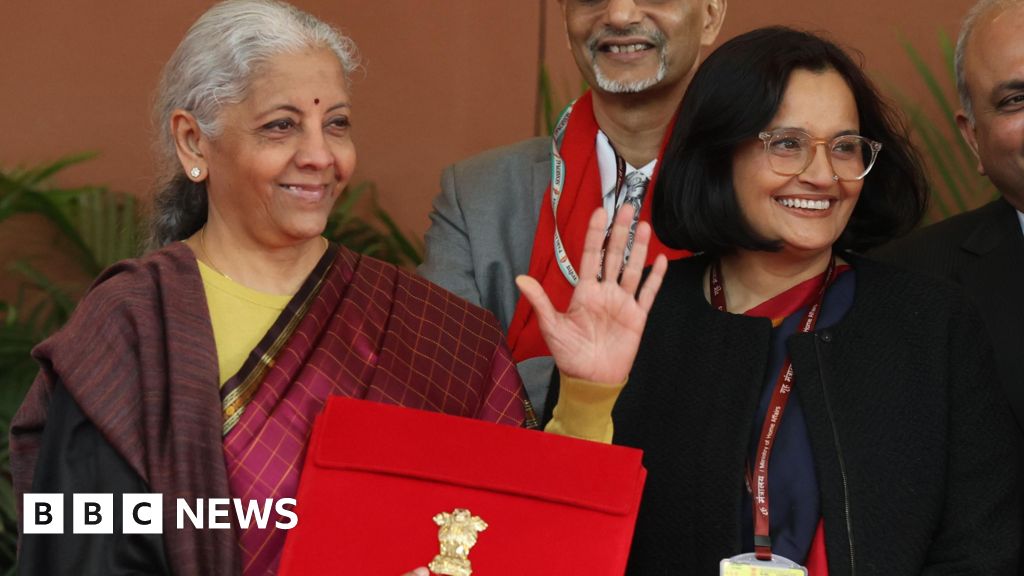
Budget 2026: India pushes local industry as global tensions riseImage Credit: BBC Business (Finance)
Key Points
- •NEW DELHI – In a clear signal of its strategic priorities, the Indian government has unveiled a budget for 2026 that doubles down on domestic manufacturing and infrastructure, choosing long-term industrial policy over short-term consumer stimulus. Finance Minister Nirmala Sitharaman’s address outlined a vision for a self-reliant India, or 'Atmanirbhar Bharat', designed to insulate the nation's economy from rising geopolitical volatility and fractured global supply chains.
- •Manufacturing Boost: The Production-Linked Incentive (PLI) scheme, a cornerstone of India's industrial policy, has received a substantial funding increase. The scheme, which rewards companies for incremental sales of domestically manufactured goods, will be expanded to include new strategic sectors like semiconductor fabrication, advanced chemistry cell batteries, and high-end medical devices.
- •Infrastructure Overhaul: A record capital expenditure outlay has been announced for infrastructure. This includes accelerated development of national highways, dedicated freight corridors for railways, and the modernisation of ports and airports. The goal is to reduce logistical bottlenecks that have historically hampered India's manufacturing competitiveness.
- •Defence Modernisation: In a direct response to regional security concerns, the defence budget has been increased, with a significant portion earmarked for domestic procurement. The policy aims to foster a local defence-industrial complex, reducing reliance on foreign military hardware and promoting exports of Indian-made equipment.
- •Green Energy Transition: The budget commits heavily to India's climate goals, framing the green transition as a matter of energy security. Funding has been allocated for solar and wind energy projects, green hydrogen production, and building out the electric vehicle (EV) charging infrastructure, aiming to decrease dependence on volatile global energy markets.
Budget 2026: India pushes local industry as global tensions rise
NEW DELHI – In a clear signal of its strategic priorities, the Indian government has unveiled a budget for 2026 that doubles down on domestic manufacturing and infrastructure, choosing long-term industrial policy over short-term consumer stimulus. Finance Minister Nirmala Sitharaman’s address outlined a vision for a self-reliant India, or 'Atmanirbhar Bharat', designed to insulate the nation's economy from rising geopolitical volatility and fractured global supply chains.
The budget prioritises capital expenditure and targeted incentives for key sectors, a move aimed at positioning India as a global manufacturing hub. This strategic pivot comes at the expense of populist measures, most notably the absence of any new direct tax cuts for the country's vast middle class.
The Big Picture: A Strategy for Self-Reliance
Against a backdrop of ongoing trade disputes, regional conflicts, and a global push to de-risk supply chains from China, Budget 2026 is less a financial statement and more a declaration of economic intent. The government's focus is squarely on building domestic capacity to reduce import dependency and boost exports.
Analysts note this approach continues the government's long-term policy trajectory, significantly scaling up initiatives designed to attract investment and build a robust industrial ecosystem. The core message is one of fiscal prudence directed towards strategic, long-term growth rather than immediate, consumption-driven demand.
Core Pillars of the Budget
The government has allocated significant capital towards several key areas identified as critical for national security and economic sovereignty.
-
Manufacturing Boost: The Production-Linked Incentive (PLI) scheme, a cornerstone of India's industrial policy, has received a substantial funding increase. The scheme, which rewards companies for incremental sales of domestically manufactured goods, will be expanded to include new strategic sectors like semiconductor fabrication, advanced chemistry cell batteries, and high-end medical devices.
-
Infrastructure Overhaul: A record capital expenditure outlay has been announced for infrastructure. This includes accelerated development of national highways, dedicated freight corridors for railways, and the modernisation of ports and airports. The goal is to reduce logistical bottlenecks that have historically hampered India's manufacturing competitiveness.
-
Defence Modernisation: In a direct response to regional security concerns, the defence budget has been increased, with a significant portion earmarked for domestic procurement. The policy aims to foster a local defence-industrial complex, reducing reliance on foreign military hardware and promoting exports of Indian-made equipment.
-
Green Energy Transition: The budget commits heavily to India's climate goals, framing the green transition as a matter of energy security. Funding has been allocated for solar and wind energy projects, green hydrogen production, and building out the electric vehicle (EV) charging infrastructure, aiming to decrease dependence on volatile global energy markets.
A Disciplined Fiscal Stance
A key talking point from the budget is the decision to hold firm on personal income tax rates. While this has disappointed some salaried individuals, the government has justified the move by pointing to prior relief and the need for fiscal consolidation.
The administration is choosing to invest its fiscal resources into capital-intensive projects that promise a higher long-term economic multiplier effect, rather than putting more money directly into consumers' pockets, which could risk stoking inflation.
-
Taxation Stability: No new personal income tax cuts were announced. This was widely anticipated, as Prime Minister Narendra Modi's government had significantly raised the income tax exemption limits in the previous budget cycle. Earnings up to 1.2 million rupees (approx. $14,400), excluding special income like capital gains, are already effectively tax-free for those in the new tax regime.
-
GST Rationalisation: The Goods and Services Tax (GST) council has already undertaken significant rationalisation exercises in recent years. This has streamlined the indirect tax system but also left little immediate fiscal room for broad-based rate cuts without impacting government revenues.
Sector-Specific Impacts
The budget's targeted approach creates clear winners and losers across the corporate landscape.
Sectors with a Positive Outlook:
- Infrastructure & Capital Goods: Companies in construction, cement, steel, and heavy machinery are poised to benefit directly from the massive government spending on infrastructure projects.
- Defence: Domestic defence manufacturers will see a surge in orders as the government pushes its 'Make in India' policy in the sector.
- Renewable Energy: Firms involved in solar, wind, and green hydrogen will benefit from new incentives and a supportive policy environment.
- Electronics & Semiconductors: The expanded PLI schemes will continue to attract global and domestic players to set up manufacturing facilities in India.
Sectors with a Mixed Outlook:
- Consumer Goods & Automotive: The lack of tax cuts means no immediate boost to disposable income, which could temper demand for fast-moving consumer goods (FMCG) and passenger vehicles. However, the long-term wealth effect of sustained economic growth could provide a tailwind.
The Road Ahead: Execution is Key
While the budget lays out an ambitious and strategically coherent vision, its success hinges entirely on effective and timely execution. The government's ability to deploy capital efficiently, remove bureaucratic hurdles, and attract sustained private investment will be the ultimate test.
International investors and credit rating agencies will be closely monitoring India's fiscal deficit trajectory and its progress in implementing these large-scale projects. The budget is a calculated gamble: it bets that foundational investments in industrial capacity today will yield a more resilient, competitive, and prosperous economy tomorrow, capable of navigating an increasingly uncertain world. The focus now shifts from pronouncement to performance.
Source: BBC Business (Finance)
Related Articles
Nationwide Protests Against ICE Enforcement Erupt in U.S.
Thousands are protesting ICE after the DOJ declined to investigate a fatal agent-involved shooting in Minneapolis, fueling a national movement and public anger.
Venezuela Amnesty Bill Could Free Political Prisoners
Learn about Venezuela's proposed amnesty bill to release political prisoners. The move could signal a major political shift and affect future economic sanctions
Pokémon Cancels Yasukuni Shrine Event After Backlash
The Pokémon Company has canceled an event at Tokyo's controversial Yasukuni Shrine after facing international backlash from China and South Korea.
US to Lose Measles Elimination Status: What It Means
The U.S. is poised to lose its measles elimination status due to escalating outbreaks. Learn what this downgrade means for public health and the economy.