Canada's Auto Plan: A Pivot from US Protectionism
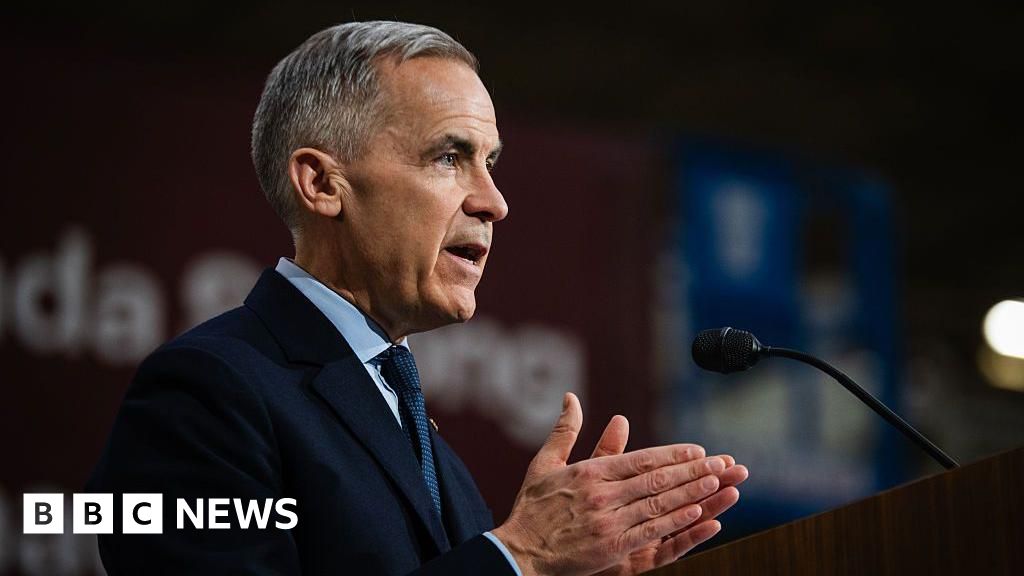
Canada's auto industry plan signals latest pivot away from USImage Credit: BBC Business (Finance)
Key Points
- •SOURCE: BBC Business (Finance)
- •The US Pivot: Carney stated that Washington's primary focus has moved from tariff removal and open markets to onshoring supply chains and favouring domestic production through powerful legislative tools like the IRA. This, he implied, makes the US a competitor as much as a partner.
- •Canada's Imperative: In this new environment, Canada cannot simply wait for trade disputes to be resolved. It must act decisively to secure its own industrial future by creating an investment climate that can rival the incentives offered in the US.
- •A New Industrial Blueprint: The recent wave of EV and battery plant investments, he suggested, is the first chapter of this new blueprint. By anchoring the entire EV supply chain—from mineral extraction to battery manufacturing to vehicle assembly—on Canadian soil, the country can insulate itself from the whims of US trade policy.
- •Key Sticking Points:
Canada's auto industry plan signals latest pivot away from US
SOURCE: BBC Business (Finance)
In a stark message delivered from the floor of a Honda assembly plant, one of Canada's most influential financial figures has declared that the foundational principles of North American free trade have been abandoned by Washington, forcing Ottawa to forge a new, more independent industrial path. Mark Carney, the former governor of both the Bank of Canada and the Bank of England, stated Thursday that the United States' shift towards protectionism means Canada can no longer rely on the decades-old playbook of continental economic integration, particularly as the continent's signature trade deal faces a critical review.
The comments, made as the federal government champions a multi-billion dollar investment in electric vehicle (EV) manufacturing, land with significant weight. They frame Canada's aggressive new industrial strategy not merely as an economic development plan, but as a deliberate geopolitical pivot—a calculated response to an increasingly unreliable partner to the south.
The Big Picture
The United States-Mexico-Canada Agreement (USMCA), the successor to NAFTA, is scheduled for a mandatory joint review in 2026. This review will determine if the deal is extended. However, Carney, now the chair of Brookfield Asset Management, argued that the spirit of the agreement is already under threat.
"The agreement's original purpose, of removing tariffs across North America, was no longer the current objective of the US administration," Carney said at the event in the Toronto area. "Their approach has changed."
This change, driven by "Buy American" provisions and massive domestic subsidies like the Inflation Reduction Act (IRA), has fundamentally altered the competitive landscape. For Canada's deeply integrated auto sector—the crown jewel of its manufacturing base—the choice is to either be sidelined by American protectionism or to build a parallel ecosystem that can compete on a global scale. Ottawa is choosing the latter.
Why This Matters: The Auto Sector Nexus
The North American auto industry is the textbook example of integrated cross-border supply chains. Parts and vehicles can cross the US-Canada border multiple times before a final product rolls off the assembly line. This seamless integration has been the bedrock of the trade relationship for over 50 years.
A strategic decoupling, even a partial one, represents a seismic shift. Canada's new strategy is to leverage its own strengths—critical minerals, clean energy, and public funds—to become a self-sufficient powerhouse in the next generation of automaking: electric vehicles.
Carney's Diagnosis
Speaking to an audience of auto workers and executives, Carney outlined the new reality facing Canadian industry. His assessment was a clear-eyed look at the end of a free-trade era.
-
The US Pivot: Carney stated that Washington's primary focus has moved from tariff removal and open markets to onshoring supply chains and favouring domestic production through powerful legislative tools like the IRA. This, he implied, makes the US a competitor as much as a partner.
-
Canada's Imperative: In this new environment, Canada cannot simply wait for trade disputes to be resolved. It must act decisively to secure its own industrial future by creating an investment climate that can rival the incentives offered in the US.
-
A New Industrial Blueprint: The recent wave of EV and battery plant investments, he suggested, is the first chapter of this new blueprint. By anchoring the entire EV supply chain—from mineral extraction to battery manufacturing to vehicle assembly—on Canadian soil, the country can insulate itself from the whims of US trade policy.
The USMCA Under a Microscope
The 2026 review of the USMCA looms over this entire discussion. It is not an automatic renewal; it is a high-stakes negotiation where any of the three countries can potentially trigger the deal's termination. This "sunset clause" creates significant uncertainty for businesses making long-term investment decisions.
The friction points are already well-established and go beyond the auto sector.
- Key Sticking Points:
- Rules of Origin: The US has aggressively challenged Canada and Mexico's interpretation of how to calculate the regional content of vehicles, a critical part of the agreement designed to favour North American production.
- Dairy and Agriculture: Long-standing disputes over Canada's supply-managed dairy sector continue to be a source of tension, with the US arguing the system unfairly limits American exports.
- Energy Policy: The US has also raised concerns about Mexico's nationalist energy policies, which it argues discriminate against American firms. These trilateral tensions complicate the Canada-US dynamic.
Canada's Proactive Strategy: Building an EV Haven
Faced with these headwinds, the Canadian government, at both the federal and provincial levels, has unleashed an unprecedented firehose of public money to attract and secure EV-related investments. The goal is to create an ecosystem so compelling that global automakers choose Canada, regardless of US incentives.
This strategy was on full display at the Honda plant where Carney spoke, which is itself part of a C$15 billion plan to build a comprehensive EV supply chain in Ontario, including a new battery plant. It follows similar mega-investments from Volkswagen in St. Thomas, Ontario, and Stellantis in Windsor.
- Canada's Playbook:
- Matching Subsidies: Ottawa has committed to providing production subsidies for battery manufacturing that directly mirror the generous tax credits available under the US Inflation Reduction Act, neutralizing America's key advantage.
- Critical Minerals: Canada is branding itself as the secure, ethical, and reliable source for critical minerals like lithium, nickel, and cobalt—the essential ingredients for EV batteries. This is a direct appeal to manufacturers wary of relying on Chinese supply chains.
- Trade Diversification: Beyond the US, Canada is actively promoting its trade links with Europe (CETA) and the Asia-Pacific (CPTPP) as alternative, stable markets for its goods.
The Road Ahead
Carney's remarks serve as an official acknowledgement of a strategy that has been unfolding for months. Canada is no longer just defending its access to the US market; it is building an industrial base that can operate with a greater degree of independence.
The ultimate test will come in 2026. The USMCA review, combined with the political uncertainty of a US election year, creates a volatile environment. The risk is that an aggressive Canadian industrial policy could be viewed in Washington as unfair competition, potentially leading to retaliatory measures.
For now, Ottawa is betting that by becoming an indispensable leader in the green supply chain, it can secure its economic future—with or without the full-throated cooperation of its oldest and most important ally. The era of simply managing the US relationship is over; the era of strategically building around it has begun.
Source: BBC Business (Finance)
Related Articles
Nationwide Protests Against ICE Enforcement Erupt in U.S.
Thousands are protesting ICE after the DOJ declined to investigate a fatal agent-involved shooting in Minneapolis, fueling a national movement and public anger.
Venezuela Amnesty Bill Could Free Political Prisoners
Learn about Venezuela's proposed amnesty bill to release political prisoners. The move could signal a major political shift and affect future economic sanctions
Pokémon Cancels Yasukuni Shrine Event After Backlash
The Pokémon Company has canceled an event at Tokyo's controversial Yasukuni Shrine after facing international backlash from China and South Korea.
US to Lose Measles Elimination Status: What It Means
The U.S. is poised to lose its measles elimination status due to escalating outbreaks. Learn what this downgrade means for public health and the economy.