10 Best David Attenborough Documentaries & How to Watch
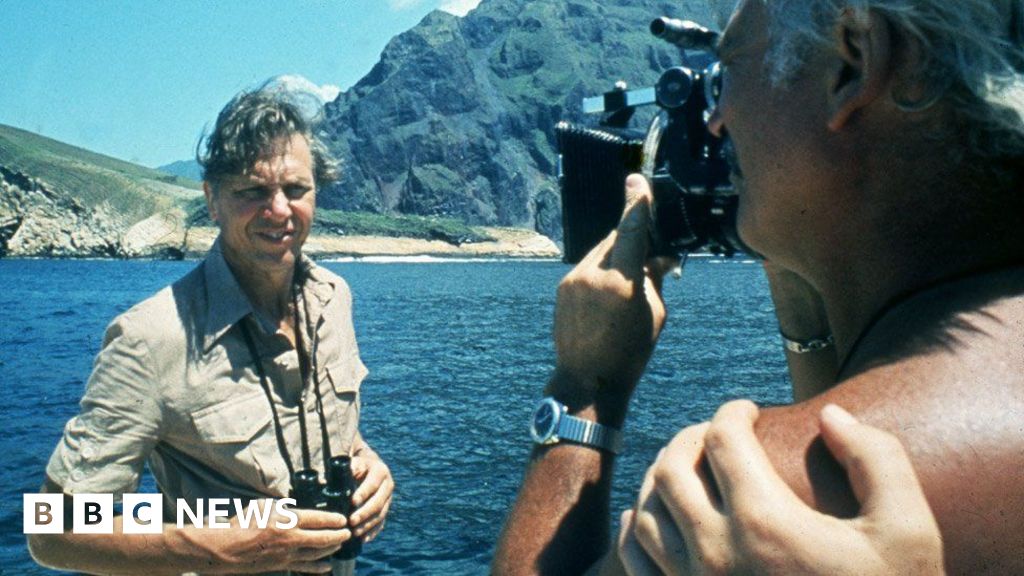
ten of David Attenborough's best documentaries and how to watch themImage Credit: BBC News
Key Points
- •Why it matters: It was a production of unprecedented scope, taking three years to film. Its famous sequence of Attenborough with mountain gorillas in Rwanda became an iconic moment in television history and cemented his role as a presenter, not just a narrator.
- •How to watch: Available on BBC iPlayer in the UK. International availability varies, often appearing on services like CuriosityStream or for digital purchase.
- •Why it matters: It was one of the most expensive nature documentaries ever made at the time and yielded an enormous return on investment through global sales and audience ratings. It revealed the deep sea as a viable and compelling subject for blockbuster television.
- •How to watch: Available on BBC iPlayer and Discovery+.
- •Why it matters: Its stunning visual quality drove sales of HD-ready televisions, making it a "system seller" for new hardware. It cost over £16 million and was sold to 130 countries, proving the immense global appetite for premium factual content.
Ten of David Attenborough's best documentaries and how to watch them
Sir David Attenborough is more than a globally revered naturalist and broadcaster; in the modern media landscape, he is a blue-chip asset. His voice and brand drive billions in production value and are a powerful weapon in the fierce battle for streaming subscriptions. As platforms like Netflix and Apple TV+ invest hundreds of millions to secure his exclusive content, the "Attenborough effect" has become a key indicator of a service's commitment to premium, high-impact programming.
This list details ten of his most significant works, charting a course from the foundational epics of public broadcasting to the nine-figure streaming blockbusters that define the market today. It serves not only as a viewing guide but as a map of the evolving, high-stakes business of natural history filmmaking.
The Big Picture: From Public Service to Streaming Wars
For decades, the BBC was the undisputed global leader in landmark natural history, with Attenborough as its singular voice. These series were national events in the UK and licensed for handsome returns globally.
The paradigm shifted with the rise of streaming. Netflix, in a bid to establish its own prestige brand, lured key members of the BBC's Natural History Unit, including producer Alastair Fothergill, to create Our Planet. The reported £10 million-per-episode budget signaled a new era. Apple TV+ followed suit, funding the technologically ambitious Prehistoric Planet. The result is a fragmented market where Attenborough's work is spread across multiple subscription services, each leveraging his credibility to attract and retain customers.
The Definitive List: A Guide to a Global Phenomenon
Here are ten essential documentaries that represent key milestones in Attenborough's career and the industry he helped build.
1. Life on Earth (1979)
This is the foundational text. The 13-part series was revolutionary in its scale and ambition, establishing the template for epic, continent-spanning natural history programming that would dominate for the next 40 years.
- Why it matters: It was a production of unprecedented scope, taking three years to film. Its famous sequence of Attenborough with mountain gorillas in Rwanda became an iconic moment in television history and cemented his role as a presenter, not just a narrator.
- How to watch: Available on BBC iPlayer in the UK. International availability varies, often appearing on services like CuriosityStream or for digital purchase.
2. The Blue Planet (2001)
The series that took viewers into a world that covers two-thirds of our planet but was largely unknown. It set new benchmarks for underwater cinematography and became a global sensation.
- Why it matters: It was one of the most expensive nature documentaries ever made at the time and yielded an enormous return on investment through global sales and audience ratings. It revealed the deep sea as a viable and compelling subject for blockbuster television.
- How to watch: Available on BBC iPlayer and Discovery+.
3. Planet Earth (2006)
The first natural history series to be filmed entirely in high definition (HD), Planet Earth was a technological and commercial watershed moment. It was co-produced with the Discovery Channel and Japan's NHK, demonstrating the power of international financing.
- Why it matters: Its stunning visual quality drove sales of HD-ready televisions, making it a "system seller" for new hardware. It cost over £16 million and was sold to 130 countries, proving the immense global appetite for premium factual content.
- How to watch: Available on BBC iPlayer and Discovery+.
4. Frozen Planet (2011)
Focusing on the Arctic and Antarctic, this series was both a visual spectacle and a turning point in the narrative tone of Attenborough's work, placing the stark reality of climate change at the forefront.
- Why it matters: The final episode, dedicated entirely to the impact of rising temperatures, sparked widespread public debate. It represented a strategic shift from pure observation to explicit environmental advocacy.
- How to watch: Available on BBC iPlayer and Discovery+.
5. Planet Earth II (2016)
Filmed a decade after the original, this sequel leveraged 4K resolution, advanced drone technology, and sophisticated camera stabilization to create a viewing experience of unparalleled intimacy and dynamism.
- Why it matters: It became the most-watched nature documentary in UK history and a global phenomenon. The "snakes vs. iguana" chase sequence became a viral internet sensation, demonstrating the power of this content in the social media age.
- How to watch: Available on BBC iPlayer and Discovery+.
6. Blue Planet II (2017)
This series had a seismic cultural and political impact. Its vivid depiction of the plastics crisis in our oceans galvanized a global movement, leading to policy changes and corporate pledges around the world.
- Why it matters: Termed the "Blue Planet effect," its influence demonstrated a direct causal link between a television program and tangible environmental action. For broadcasters and platforms, it proved that purpose-driven content could also be a massive commercial success.
- How to watch: Available on BBC iPlayer and Discovery+.
7. Our Planet (2019)
Netflix's first major foray into the Attenborough-verse. Produced by the team behind Planet Earth and Blue Planet, this series was a clear statement of intent from the streaming giant.
- Why it matters: With a colossal budget and a simultaneous global launch in 190 countries, it disrupted the BBC's dominance. The series integrated a strong conservation message throughout each episode, not just at the end. In his review, then-BBC arts editor Will Gompertz wrote that Our Planet "gives us some of the most dazzling images you are ever likely to view on TV". He concluded: "It is the voice of a man who knows he won't be around forever but hopes passionately that Our Planet will."
- How to watch: Exclusive to Netflix.
8. David Attenborough: A Life on Our Planet (2020)
Pitched as his "witness statement," this feature-length documentary is Attenborough's most personal and urgent project. It blends his life story with a stark depiction of planetary decline and a hopeful vision for the future.
- Why it matters: As another Netflix exclusive, it solidified the platform's relationship with Attenborough. Its narrative structure—part-biography, part-manifesto—created a powerful emotional connection and served as a capstone to his career's work.
- How to watch: Exclusive to Netflix.
9. The Green Planet (2022)
Returning to the BBC, this series used pioneering robotics and time-lapse technology to reveal the dramatic and often hidden life of plants in a way never seen before.
- Why it matters: It showcased the BBC's continued commitment to technological innovation in the face of streaming competition. By making plants the active, compelling protagonists, it pushed the boundaries of natural history storytelling.
- How to watch: Available on BBC iPlayer and PBS (in the US).
10. Prehistoric Planet (2022)
Apple TV+'s blockbuster entry, this series used cutting-edge CGI from the team behind The Lion King and The Jungle Book to resurrect dinosaurs with stunning scientific accuracy, all narrated by Attenborough.
- Why it matters: It represents the convergence of Hollywood visual effects and factual storytelling. For Apple, it was a major investment to acquire a tentpole franchise that could compete directly with Netflix and the BBC for subscribers who value premium, educational content.
- How to watch: Exclusive to Apple TV+.
The Bottom Line
The distribution of David Attenborough's work across a patchwork of linear broadcasters and competing streaming services tells the story of the modern media business. His name is a guarantee of quality and a powerful driver of subscriber growth, making him a central figure in the multi-billion dollar content arms race.
For consumers, accessing his full catalogue now requires multiple subscriptions. For the industry, the key implication is clear: premium, purpose-driven factual content is no longer a niche genre but a pillar of platform strategy. The next front in the streaming war will be fought not just with scripted dramas, but in the jungles, oceans, and prehistoric landscapes that Attenborough brought to the world.
Source: BBC News
Related Articles
Nationwide Protests Against ICE Enforcement Erupt in U.S.
Thousands are protesting ICE after the DOJ declined to investigate a fatal agent-involved shooting in Minneapolis, fueling a national movement and public anger.
Venezuela Amnesty Bill Could Free Political Prisoners
Learn about Venezuela's proposed amnesty bill to release political prisoners. The move could signal a major political shift and affect future economic sanctions
Pokémon Cancels Yasukuni Shrine Event After Backlash
The Pokémon Company has canceled an event at Tokyo's controversial Yasukuni Shrine after facing international backlash from China and South Korea.
US to Lose Measles Elimination Status: What It Means
The U.S. is poised to lose its measles elimination status due to escalating outbreaks. Learn what this downgrade means for public health and the economy.