D.C. IndyCar Race Sparks Fears for Museum Art Safety
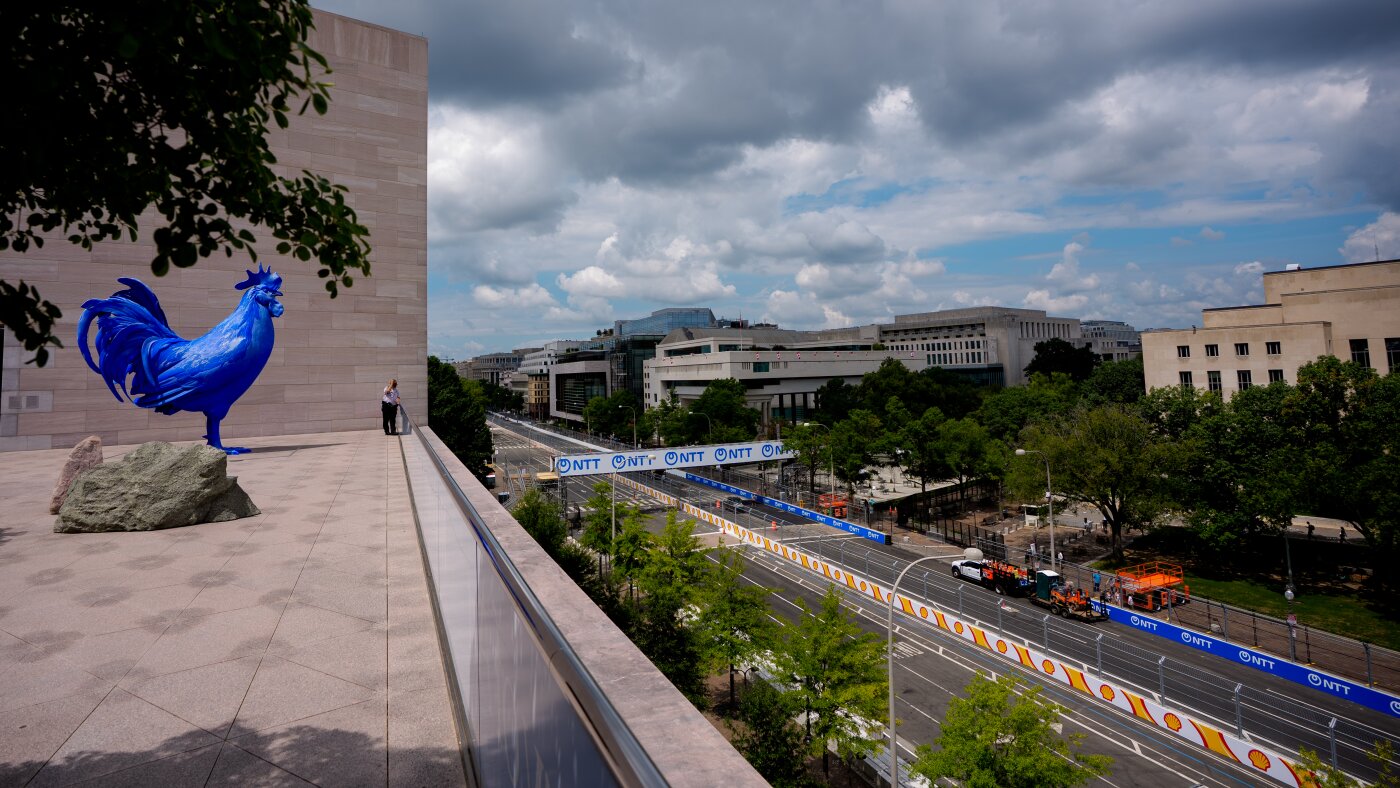
D.C.'s IndyCar race will zoom past museums. Some worry it could harm the art insideImage Credit: NPR Politics
Key Points
- •D.C.'s IndyCar race will zoom past museums. Some worry it could harm the art inside
- •The Race: The main event on Sunday afternoon will see IndyCar drivers compete in a 250-mile, 147-lap race.
- •The Circuit: A temporary 1.7-mile track has been constructed directly on the National Mall, navigating past some of the country's most significant cultural institutions.
- •The Stakes: The two-day affair, including practices and qualifiers, is a high-profile collaboration between the White House and IndyCar, owned by Penske Entertainment Corp., designed as a major public celebration.
- •Primary Concern: The primary risk identified is damage from ground-borne vibrations. Experts worry that the sustained, low-frequency vibrations generated by a fleet of IndyCars could potentially damage delicate paintings, sculptures, and ancient documents.
D.C.'s IndyCar race will zoom past museums. Some worry it could harm the art inside
Washington, D.C. — This weekend, the familiar hum of the nation's capital will be replaced by the high-octane roar of IndyCar engines as the Freedom 250 Grand Prix transforms the iconic National Mall into a high-speed racetrack. While organizers celebrate the event as a landmark tribute for the country's milestone birthday, a significant debate has emerged, pitting the spectacle of motorsport against the solemn duty of preserving priceless national treasures housed just feet from the circuit.
The core of the controversy centers on a critical question: Could the intense vibrations from two dozen race cars, reaching speeds of up to 180 mph, cause irreparable harm to the art and historical artifacts within the world-renowned museums lining the course?
The Event: A Spectacle on Hallowed Ground
The Freedom 250 Grand Prix is an unprecedented event for the National Mall, a site more accustomed to presidential inaugurations and national protests than professional auto racing.
- The Race: The main event on Sunday afternoon will see IndyCar drivers compete in a 250-mile, 147-lap race.
- The Circuit: A temporary 1.7-mile track has been constructed directly on the National Mall, navigating past some of the country's most significant cultural institutions.
- The Stakes: The two-day affair, including practices and qualifiers, is a high-profile collaboration between the White House and IndyCar, owned by Penske Entertainment Corp., designed as a major public celebration.
The Risk: Vibrations, Debris, and Unanswered Questions
Along the race route lie the National Gallery of Art, the National Archives Building, the Smithsonian's National Air and Space Museum, and the Hirshhorn Museum. The proximity of these institutions to the high-speed circuit has prompted serious concerns from preservation experts.
- Primary Concern: The primary risk identified is damage from ground-borne vibrations. Experts worry that the sustained, low-frequency vibrations generated by a fleet of IndyCars could potentially damage delicate paintings, sculptures, and ancient documents.
- Institutional Worries: Art historian Mary Okin, assistant director at Living New Deal, has publicly voiced fears that "for several hours of racing cars, we might be risking... the access to these extraordinary works for future generations."
- Broader Hazards: Okin also highlighted secondary risks in a letter to the National Park Service, including potential damage from course construction, fires, and flying debris in the event of a crash—a worst-case scenario with devastating implications in such a dense cultural corridor.
Official Reassurances and Mitigation Efforts
Event organizers and some of the affected institutions state they have taken necessary precautions, citing a history of successful races in other sensitive urban environments.
- The National Gallery of Art: A spokesperson confirmed the gallery conducted an "extensive vibration study." Based on its findings, it has "implemented a set of measures to ensure the safety of our staff, visitors, collection, and facilities," which includes boarding up some of its outdoor sculptures in the adjacent garden.
- The White House: Spokesperson Davis Ingle stated that organizers have "followed all appropriate protocols and been in close coordination with all relevant agencies to ensure this is also the safest and most secure race for all visitors to enjoy."
- IndyCar's Precedent: IndyCar officials point to a strong track record. Spokesperson Alex Damron noted successful events near Detroit's historic Belle Isle Park and past The Dalí Museum in St. Petersburg, Florida.
- A Case Study: Beth Bell, chief marketing officer of The Dalí Museum, confirmed that their facility—engineered to withstand a Category 5 hurricane—has "remained safe and secure throughout the event's history." IndyCar argues this precedent, combined with thorough preparation, suggests no impact is anticipated on the structures in D.C.
The Counterpoint: An Unprecedented Challenge
Despite official assurances, critics maintain that the National Mall is a uniquely fragile environment and that the planning process was dangerously rushed.
- A Unique Venue: Unlike other urban circuits, the National Mall is not a purpose-built entertainment district. Normal speed limits are a placid 25 mph, and a motorsport event of this scale has never been attempted here before.
- Aggressive Timeline: Organizers and critics alike acknowledge the event was planned in less than a year. Preservation advocates argue this compressed timeframe was insufficient to conduct the rigorous environmental and structural impact studies required for such a high-risk undertaking.
- A Specific Landmark: Okin has drawn particular attention to the Wilbur J. Cohen Federal Building, a protected historic site along the route renowned for its architecture and New Deal-era murals. She argues the permitting process, managed by the National Park Service, failed to adequately assess the risks to this and other structures.
- A Wall of Silence: Underscoring these concerns is the lack of detailed responses from key government bodies. The National Archives and Records Administration, the Smithsonian Institution, the Department of the Interior, the Department of Transportation, and the National Park Service did not answer NPR's specific questions regarding safety preparations and the permitting process.
Implications Beyond the Finish Line
The Freedom 250 Grand Prix represents a significant test case for the use of America's most revered public spaces. For some, like Mary Okin, the race is emblematic of a broader trend under the Trump administration that prioritizes spectacle over preservation. She questions the precedent it sets, asking, "If this is how the federal government treats something this significant, what's to stop it from treating the rest of our cultural heritage nationally as poorly?"
As the cars complete their final laps this Sunday, the focus will shift from speed to scrutiny. Post-race inspections of the collections and buildings will be critical in determining whether the preservationists' fears were warranted or the organizers' confidence was justified. The outcome will undoubtedly influence future policy, shaping the debate over how to balance commerce, celebration, and conservation on the nation's most sacred grounds for years to come.
Source: NPR Politics
Related Articles
Nationwide Protests Against ICE Enforcement Erupt in U.S.
Thousands are protesting ICE after the DOJ declined to investigate a fatal agent-involved shooting in Minneapolis, fueling a national movement and public anger.
Venezuela Amnesty Bill Could Free Political Prisoners
Learn about Venezuela's proposed amnesty bill to release political prisoners. The move could signal a major political shift and affect future economic sanctions
Pokémon Cancels Yasukuni Shrine Event After Backlash
The Pokémon Company has canceled an event at Tokyo's controversial Yasukuni Shrine after facing international backlash from China and South Korea.
US to Lose Measles Elimination Status: What It Means
The U.S. is poised to lose its measles elimination status due to escalating outbreaks. Learn what this downgrade means for public health and the economy.