Democrats Prepare for Trump Midterm Election Interference
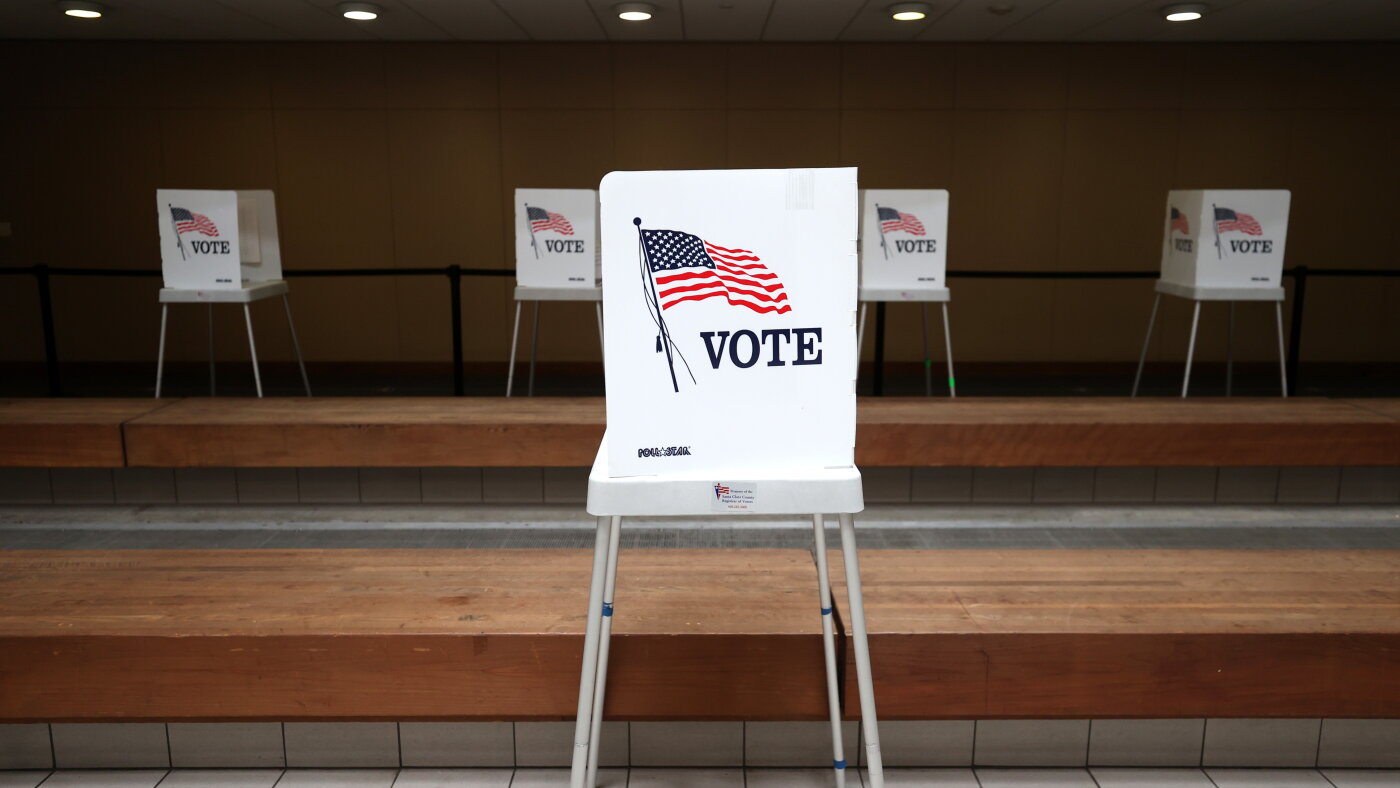
How Democrats in Congress are preparing for Trump midterm election interferenceImage Credit: NPR Politics
Key Points
- •WASHINGTON – As the nation barrels toward the November midterm elections, a new and significant political risk is taking center stage in the capital: the prospect of presidential interference. Congressional Democrats are mobilizing an extensive effort to counter what they describe as unprecedented threats from President Trump to the integrity of the voting process, setting the stage for a high-stakes confrontation over the bedrock of American democracy.
- •The Task Force: Convened by Senate Minority Leader Chuck Schumer, the group includes at least 11 senators, their senior staff, and a wide network of outside legal experts, academics, and nonpartisan good-governance organizations.
- •Stated Mission: According to Schumer, the goal is to "ensure that every vote counts, and every American can participate in our democracy without coercion, intimidation or threats from Donald Trump or anyone else."
- •Scope of Concerns: A working list compiled by Senate staff outlines approximately 100 distinct threats, ranging from disinformation campaigns to direct interference with ballot counting.
- •High-Level Scenarios: Among the most serious concerns being modeled is the possibility of President Trump declaring a national election emergency, a move that could be used to justify extraordinary federal actions.
How Democrats in Congress Are Preparing for Trump Midterm Election Interference
WASHINGTON – As the nation barrels toward the November midterm elections, a new and significant political risk is taking center stage in the capital: the prospect of presidential interference. Congressional Democrats are mobilizing an extensive effort to counter what they describe as unprecedented threats from President Trump to the integrity of the voting process, setting the stage for a high-stakes confrontation over the bedrock of American democracy.
This preemptive strategy, a direct response to the political turbulence of recent years, signals a shift from traditional campaign messaging to a focus on safeguarding the electoral machinery itself. The outcome will not only shape the next Congress but also test the resilience of the nation's democratic institutions.
A New Kind of Midterm Challenge
At the heart of the Democratic preparations is a dedicated task force operating within the Senate. This group is designed to be a rapid-response and strategic planning hub against perceived threats to a fair election.
-
The Task Force: Convened by Senate Minority Leader Chuck Schumer, the group includes at least 11 senators, their senior staff, and a wide network of outside legal experts, academics, and nonpartisan good-governance organizations.
-
Stated Mission: According to Schumer, the goal is to "ensure that every vote counts, and every American can participate in our democracy without coercion, intimidation or threats from Donald Trump or anyone else."
This account is based on interviews with over a dozen lawmakers, aides, and election experts involved in the effort. They reveal a Democratic establishment determined to avoid what many now call a "failure of imagination"—the inability to foresee and prepare for the events that culminated in the January 6 attack on the U.S. Capitol.
The Threat Matrix
Task force staff have moved beyond rhetoric to active scenario planning, identifying and wargaming responses to a wide array of potential disruptions. This proactive stance is a core element of their strategy.
-
Scope of Concerns: A working list compiled by Senate staff outlines approximately 100 distinct threats, ranging from disinformation campaigns to direct interference with ballot counting.
-
High-Level Scenarios: Among the most serious concerns being modeled is the possibility of President Trump declaring a national election emergency, a move that could be used to justify extraordinary federal actions.
-
On-the-Ground Worries: Another key focus is the potential for the administration to deploy federal troops or law enforcement agents to polling locations, a scenario Democrats fear could intimidate voters and disrupt polling operations.
Members have already engaged in challenging preelection maneuvers they attribute to the administration, including efforts to obtain state voter rolls and moves to limit access to mail-in voting.
Trump’s Push for ‘Honest Elections’
The White House and President Trump frame their actions not as interference, but as a necessary campaign to secure the vote against fraud. Since returning to office, the president has made election administration a central focus of his public remarks.
"We have very important elections coming up," Trump stated during a July address from the White House. "We want those elections to be honest."
In that speech, the president called on Congress to pass the SAVE America Act, a legislative package of election law changes.
- Key Provisions of the SAVE America Act: The bill would require individuals to provide proof of U.S. citizenship to register to vote and mandate that all voters present a photo ID before casting a ballot.
Trump has been unequivocal in his rhetoric, arguing, "The only reason you wouldn't do it is you want to cheat because your policies are so bad, and your candidates are so pathetic that you can't get away or can't get elected any other way."
The White House reinforces this position. "Every American should be asking why Democrats are fighting against the SAVE America Act which includes commonsense election integrity measures, like Voter ID, that are strongly supported by the vast majority of Americans," spokeswoman Lauren Bis said in a statement.
The ‘Deceive, Disrupt, Deny’ Playbook
Democrats and their allies argue that the president’s public campaign for "election integrity" is the first step in a deliberate strategy to undermine results he may not like.
Justin Vail, a leader at the cross-ideological group Protect Democracy and a former White House official under President Biden, characterizes this as a three-step playbook.
-
Step 1: Deceive: This involves manufacturing and amplifying claims of voter fraud to sow widespread doubt in the security and reliability of U.S. elections. Critics point to the president’s rhetoric and executive orders as evidence of this step.
-
Step 2: Disrupt: This phase seeks to interfere with the normal state and local management of elections. Vail suggests this could involve using federal power to coerce local officials into adopting policies that restrict voter access.
-
Step 3: Deny: The final step, if the first two are not sufficient, is to outright deny and contest unfavorable election results, leveraging the doubt created in the first phase.
Implications and the Path Forward
Despite the urgency, Democratic lawmakers acknowledge their limitations. With a lack of Republican support for their efforts and few legislative maneuvers available, they cannot simply pass a law to achieve their goals. There is no "protect democracy" button hidden in a Capitol Hill office.
Instead, they are focusing their power on their roles as public messengers and organizers. Their strategy relies on preparing the public, along with state and local election officials, to recognize and resist any attempts at interference, ensuring the legitimacy of the vote count.
The coming weeks represent a critical test. The clash between these two fundamentally opposed narratives—one of defending democracy from an internal threat, the other of securing it from fraud—guarantees a contentious election season. This elevated political risk and focus on the stability of core institutions are being watched closely, as markets and global partners prize predictability and the peaceful, orderly transfer of power. The battle over the November midterms is no longer just about who wins, but about how the winner is determined and whether that process is accepted as legitimate.
Source: NPR Politics
Related Articles
Nationwide Protests Against ICE Enforcement Erupt in U.S.
Thousands are protesting ICE after the DOJ declined to investigate a fatal agent-involved shooting in Minneapolis, fueling a national movement and public anger.
Venezuela Amnesty Bill Could Free Political Prisoners
Learn about Venezuela's proposed amnesty bill to release political prisoners. The move could signal a major political shift and affect future economic sanctions
Pokémon Cancels Yasukuni Shrine Event After Backlash
The Pokémon Company has canceled an event at Tokyo's controversial Yasukuni Shrine after facing international backlash from China and South Korea.
US to Lose Measles Elimination Status: What It Means
The U.S. is poised to lose its measles elimination status due to escalating outbreaks. Learn what this downgrade means for public health and the economy.