Dimon's Davos Threat to UK Over Post-Crisis Rules
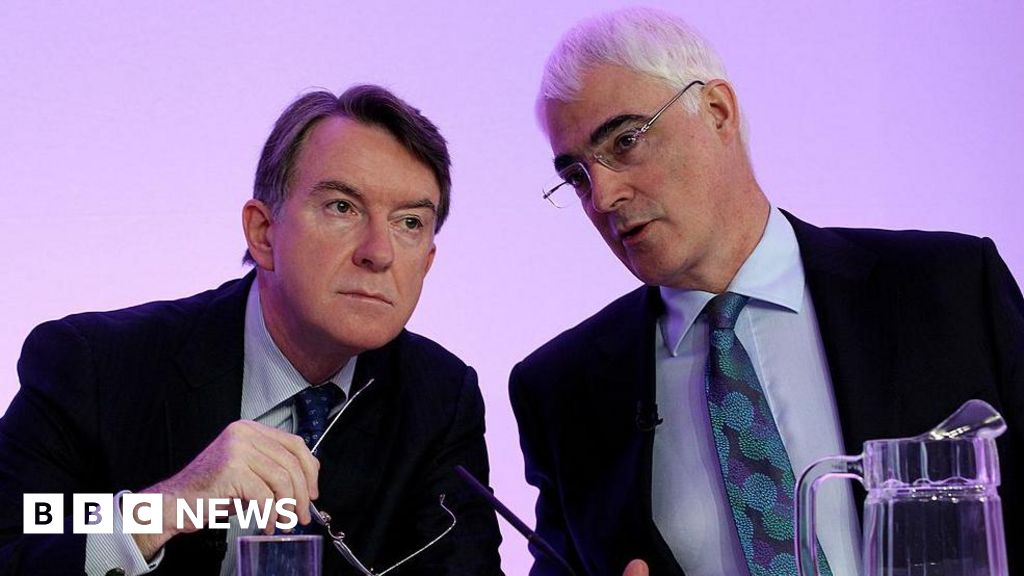
Faisal Islam: Mandelson, Darling and the conversation I can't forgetImage Credit: BBC News
Key Points
- •Sovereign Debt as a Weapon: The JPMorgan chief reportedly questioned the wisdom of his bank's significant holdings of UK government debt (gilts). He is said to have "wondered if that was now such a good idea," a thinly veiled threat that his institution could dump UK bonds or cease being a reliable buyer, a move that would have rattled markets and increased borrowing costs for the British government at a moment of extreme vulnerability.
- •Investment on the Line: Mr. Dimon directly linked his bank's future investment in the UK to the government's policy agenda. He stated that JPMorgan was "thinking of building a new office in London but they had to reconsider that now." This put a tangible, multi-billion-dollar investment and thousands of potential jobs on the line, targeting the heart of London's status as a global financial centre.
- •The Backdrop: The era was defined by taxpayer-funded bank bailouts, soaring national debt, and widespread public outrage over a financial culture that was seen as rewarding the very individuals who precipitated the crisis.
- •The UK's Response: In response, Chancellor Darling introduced a temporary "supertax" on bank bonuses and was spearheading a global push for tougher capital requirements and a new bank levy. These measures were designed to recoup some of the bailout costs and curb the excessive risk-taking that led to the crash.
- •The Banks' Perspective: From the perspective of bank executives like Mr. Dimon, whose own institution had weathered the crisis better than most, these moves were seen as punitive, populist, and a threat to their ability to attract talent and compete globally. They viewed London's actions as a dangerous precedent that could undermine its reputation as a stable, pro-business financial hub.
The Davos Confrontation: How a Heated Exchange Revealed UK's Post-Crisis Fragility
A newly revealed account of a tense confrontation at the height of the post-financial crisis cleanup has cast a stark light on the fragile power dynamics between a sovereign government and the global banking titans it sought to regulate. In a heated exchange, JPMorgan Chase CEO Jamie Dimon threatened to pull back from the UK, directly challenging the nation's top finance and business ministers over new banking regulations, a conversation that underscores the high-stakes battle that played out behind closed doors in the wake of the 2008 meltdown.
The incident, recounted by BBC economics editor Faisal Islam, details a "very, very angry" Mr. Dimon confronting then-Chancellor Alistair Darling and Business Secretary Lord Peter Mandelson. The exchange, which took place on the sidelines of the World Economic Forum in Davos, saw one of the world's most powerful bankers issue a direct ultimatum to a G7 nation grappling with the economic and political fallout of the banking collapse.
The Flashpoint in Davos
At the heart of the confrontation were two explicit threats from Mr. Dimon, reflecting his fury at the UK government's new, tougher stance on the financial sector, which included a one-off 50% tax on bank bonuses.
According to the account, Mr. Dimon's message was unambiguous:
-
Sovereign Debt as a Weapon: The JPMorgan chief reportedly questioned the wisdom of his bank's significant holdings of UK government debt (gilts). He is said to have "wondered if that was now such a good idea," a thinly veiled threat that his institution could dump UK bonds or cease being a reliable buyer, a move that would have rattled markets and increased borrowing costs for the British government at a moment of extreme vulnerability.
-
Investment on the Line: Mr. Dimon directly linked his bank's future investment in the UK to the government's policy agenda. He stated that JPMorgan was "thinking of building a new office in London but they had to reconsider that now." This put a tangible, multi-billion-dollar investment and thousands of potential jobs on the line, targeting the heart of London's status as a global financial centre.
The UK officials reportedly held their ground, with Islam noting he "pointed out that they bought our debt because it was a good business deal for them," not as a favour to the UK. This retort highlights the fundamental tension: governments viewing sovereign debt as a straightforward market transaction, while powerful institutional buyers see it as leverage.
The Context: A World Remade by Crisis
To understand Mr. Dimon's anger, one must revisit the political and economic climate of late 2009 and early 2010. Governments worldwide, including the UK's Labour administration, were under immense public pressure.
-
The Backdrop: The era was defined by taxpayer-funded bank bailouts, soaring national debt, and widespread public outrage over a financial culture that was seen as rewarding the very individuals who precipitated the crisis.
-
The UK's Response: In response, Chancellor Darling introduced a temporary "supertax" on bank bonuses and was spearheading a global push for tougher capital requirements and a new bank levy. These measures were designed to recoup some of the bailout costs and curb the excessive risk-taking that led to the crash.
-
The Banks' Perspective: From the perspective of bank executives like Mr. Dimon, whose own institution had weathered the crisis better than most, these moves were seen as punitive, populist, and a threat to their ability to attract talent and compete globally. They viewed London's actions as a dangerous precedent that could undermine its reputation as a stable, pro-business financial hub.
A Clash of Titans: Government vs. Global Finance
The confrontation was more than just a heated argument; it was a raw display of the power wielded by a new class of global financial institutions. In the post-crisis world, major banks were simultaneously pariahs and indispensable partners.
JPMorgan Chase's scale gave Dimon's threats immense weight. The bank was, and remains, a cornerstone of the UK's financial ecosystem.
-
A Major UK Employer: The bank is one of the largest overseas employers in the UK financial sector, with a workforce numbering in the tens of thousands.
-
Critical Market Infrastructure: JPMorgan is a key player in the City of London, involved in everything from investment banking and asset management to acting as a primary dealer for UK government debt. Its withdrawal or significant scaling back would have sent shockwaves through the market.
This dynamic placed Darling and Mandelson in an incredibly difficult position: they had to project strength and regulatory resolve to a furious domestic audience while simultaneously trying to avoid spooking the very institutions whose confidence was essential for economic recovery.
The Aftermath and Enduring Implications
Ultimately, Mr. Dimon's threat to reconsider a new London office did not materialize in the way he suggested. In 2010, JPMorgan Chase affirmed its commitment to the UK by purchasing a large office building at 25 Bank Street in Canary Wharf—the former Lehman Brothers headquarters—to serve as its new European headquarters.
This outcome suggests the Davos confrontation may have been a high-stakes negotiating tactic—a shot across the bow intended to moderate the government's regulatory zeal.
The implications of this episode, however, resonate to this day:
-
The Regulatory Balance: The incident serves as a permanent reminder of the delicate balance governments must strike between robust financial regulation and maintaining competitiveness to attract global capital.
-
The Power of Capital: It demonstrates the significant leverage that large, mobile financial institutions hold over national governments, even those of major economies. The threat to withhold investment or shun sovereign debt remains a powerful tool in the corporate arsenal.
-
A Precursor to Brexit Debates: This historical flashpoint foreshadowed the decade of debate that would follow over London's relationship with the world, culminating in Brexit. The core question—how to set domestic policy without driving away international business—remains the central challenge for UK policymakers today as they navigate a new economic landscape outside the European Union. The conversation in the Davos snow serves as a crucial lesson in the unforgiving realities of global finance.
Source: BBC News
Related Articles
Nationwide Protests Against ICE Enforcement Erupt in U.S.
Thousands are protesting ICE after the DOJ declined to investigate a fatal agent-involved shooting in Minneapolis, fueling a national movement and public anger.
Venezuela Amnesty Bill Could Free Political Prisoners
Learn about Venezuela's proposed amnesty bill to release political prisoners. The move could signal a major political shift and affect future economic sanctions
Pokémon Cancels Yasukuni Shrine Event After Backlash
The Pokémon Company has canceled an event at Tokyo's controversial Yasukuni Shrine after facing international backlash from China and South Korea.
US to Lose Measles Elimination Status: What It Means
The U.S. is poised to lose its measles elimination status due to escalating outbreaks. Learn what this downgrade means for public health and the economy.