Disney Parks Face Slowdown from Fewer Foreign Visitors
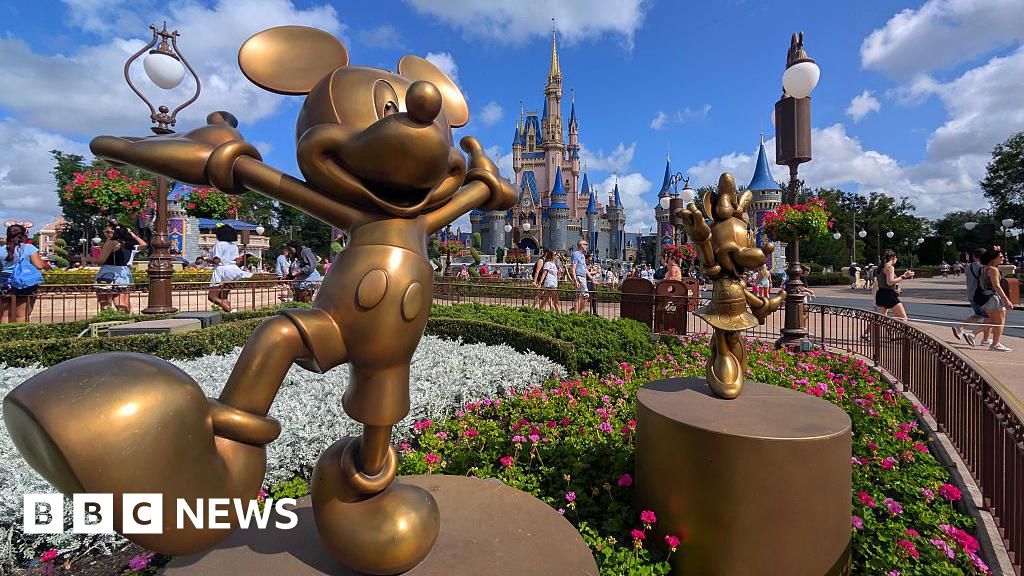
Disney warns of hit from flagging foreign visitsImage Credit: BBC Business (Finance)
Key Points
- •LONDON – The Walt Disney Company has signalled a potential softening in its powerhouse Parks division, warning investors that a slowdown in international tourism to its flagship Florida resort could temper the explosive growth seen in the post-pandemic era. The disclosure, made during the company's recent earnings call, casts a spotlight on the economic headwinds facing one of the world's most iconic travel destinations.
- •International Attendance: While specific figures were not broken out, executives confirmed that the volume of international visitors is tracking below the exceptionally strong levels of the previous year. For a destination that heavily relies on global tourism, any sustained dip is a significant headwind.
- •The Strong Dollar Effect: The U.S. Dollar Index (DXY) has remained elevated, meaning foreign currencies buy fewer dollars. A family visiting from the UK, for example, could find their trip costing 10-15% more than it would have a couple of years ago, purely based on exchange rates, before even accounting for Disney's own price increases.
- •Per Capita Spending: This remains a bright spot. Disney reported that the amount each guest spends on tickets, food, merchandise, and its premium Genie+ service continues to be robust. This indicates that the visitors who are coming are willing to spend, partially offsetting the lower international footfall.
- •Hotel Occupancy: Forward-looking hotel bookings, a key indicator of future demand, are reportedly slightly softer than the same period last year. This aligns with the forecast of moderating attendance levels.
Disney Warns of Hit From Flagging Foreign Visits
LONDON – The Walt Disney Company has signalled a potential softening in its powerhouse Parks division, warning investors that a slowdown in international tourism to its flagship Florida resort could temper the explosive growth seen in the post-pandemic era. The disclosure, made during the company's recent earnings call, casts a spotlight on the economic headwinds facing one of the world's most iconic travel destinations.
In a candid assessment, Disney's finance chief noted that attendance and hotel occupancy at Walt Disney World for the current quarter are expected to see a slight downturn compared to the prior year. The primary driver is a normalization of travel patterns following the "revenge travel" surge, coupled with the strengthening U.S. dollar making American holidays significantly more expensive for foreign visitors.
While the company emphasized continued strength among domestic guests and robust per-capita spending, the alert has caused a ripple of caution among investors, who are now closely watching how the entertainment giant navigates this evolving economic landscape.
The Core Challenge: A Tale of Two Tourists
The issue facing Walt Disney World is not a collapse in demand but a shift in its composition. The park, a global magnet for tourism, is experiencing a divergence between its domestic and international visitor bases.
Domestic demand, particularly from high-spending guests, remains resilient. However, the international component, which was a critical factor in the resort's rapid post-COVID recovery, is now showing signs of fatigue.
This trend is attributed to two main factors: the winding down of the pent-up demand that characterized 2022 and 2023, and unfavourable currency exchange rates that are stretching the budgets of travellers from key markets like the United Kingdom, Europe, and Latin America.
By the Numbers: Key Metrics Under Pressure
To understand the financial implications, it's crucial to examine the specific data points that are guiding Disney's forecast. The company's transparency on these metrics provides a clear view of the pressures at play.
-
International Attendance: While specific figures were not broken out, executives confirmed that the volume of international visitors is tracking below the exceptionally strong levels of the previous year. For a destination that heavily relies on global tourism, any sustained dip is a significant headwind.
-
The Strong Dollar Effect: The U.S. Dollar Index (DXY) has remained elevated, meaning foreign currencies buy fewer dollars. A family visiting from the UK, for example, could find their trip costing 10-15% more than it would have a couple of years ago, purely based on exchange rates, before even accounting for Disney's own price increases.
-
Per Capita Spending: This remains a bright spot. Disney reported that the amount each guest spends on tickets, food, merchandise, and its premium Genie+ service continues to be robust. This indicates that the visitors who are coming are willing to spend, partially offsetting the lower international footfall.
-
Hotel Occupancy: Forward-looking hotel bookings, a key indicator of future demand, are reportedly slightly softer than the same period last year. This aligns with the forecast of moderating attendance levels.
Broader Context: Competition and Pricing Strategy
Disney's situation does not exist in a vacuum. The broader Central Florida tourism market is entering a new phase of intense competition and evolving consumer behaviour.
Comcast's Universal Orlando Resort is poised to launch its highly anticipated third theme park, Epic Universe, in 2025. This massive investment represents the most significant competitive threat to Disney's regional dominance in a generation and is undoubtedly factoring into the strategic calculations of both companies.
Furthermore, Disney's own dynamic pricing strategy and the introduction of the park reservation system have been a topic of debate. While these tools have been effective at maximizing revenue and managing crowds, some analysts suggest they may have contributed to pricing out a segment of more budget-conscious families, both domestic and international.
Analyst Reaction: Caution, Not Crisis
Wall Street's reaction to the news has been measured. The sentiment reflects the nuance of the situation: this is a moderation, not a collapse. The company's stock saw a modest dip following the announcement, as the market priced in the more conservative short-term outlook.
As one analyst from a major investment bank noted, "It's not going to be as stellar as they would have hoped or it would normally be for the summer quarter, but it's not an all-out disaster either." The consensus is that the Parks, Experiences and Products division remains fundamentally strong, but the days of easy, record-breaking year-over-year growth are likely over for now.
Disney's Path Forward: Investment and Adaptation
Faced with these headwinds, Disney is not standing still. The company is embarking on a multi-pronged strategy to shore up demand and protect its bottom line. The focus is on enhancing the guest experience to justify premium pricing while exploring targeted incentives.
-
A Decade of Investment: CEO Bob Iger has committed to a massive capital expenditure plan, earmarking approximately $60 billion over the next ten years for the Parks, Experiences and Products division. This investment is aimed at creating new attractions, shows, and technologies to drive future attendance.
-
Strategic Promotions: While broad-based discounting is unlikely, the company may deploy more targeted promotions aimed at specific markets. This could include special offers for international tour groups or packages designed to lure domestic visitors during softer periods.
-
Operational Efficiency: In parallel with its growth initiatives, Disney continues to focus on cost discipline and operational efficiency. Streamlining operations helps protect profit margins even if top-line revenue growth slows.
Outlook and Implications
The coming months will be a crucial test for Disney. Investors and industry observers will be watching closely to see if the slowdown in international visitors is a temporary blip or the beginning of a more sustained trend.
The key variables to monitor will be global currency fluctuations, international travel booking data for the fall and holiday seasons, and the initial consumer response to marketing for Universal's Epic Universe.
For now, The Walt Disney Company is navigating a period of normalization. Its ability to leverage its powerful brand, strong domestic base, and planned investments will determine whether it can successfully mitigate the impact of a less-travelled world and maintain its position as the undisputed leader in destination entertainment.
Source: BBC Business (Finance)
Related Articles
Nationwide Protests Against ICE Enforcement Erupt in U.S.
Thousands are protesting ICE after the DOJ declined to investigate a fatal agent-involved shooting in Minneapolis, fueling a national movement and public anger.
Venezuela Amnesty Bill Could Free Political Prisoners
Learn about Venezuela's proposed amnesty bill to release political prisoners. The move could signal a major political shift and affect future economic sanctions
Pokémon Cancels Yasukuni Shrine Event After Backlash
The Pokémon Company has canceled an event at Tokyo's controversial Yasukuni Shrine after facing international backlash from China and South Korea.
US to Lose Measles Elimination Status: What It Means
The U.S. is poised to lose its measles elimination status due to escalating outbreaks. Learn what this downgrade means for public health and the economy.