Drought Linked to Rise of Antibiotic-Resistant Superbugs
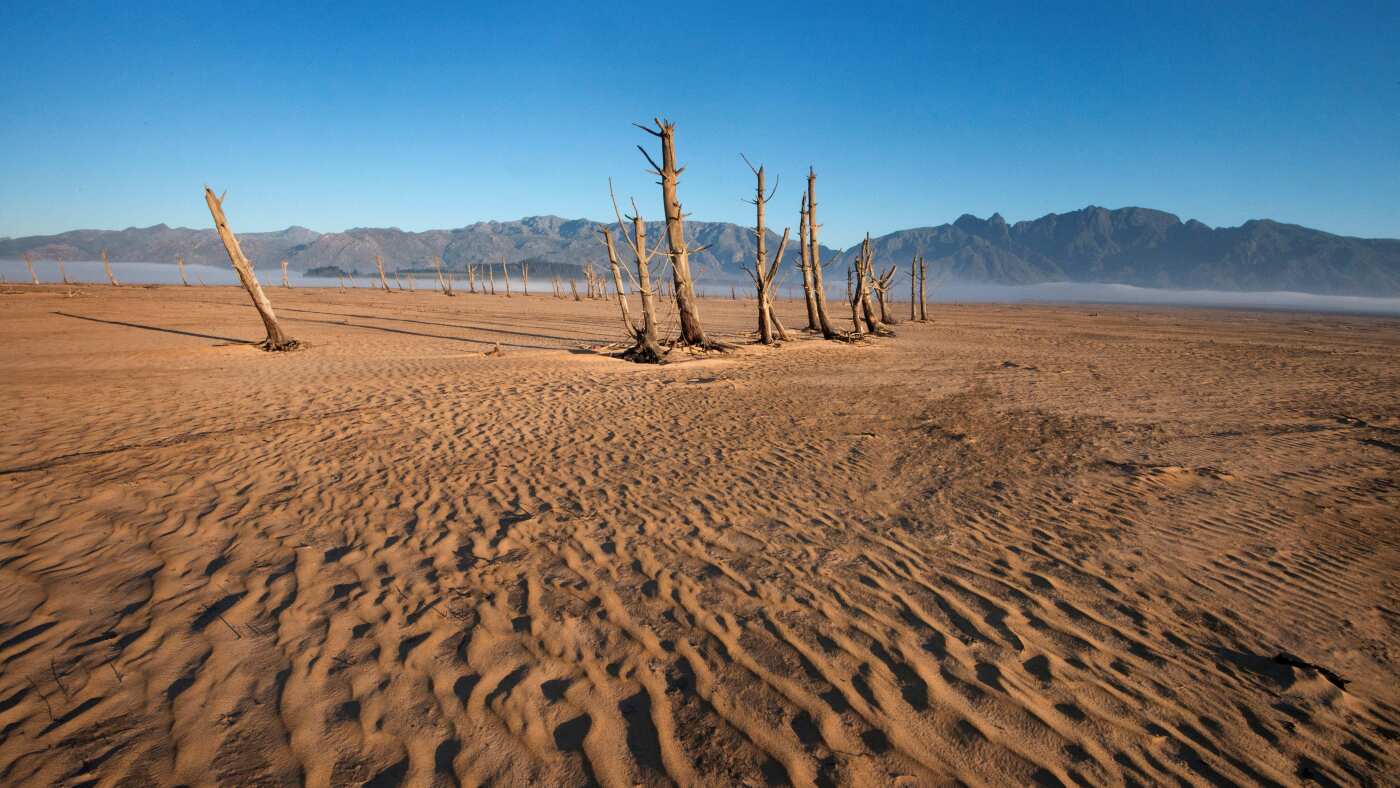
Here's some new dirt on an unusual source of antibiotic resistanceImage Credit: NPR News
Key Points
- •A study in Nature Microbiology uncovers an environmental driver for antimicrobial resistance, with significant implications for global health and economic stability.
- •Widespread Resistance: According to recent data, approximately one in six human infections tested in laboratory settings now show resistance to standard antibiotic treatments.
- •Economic Burden: The World Bank has projected that by 2050, AMR could slash annual global GDP by 3.8% and push an additional 24 million people into extreme poverty. The crisis strains healthcare systems through longer hospital stays, the need for more expensive treatments, and increased mortality rates.
- •The Concentration Effect: Newman uses the analogy of an evaporating vat of liquid. "If you were to evaporate that liquid, those molecules [of antibiotics] would stay there, and they would become more concentrated." In drying soil, the naturally produced antibiotics become more potent.
- •Intensified Selection: This higher concentration of antibiotics creates immense selective pressure. Only the bacteria that possess or can rapidly develop genes to withstand these powerful compounds survive and proliferate. "Anywhere you increase exposure to antibiotics, you will select for microbes that can withstand them," Newman states.
New Research Links Worsening Droughts to Rise in Antibiotic-Resistant Superbugs
A study in Nature Microbiology uncovers an environmental driver for antimicrobial resistance, with significant implications for global health and economic stability.
The global battle against antibiotic-resistant superbugs—a crisis contributing to over four million deaths annually—has a new and alarming front: climate change. Groundbreaking research reveals that drought conditions, intensifying across the globe, are creating potent breeding grounds for antibiotic resistance in soil, with evidence suggesting these resilient microbes are already infiltrating human clinical settings.
This discovery adds a critical, and previously unaccounted for, variable to the complex equation of global health security, connecting climate policy directly to the viability of modern medicine.
The Global Health Threat
Antimicrobial resistance (AMR) is one of the most significant threats to global health and economic development. As bacteria evolve to withstand the drugs designed to kill them, common infections are becoming untreatable, and routine medical procedures are becoming increasingly risky.
The scale of the problem is staggering.
- Widespread Resistance: According to recent data, approximately one in six human infections tested in laboratory settings now show resistance to standard antibiotic treatments.
- Economic Burden: The World Bank has projected that by 2050, AMR could slash annual global GDP by 3.8% and push an additional 24 million people into extreme poverty. The crisis strains healthcare systems through longer hospital stays, the need for more expensive treatments, and increased mortality rates.
While the overuse of antibiotics in human medicine and agriculture is a well-documented driver of AMR, new findings point to a powerful environmental accelerator.
A Natural Proving Ground
Researchers have long known that soil is the original battlefield where microbes wage war. This ancient conflict is the very source of the antibiotics we use today.
"In nature, organisms are duking it out, it's a competitive environment," explains Dianne Newman, a microbiologist at Caltech and a lead author of the new study published in Nature Microbiology. "One of the strategies microbes have evolved to effectively compete is to produce antibiotics, to kill their neighbors."
Newman’s team hypothesized that environmental changes, specifically drought, could be intensifying this natural arms race and supercharging the evolution of resistance.
The mechanism is surprisingly straightforward.
- The Concentration Effect: Newman uses the analogy of an evaporating vat of liquid. "If you were to evaporate that liquid, those molecules [of antibiotics] would stay there, and they would become more concentrated." In drying soil, the naturally produced antibiotics become more potent.
- Intensified Selection: This higher concentration of antibiotics creates immense selective pressure. Only the bacteria that possess or can rapidly develop genes to withstand these powerful compounds survive and proliferate. "Anywhere you increase exposure to antibiotics, you will select for microbes that can withstand them," Newman states.
- Empirical Evidence: To test this, the research team analyzed a global database of soil samples. Their findings confirmed the hypothesis: drier soils consistently contained more genes for both producing and resisting antibiotics. The longer the drought conditions persisted, the more prevalent these genes became.
From Dirt to the Doctor's Office
The critical question for public health is whether this reservoir of resistance in soil poses a direct threat to humans. While most soil bacteria are harmless, they possess a troubling ability to share genetic material with other microbes, including human pathogens.
This process, known as horizontal gene transfer, is "what allows sort of rapid propagation from the soil into the clinical setting where it becomes really problematic," says Newman. The study provides compelling evidence that this transfer is not just a theoretical possibility but a current reality.
- Genetic Fingerprinting: By cross-referencing their soil data with samples of bacteria from hospital patients, the team found several resistance genes that were present in both environments.
- A Direct Link: In one striking case, a specific resistance gene found in drought-affected soil was a 100% identical match to one found in a clinical pathogen, suggesting a very recent transfer from the environment to a human infection.
- Global Correlation: The researchers then scaled up their analysis, examining antibiotic resistance data from hospitals across 116 countries. They discovered a clear and concerning correlation: countries with drier, more arid climates tended to have significantly higher rates of antibiotic resistance in their healthcare systems.
"It's an awesome paper, and shows that drought is already having an impact on health care systems around the world," says Timothy Ghaly, a microbial ecologist at Macquarie University in Australia who was not involved with the study. "With drought increasing in many parts of the world, that's likely to increase the prevalence of antimicrobial resistance as well."
The Bottom Line: A New Dimension to Climate Risk
This research reframes the AMR crisis, adding an urgent environmental dimension that intersects directly with climate change policy. The findings suggest that our efforts to combat superbugs cannot be confined to hospitals and farms; they must now extend to environmental and climate stewardship.
Ramanan Laxminarayan, an epidemiologist at Princeton University, notes the study is "novel in terms of positing a very specific pathway in which drought is driving the concentration of resistance genes." While he cautions that the exact scale of the risk to humans requires further study, the pathway itself represents a major new area of concern.
The implications are far-reaching.
- For Healthcare and Pharma: Rising environmental resistance could accelerate the obsolescence of existing antibiotics, placing even greater pressure on the pharmaceutical pipeline to develop novel drugs. It also complicates infection control, as the source of resistance may be the environment itself, brought in through a simple cut or scrape.
- For Policymakers: The link between aridity and AMR demands a new, integrated approach. Climate change mitigation is no longer just an environmental issue; it is a critical public health strategy to preserve modern medicine. Water management and soil health policies take on a new level of importance.
- Next Steps: The immediate priority is to quantify this risk. Future research must focus on understanding the frequency and primary routes of gene transfer from soil to humans. Furthermore, this study highlights the need for global surveillance systems that monitor for resistance genes not just in clinics, but in the environment itself.
As the planet continues to warm and droughts become more frequent and severe, this hidden catalyst for antibiotic resistance could grow, posing a quiet but escalating threat to health and economic stability worldwide.
Source: NPR News
Related Articles
Nationwide Protests Against ICE Enforcement Erupt in U.S.
Thousands are protesting ICE after the DOJ declined to investigate a fatal agent-involved shooting in Minneapolis, fueling a national movement and public anger.
Venezuela Amnesty Bill Could Free Political Prisoners
Learn about Venezuela's proposed amnesty bill to release political prisoners. The move could signal a major political shift and affect future economic sanctions
Pokémon Cancels Yasukuni Shrine Event After Backlash
The Pokémon Company has canceled an event at Tokyo's controversial Yasukuni Shrine after facing international backlash from China and South Korea.
US to Lose Measles Elimination Status: What It Means
The U.S. is poised to lose its measles elimination status due to escalating outbreaks. Learn what this downgrade means for public health and the economy.