Dumfries House: How King Charles Transformed a Scottish Esta
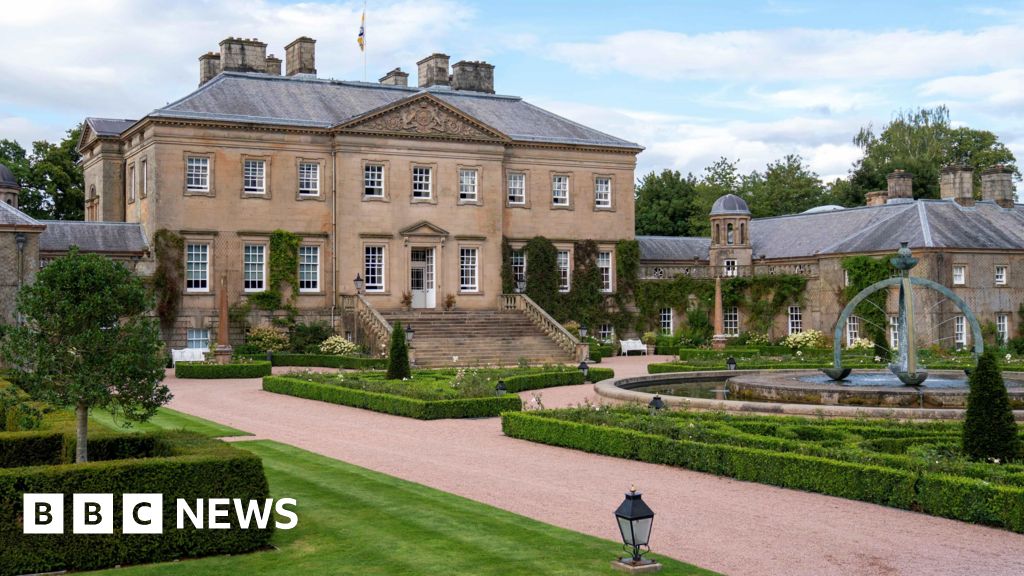
Dumfries House: Scottish estate transformed by King Charles' visionImage Credit: BBC News
Key Points
- •AYRSHIRE, SCOTLAND – What was once a decaying 18th-century Palladian mansion, its priceless contents moments from being auctioned off, has been meticulously resurrected into a thriving economic and social hub. Dumfries House now stands not merely as a preserved piece of history, but as a tangible blueprint for King Charles III's decades-old philosophy on sustainability, community, and integrated local economies.
- •Key Impact: Job Creation and Local Sourcing: The estate directly employs staff across hospitality, tourism, education, and agriculture. A core principle is local sourcing, with the vast majority of suppliers for its restaurants and shops located within a tight radius, injecting millions of pounds annually into the regional economy.
- •Key Impact: Vocational Education: Dumfries House has become a national centre for practical skills training, addressing critical shortages in both traditional and modern trades. Its educational centres offer programmes in everything from hospitality and culinary arts to STEM, traditional building skills, and textile manufacturing.
- •Key Impact: Sustainable Agriculture: The estate's Valentin's Farm is a fully operational organic farm that supplies the on-site restaurants. It serves as an educational resource for local schools and a training ground for future farmers, championing sustainable practices and farm-to-table food systems.
- •Community Engagement: The estate is not walled off. Its grounds are open to the public, and it runs numerous health and wellness programmes for the local community, including an integrated health centre that combines conventional and complementary therapies.
Dumfries House: Scottish Estate Transformed by King Charles' Vision
AYRSHIRE, SCOTLAND – What was once a decaying 18th-century Palladian mansion, its priceless contents moments from being auctioned off, has been meticulously resurrected into a thriving economic and social hub. Dumfries House now stands not merely as a preserved piece of history, but as a tangible blueprint for King Charles III's decades-old philosophy on sustainability, community, and integrated local economies.
The estate, located in a region of Scotland historically plagued by the decline of the coal mining industry, has become a powerful engine for regeneration. It demonstrates a model where heritage preservation acts as the catalyst for job creation, vocational training, and holistic community well-being, directly challenging conventional approaches to regional development.
A High-Stakes Rescue
The story of Dumfries House's revival began with a dramatic, high-stakes intervention in 2007. The estate was on the market, and its unique, intact collection of Thomas Chippendale furniture was set to be dispersed at auction.
Then Prince of Wales, Charles orchestrated a last-minute, £45 million deal to save the estate and its contents for the nation. He personally secured a £20 million loan, a move then seen as a significant financial gamble, to bring a consortium of charities and heritage bodies together. The goal was twofold: preserve a national treasure and, more ambitiously, use it as a foundation for sustainable regeneration.
The Estate as an Economic Ecosystem
Today, the estate is managed by The Prince's Foundation and is far more than a museum. It is a dynamic, multi-faceted operation that has become one of the largest employers in East Ayrshire, directly creating hundreds of jobs and supporting thousands more through its supply chains and visitor economy.
The transformation is built on a series of interconnected initiatives designed to be self-sustaining and community-focused.
-
Key Impact: Job Creation and Local Sourcing: The estate directly employs staff across hospitality, tourism, education, and agriculture. A core principle is local sourcing, with the vast majority of suppliers for its restaurants and shops located within a tight radius, injecting millions of pounds annually into the regional economy.
-
Key Impact: Vocational Education: Dumfries House has become a national centre for practical skills training, addressing critical shortages in both traditional and modern trades. Its educational centres offer programmes in everything from hospitality and culinary arts to STEM, traditional building skills, and textile manufacturing.
-
Key Impact: Sustainable Agriculture: The estate's Valentin's Farm is a fully operational organic farm that supplies the on-site restaurants. It serves as an educational resource for local schools and a training ground for future farmers, championing sustainable practices and farm-to-table food systems.
A Philosophy in Practice
The diverse activities at Dumfries House are not a random collection of charitable projects; they are the physical manifestation of a coherent philosophy. As a senior aide to the King articulated, this vision is about fundamentally rethinking how we live.
He added: "These principles underpin our approaches to how we engage with communities, how we build and design our communities, how we look at our food systems; all of these processes that are so fundamental to the way that we live our lives."
This philosophy is evident across the estate:
-
Community Engagement: The estate is not walled off. Its grounds are open to the public, and it runs numerous health and wellness programmes for the local community, including an integrated health centre that combines conventional and complementary therapies.
-
Building and Design: New structures on the estate, from the educational pavilions to the artists' studios, are designed using traditional architecture and sustainable materials, reflecting the King's long-standing advocacy for harmonious and human-scale design.
-
Food Systems: The entire food cycle is on display, from the organic farm and market garden to the training kitchens and public restaurants. This closed-loop system educates visitors and trainees on the importance of local, seasonal food production.
The Financial Model
Crucially for its long-term viability, Dumfries House is operated as a social enterprise. While its initial rescue was dependent on loans and philanthropy, the estate now generates significant revenue through its own commercial activities.
- Primary Revenue Streams: Income is derived from a diverse portfolio that includes luxury accommodation at the Dumfries House Lodge, restaurant and café sales, corporate events and weddings, estate tours, and retail sales from its on-site shops.
This commercial income is reinvested directly back into the estate's charitable work, funding its extensive educational and community programmes. This creates a virtuous cycle where the success of the commercial arm directly enables and expands its social mission, reducing its reliance on external donations.
Implications and The Path Forward
Dumfries House has successfully transitioned from a high-risk heritage rescue to a case study in holistic, sustainable development. It serves as a living laboratory for the principles King Charles has championed for over 50 years.
The key question now is its replicability. While the project benefited from a unique Royal catalyst, the underlying model—leveraging a core asset to build a diverse, self-funding ecosystem of education, enterprise, and community support—offers a powerful template for post-industrial regions globally.
As The Prince's Foundation continues to refine this model, policymakers and developers are watching closely. The success of Dumfries House suggests that investing in heritage, skills, and community in an integrated way is not just a charitable act, but a sound and sustainable strategy for long-term economic and social prosperity.
Source: BBC News
Related Articles
Nationwide Protests Against ICE Enforcement Erupt in U.S.
Thousands are protesting ICE after the DOJ declined to investigate a fatal agent-involved shooting in Minneapolis, fueling a national movement and public anger.
Venezuela Amnesty Bill Could Free Political Prisoners
Learn about Venezuela's proposed amnesty bill to release political prisoners. The move could signal a major political shift and affect future economic sanctions
Pokémon Cancels Yasukuni Shrine Event After Backlash
The Pokémon Company has canceled an event at Tokyo's controversial Yasukuni Shrine after facing international backlash from China and South Korea.
US to Lose Measles Elimination Status: What It Means
The U.S. is poised to lose its measles elimination status due to escalating outbreaks. Learn what this downgrade means for public health and the economy.