EU Airlines Warn of Fuel Shortage from Hormuz Closure
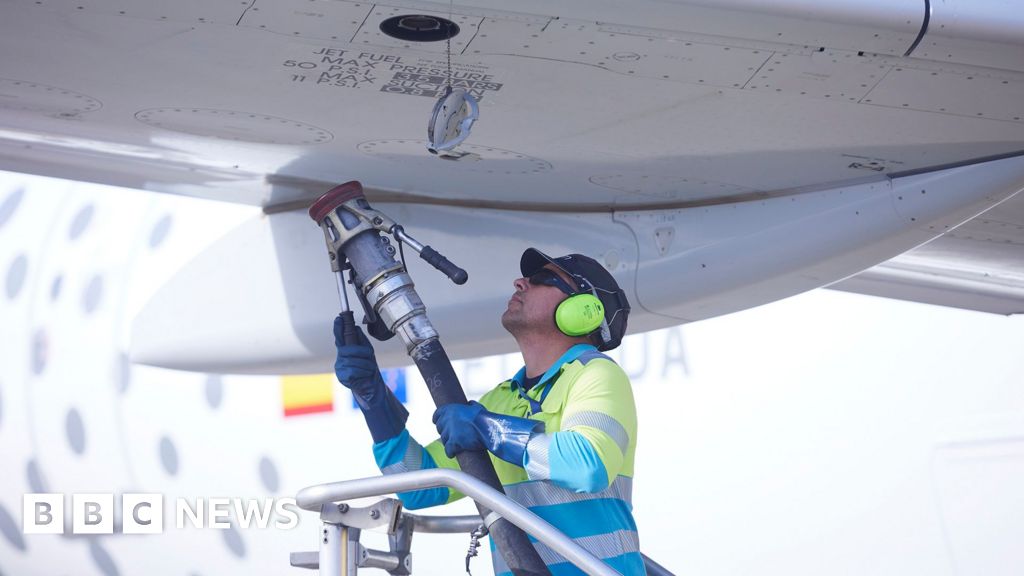
EU airline industry warns of fuel shortages if Strait of Hormuz stays closedImage Credit: BBC Business (Finance)
Key Points
- •LONDON – Europe's aviation industry is on high alert, issuing a stark warning that a prolonged closure of the Strait of Hormuz would trigger a "systemic jet fuel shortage" across the European Union within three weeks. The warning underscores the continent's acute vulnerability to disruptions in a single, volatile maritime chokepoint and raises the prospect of widespread flight cancellations, soaring ticket prices, and significant economic fallout.
- •Global Energy Artery: Approximately one-fifth of the world's total petroleum consumption and a third of its liquefied natural gas (LNG) passes through the strait. Any disruption has an immediate and dramatic effect on global energy prices and availability.
- •EU's Fuel Dependency: While Europe has significant refining capacity, it remains a net importer of jet fuel (kerosene). A substantial portion of these imports originates from refineries in the Middle East and Asia, including major producers like Kuwait, the UAE, and India. The vast majority of these shipments must navigate the Strait of Hormuz to reach European ports.
- •Limited Alternatives: Rerouting tankers around Africa is not a viable short-term solution. The journey adds weeks to delivery times and dramatically increases shipping costs. Ramping up domestic production or sourcing from alternative regions like the Americas cannot be done quickly enough to fill the immediate gap left by a Hormuz closure.
- •Flight Cancellations and Rationing: Airlines would be forced to ground aircraft on a massive scale. Long-haul international flights, which require large fuel loads, would likely be the first to be cut. Airports would almost certainly implement fuel rationing protocols, allocating limited supplies to prioritized services, such as medical, cargo, and key strategic routes.
EU airline industry warns of fuel shortages if Strait of Hormuz stays closed
LONDON – Europe's aviation industry is on high alert, issuing a stark warning that a prolonged closure of the Strait of Hormuz would trigger a "systemic jet fuel shortage" across the European Union within three weeks. The warning underscores the continent's acute vulnerability to disruptions in a single, volatile maritime chokepoint and raises the prospect of widespread flight cancellations, soaring ticket prices, and significant economic fallout.
The alert, circulated among senior industry stakeholders, paints a grim picture of the logistical realities facing one of the world's busiest aviation markets. It highlights the critical, yet often overlooked, supply chain that keeps Europe's airlines flying.
"At this stage, we understand that if the passage through the Strait of Hormuz does not resume in any significant and stable way within the next three weeks, systemic jet fuel shortage is set to become a reality for the EU," a source familiar with the industry's assessment stated.
The Hormuz Lifeline
The Strait of Hormuz, a narrow waterway separating Iran from the Arabian Peninsula, is the world's most important oil transit chokepoint. Its stability is paramount not just for crude oil, but for the refined products, like jet fuel, that power the global economy. A hypothetical closure, whether due to geopolitical conflict, accident, or deliberate action, would sever a vital energy artery.
-
Global Energy Artery: Approximately one-fifth of the world's total petroleum consumption and a third of its liquefied natural gas (LNG) passes through the strait. Any disruption has an immediate and dramatic effect on global energy prices and availability.
-
EU's Fuel Dependency: While Europe has significant refining capacity, it remains a net importer of jet fuel (kerosene). A substantial portion of these imports originates from refineries in the Middle East and Asia, including major producers like Kuwait, the UAE, and India. The vast majority of these shipments must navigate the Strait of Hormuz to reach European ports.
-
Limited Alternatives: Rerouting tankers around Africa is not a viable short-term solution. The journey adds weeks to delivery times and dramatically increases shipping costs. Ramping up domestic production or sourcing from alternative regions like the Americas cannot be done quickly enough to fill the immediate gap left by a Hormuz closure.
A Cascade of Consequences for Aviation
A systemic fuel shortage would not be a localized issue affecting a single airport. It would create a domino effect across the continent, forcing airlines and authorities into unprecedented crisis management. Fuel, which already accounts for 25-35% of an airline's operating costs, would become both scarce and prohibitively expensive.
The Inevitable Ripple Effect
The primary impacts would be felt immediately by passengers, businesses, and the airlines themselves.
-
Flight Cancellations and Rationing: Airlines would be forced to ground aircraft on a massive scale. Long-haul international flights, which require large fuel loads, would likely be the first to be cut. Airports would almost certainly implement fuel rationing protocols, allocating limited supplies to prioritized services, such as medical, cargo, and key strategic routes.
-
Skyrocketing Operational Costs: The basic economic principle of supply and demand would take hold. The price of available jet fuel in Europe would spike, placing immense financial pressure on carriers still recovering from the pandemic. These costs would inevitably be passed on to consumers in the form of drastically higher airfares and fuel surcharges.
-
Supply Chain Paralysis: The disruption would extend far beyond passenger travel. Air cargo is the backbone of modern logistics, transporting high-value and time-sensitive goods, including pharmaceuticals, electronics, and perishable foods. A crippled aviation network would sever these critical supply chains, impacting manufacturing, healthcare, and retail across the continent.
Broader Economic and Geopolitical Fallout
The crisis would quickly spill over from the aviation sector into the wider European and global economy. The interconnected nature of modern commerce means a halt in air travel and transport would have far-reaching consequences.
-
Impact on European GDP: Industries reliant on aviation, such as tourism, hospitality, and international business, would face an immediate and severe downturn. The inability for goods and people to move freely would stifle economic activity, threatening to shave points off GDP growth in major European economies.
-
Energy Market Turmoil: A closure of the Strait would send shockwaves through global energy markets. The price of Brent crude, the international benchmark, would surge, leading to higher costs for everything from gasoline at the pump to industrial manufacturing and home heating.
-
Intensified Diplomatic Pressure: The scenario would trigger an intense international diplomatic and security crisis. Global powers would exert immense pressure to secure and reopen the waterway, with the potential for military intervention to protect freedom of navigation becoming a central point of discussion.
Mitigation and The Path Forward
Governments and industry leaders are not idle observers. Contingency plans are being reviewed, and emergency response mechanisms are being put on standby. The focus is on both short-term buffers and long-term strategic shifts.
-
Strategic Petroleum Reserves: The primary line of defense would be a coordinated release of government-controlled strategic petroleum reserves (SPRs). The International Energy Agency (IEA) would oversee this process to stabilize supply and temper price spikes, but these reserves are finite and designed to be a temporary bridge, not a permanent solution.
-
Industry Contingency Planning: Airlines are assessing "tankering" strategies—carrying extra fuel on inbound flights to reduce the need to refuel at supply-starved airports. However, this practice is inefficient and only feasible on a limited scale. Drastic network reductions remain the most likely outcome.
-
A Wake-Up Call for Diversification: This stark warning serves as another powerful reminder of the EU's energy vulnerabilities. It will undoubtedly accelerate the strategic push for energy independence and supply chain resilience. This includes not only diversifying sources of fossil fuels but also intensifying the development and deployment of Sustainable Aviation Fuels (SAFs) to reduce long-term reliance on traditional kerosene.
For now, the European airline industry watches the Strait of Hormuz with bated breath. The three-week timeline is a sobering calculation that transforms a distant geopolitical risk into an imminent and tangible threat to Europe's economic stability.
Source: BBC Business (Finance)
Related Articles
Nationwide Protests Against ICE Enforcement Erupt in U.S.
Thousands are protesting ICE after the DOJ declined to investigate a fatal agent-involved shooting in Minneapolis, fueling a national movement and public anger.
Venezuela Amnesty Bill Could Free Political Prisoners
Learn about Venezuela's proposed amnesty bill to release political prisoners. The move could signal a major political shift and affect future economic sanctions
Pokémon Cancels Yasukuni Shrine Event After Backlash
The Pokémon Company has canceled an event at Tokyo's controversial Yasukuni Shrine after facing international backlash from China and South Korea.
US to Lose Measles Elimination Status: What It Means
The U.S. is poised to lose its measles elimination status due to escalating outbreaks. Learn what this downgrade means for public health and the economy.