Farage's School Racism Apology Rejected by Ex-Pupil
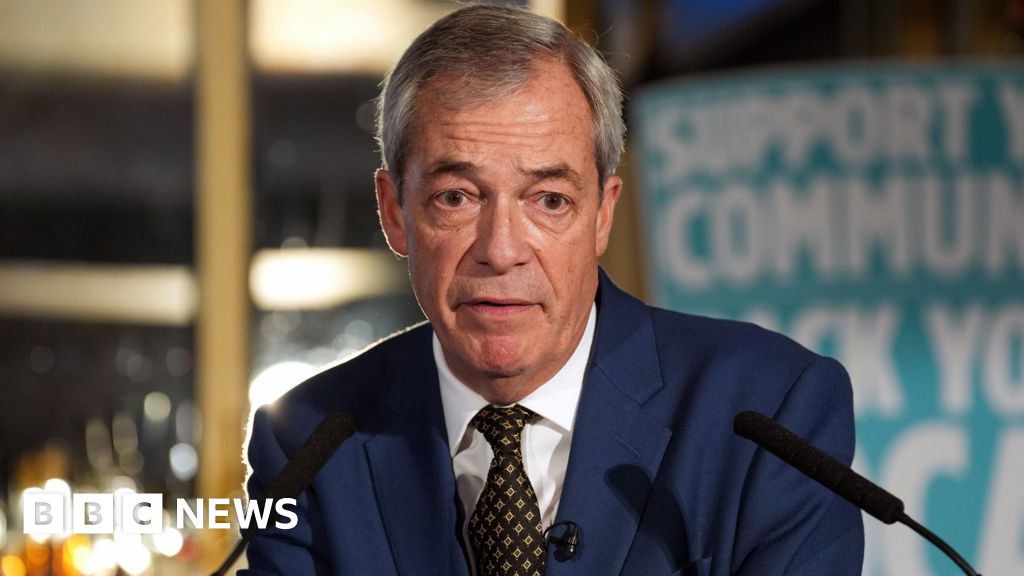
Farage apology over school racism allegations does not go far enough, ex-pupil saysImage Credit: BBC Politics
Key Points
- •LONDON – Nigel Farage’s carefully worded apology for his conduct as a schoolboy in the 1970s has been rebuffed as inadequate by a former classmate, who maintains the Reform UK leader has yet to take full responsibility for specific racist and antisemitic remarks. The dispute escalates a controversy that links Farage's past to his present political ambitions, creating a significant test of his leadership ahead of the general election.
- •The Core Conflict: Ettedgui and other former pupils allege Farage expressed support for the National Front and used racist and antisemitic language in the late 1970s. Farage has offered a general apology for any offence caused but continues to deny the specific, detailed allegations.
- •The Political Stakes: As Reform UK gains traction in the polls, Farage's character is as much a part of his appeal as his policies. This dispute directly targets that character, threatening to alienate moderate voters the party needs to break through electorally.
- •Alleged Remarks: Former classmates accused a young Farage of singing Hitler Youth songs and remarking, "Hitler was right," as well as using a pejorative term for people of colour.
- •Antisemitic Accusations: Ettedgui, who is Jewish, alleged that Farage told him, "You have a Jewish name," and made other antisemitic comments that made him feel targeted and ostracised.
Farage apology over school racism allegations does not go far enough, ex-pupil says
LONDON – Nigel Farage’s carefully worded apology for his conduct as a schoolboy in the 1970s has been rebuffed as inadequate by a former classmate, who maintains the Reform UK leader has yet to take full responsibility for specific racist and antisemitic remarks. The dispute escalates a controversy that links Farage's past to his present political ambitions, creating a significant test of his leadership ahead of the general election.
The issue, which had been dormant, resurfaced with Farage’s high-profile return to frontline politics, placing his personal history under renewed scrutiny.
Why It Matters
The standoff between Farage and his former Dulwich College contemporary, Raphael Ettedgui, has evolved from a historical accusation into a real-time political challenge. For a leader positioning himself as an anti-establishment truth-teller, questions of personal integrity and accountability are particularly potent.
The controversy forces voters to weigh decades-old alleged behaviour against a contemporary political platform, creating a significant distraction for the Reform UK campaign as it seeks to build momentum.
-
The Core Conflict: Ettedgui and other former pupils allege Farage expressed support for the National Front and used racist and antisemitic language in the late 1970s. Farage has offered a general apology for any offence caused but continues to deny the specific, detailed allegations.
-
The Political Stakes: As Reform UK gains traction in the polls, Farage's character is as much a part of his appeal as his policies. This dispute directly targets that character, threatening to alienate moderate voters the party needs to break through electorally.
A Contested Apology
Speaking recently, Farage addressed the controversy by expressing regret for his youthful behaviour in broad terms, a marked change from his previous outright denials.
He acknowledged that as a teenager, he likely "said things that were unpleasant" and apologised for any hurt caused. However, he stopped short of admitting to the specific racist and antisemitic slurs he is accused of using.
This attempt at reconciliation was promptly rejected by Ettedgui, the primary source of the allegations. In a statement, Ettedgui argued the apology was a classic "non-apology."
"He is apologising for the way I might feel, not for the things he actually said and did," Ettedgui stated. "An apology without a full and honest acknowledgement of the specific actions is meaningless. It is an attempt to manage a political problem, not a sincere act of contrition."
Flashback: The Original Allegations and Denial
The allegations first gained widespread attention in a 2013 Channel 4 documentary and have been revisited by publications including The Guardian. Former pupils and a teacher from Dulwich College in the 1970s made several specific claims.
-
Alleged Remarks: Former classmates accused a young Farage of singing Hitler Youth songs and remarking, "Hitler was right," as well as using a pejorative term for people of colour.
-
Antisemitic Accusations: Ettedgui, who is Jewish, alleged that Farage told him, "You have a Jewish name," and made other antisemitic comments that made him feel targeted and ostracised.
-
Teacher's Letter: A letter from a concerned English teacher to the school's headmaster in 1981 described Farage as holding "publicly professed racist and neo-fascist views."
Initially, Farage’s response to these reports was not one of apology but of aggressive denial and counter-accusation. Speaking on GB News in November, he framed the story as a politically motivated attack by a desperate media.
"I categorically deny saying those things, to that one individual," Farage stated, referring to Ettedgui. "And frankly, for the Guardian and the BBC to be going back just shy of half a century to come out with this stuff it shows how desperate they are."
This evolution from categorical denial to a qualified, general apology highlights the increased political pressure Farage now faces as a party leader in a general election campaign.
The Political Fallout
For the Reform UK campaign, the timing of this renewed focus is problematic. The party's strategy relies heavily on Farage's personal brand and his ability to connect with voters on issues like immigration and national sovereignty. This controversy serves as a major distraction.
-
Reputational Risk: The allegations could damage Farage's image, particularly among swing voters who may be sympathetic to his populist message but are repelled by accusations of racism.
-
Campaign Distraction: Every moment spent addressing his schoolboy past is a moment not spent attacking the Conservative and Labour parties on policy, diverting valuable resources and media oxygen.
-
Leadership Scrutiny: How Farage handles this ongoing issue is a test of his political acumen. A misstep could be portrayed by opponents as a sign of flawed character, undermining his core "man of the people" appeal.
The Bottom Line
The issue has moved beyond a simple historical dispute. It has become a contemporary test of political accountability and crisis management. Ettedgui's rejection of the apology ensures the story will persist, forcing Farage to decide between issuing a more specific mea culpa or attempting to ride out the storm.
With the election weeks away, the question is whether voters will see this as a smear campaign dredging up the distant past, or as a relevant insight into the character of a man seeking to fundamentally reshape British politics. The next move is Farage's, but the ultimate verdict will be delivered at the ballot box.
Source: BBC Politics
Related Articles
Nationwide Protests Against ICE Enforcement Erupt in U.S.
Thousands are protesting ICE after the DOJ declined to investigate a fatal agent-involved shooting in Minneapolis, fueling a national movement and public anger.
Venezuela Amnesty Bill Could Free Political Prisoners
Learn about Venezuela's proposed amnesty bill to release political prisoners. The move could signal a major political shift and affect future economic sanctions
Pokémon Cancels Yasukuni Shrine Event After Backlash
The Pokémon Company has canceled an event at Tokyo's controversial Yasukuni Shrine after facing international backlash from China and South Korea.
US to Lose Measles Elimination Status: What It Means
The U.S. is poised to lose its measles elimination status due to escalating outbreaks. Learn what this downgrade means for public health and the economy.