Gaza's Key Rafah Crossing Reopens After Diplomatic Deal
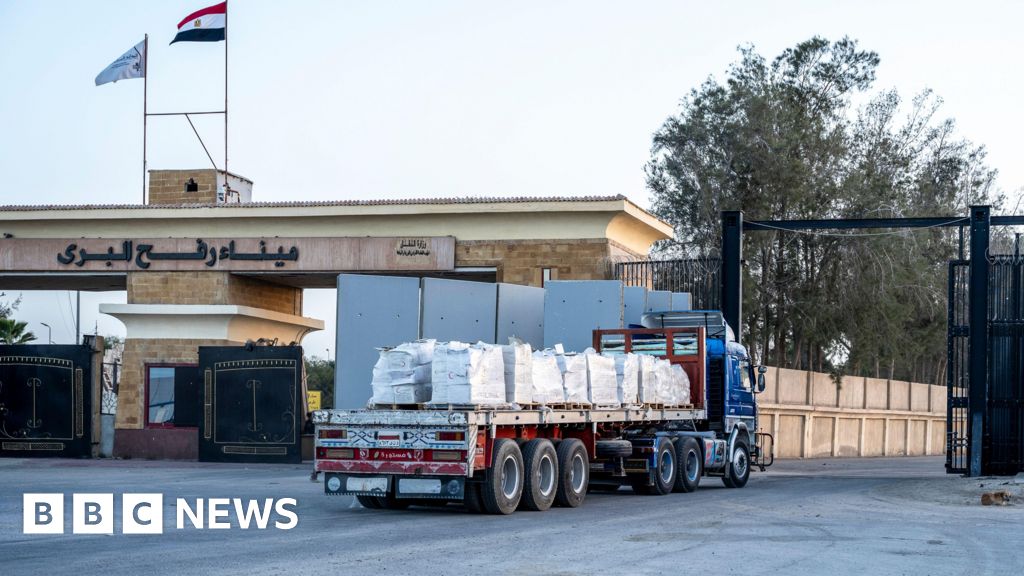
Gaza's key Rafah border crossing with Egypt reopensImage Credit: BBC News
Key Points
- •CAIRO – The Rafah border crossing, Gaza's sole gateway to the world not controlled by Israel, has reopened for two-way traffic, marking a significant diplomatic breakthrough and a critical step toward addressing the Strip's spiraling humanitarian and economic crisis. The move follows a tense standoff between Egypt and Israel that had left the vital artery shuttered for weeks, stranding tens of thousands and choking the flow of essential aid.
- •Egypt's Stance: Cairo feared that a one-way opening would facilitate a permanent displacement of Gazans into its Sinai Peninsula, creating a massive refugee crisis and a significant long-term security and economic burden. The government maintained that the right of return was non-negotiable.
- •The Breakthrough: While official details of the final agreement remain discreet, the resumption of two-way movement indicates that Egypt's conditions were met. The deal was reportedly brokered with significant pressure from international partners, who emphasized the need for a stable channel for both humanitarian aid and civilian movement.
- •Humanitarian Aid: This is the most immediate priority. Billions of dollars in international aid have been pledged, but delivery has been severely hampered. Rafah is the main conduit for trucks carrying food, water, medicine, and shelter materials from Egyptian ports and warehouses. A sustained, high-volume flow is necessary to avert famine and disease.
- •Commercial Goods: Beyond aid, the crossing is vital for the eventual resumption of commercial imports. The private sector in Gaza, though battered, depends on imports of raw materials, consumer products, and agricultural inputs. The ability to bring in these goods, even on a limited scale, is the first step toward reviving any semblance of a market economy.
Gaza's Key Rafah Border Crossing with Egypt Reopens
CAIRO – The Rafah border crossing, Gaza's sole gateway to the world not controlled by Israel, has reopened for two-way traffic, marking a significant diplomatic breakthrough and a critical step toward addressing the Strip's spiraling humanitarian and economic crisis. The move follows a tense standoff between Egypt and Israel that had left the vital artery shuttered for weeks, stranding tens of thousands and choking the flow of essential aid.
The reopening represents a crucial, albeit fragile, lifeline for Gaza's 2.3 million residents and its shattered economy. For international donors and financial institutions, a functioning Rafah crossing is the primary precondition for the monumental task of reconstruction that lies ahead.
Diplomatic Impasse Resolved
The agreement ends a deadlock that highlighted the complex geopolitics governing Gaza's borders. The initial impasse centered on the direction of travel.
In December, the Israeli government signaled it would permit the crossing to open for Palestinians wishing to leave Gaza. This one-way proposal was immediately rejected by Cairo.
Egyptian officials insisted that any reopening must be bilateral, allowing not only for departures but also for the return of tens of thousands of Palestinians who had been in Egypt for medical treatment, business, or family visits when the conflict escalated and were unable to go home.
-
Egypt's Stance: Cairo feared that a one-way opening would facilitate a permanent displacement of Gazans into its Sinai Peninsula, creating a massive refugee crisis and a significant long-term security and economic burden. The government maintained that the right of return was non-negotiable.
-
The Breakthrough: While official details of the final agreement remain discreet, the resumption of two-way movement indicates that Egypt's conditions were met. The deal was reportedly brokered with significant pressure from international partners, who emphasized the need for a stable channel for both humanitarian aid and civilian movement.
A Critical Economic Artery
Before the recent conflict, Rafah was more than just a passenger terminal; it was a limited but essential channel for commercial goods and cash flow, supplementing the more restricted Israeli-controlled crossings. Its reopening is pivotal for preventing a total economic collapse.
The economic significance of the crossing can be broken down into several key areas:
-
Humanitarian Aid: This is the most immediate priority. Billions of dollars in international aid have been pledged, but delivery has been severely hampered. Rafah is the main conduit for trucks carrying food, water, medicine, and shelter materials from Egyptian ports and warehouses. A sustained, high-volume flow is necessary to avert famine and disease.
-
Commercial Goods: Beyond aid, the crossing is vital for the eventual resumption of commercial imports. The private sector in Gaza, though battered, depends on imports of raw materials, consumer products, and agricultural inputs. The ability to bring in these goods, even on a limited scale, is the first step toward reviving any semblance of a market economy.
-
Cash & Capital Flow: Gaza's banking system is under extreme duress. The physical movement of people through Rafah has historically been a key mechanism for bringing cash into the Strip, essential for daily transactions in an economy where digital payments are not widely accessible.
The Crossing's Turbulent History
The Rafah crossing has long been a geopolitical flashpoint, subject to the shifting dynamics between Egypt, Israel, and Palestinian factions. Since Hamas took control of Gaza in 2007, both Israel and Egypt have imposed a strict blockade, tightly controlling the movement of people and goods.
Operations at Rafah have been inconsistent for over a decade, characterized by frequent and often prolonged closures.
- Control & Sovereignty: The crossing is a complex logistical and political puzzle. The Egyptian government controls its side of the border. The Gazan side is nominally operated by Palestinian authorities but functions under the de facto reality of Hamas's governance and the overarching security veto of Israel, which monitors activity in the region closely. This tripartite arrangement makes any operational decision a matter of intense negotiation.
Navigating Geopolitical Pressures
The decision to reopen reflects the immense pressure on both Cairo and Jerusalem.
Egypt's Delicate Balancing Act
For Egypt, the situation in Gaza is a matter of national security and regional stability. The government is navigating several competing interests:
- Security Concerns: Cairo remains vigilant about potential militant activity and weapons smuggling across its border into the Sinai, where it has fought an insurgency for years.
- Humanitarian & Political Pressure: Egypt faces pressure from its own population and the Arab world to alleviate the suffering in Gaza, while also resisting any plan that would make it responsible for a large, permanently displaced Palestinian population.
- Economic Burden: Hosting tens of thousands of displaced Gazans, even temporarily, places a significant strain on Egypt's resources and public services at a time when the country is facing its own economic challenges.
Israel's Security-First Approach
Israel's calculations are driven primarily by security. Its long-standing blockade is aimed at preventing Hamas and other militant groups from importing weapons and materials for military use.
- Strategic Calculation: Allowing the crossing to reopen, especially for two-way traffic, suggests a strategic calculation that the humanitarian crisis in Gaza has become a greater liability than the risk posed by a functioning border. International pressure, particularly from the United States, likely played a significant role in this shift. The stability of its peace treaty with Egypt is also a paramount consideration.
What to Watch Next
The reopening of the Rafah crossing is a critical first step, but the road ahead is fraught with logistical and financial challenges. The international community, investors, and aid organizations will be closely monitoring several key indicators.
-
Reconstruction Costs: The World Bank and the UN have projected that the initial cost of rebuilding essential infrastructure in Gaza will run into the tens of billions of dollars. The ability to import vast quantities of cement, steel, and heavy machinery through Rafah (or other dedicated channels) will determine the feasibility and timeline of any reconstruction effort.
-
Private Sector Revival: The survival of Gaza's private sector depends on the consistent flow of goods and the ability of businesspeople to travel. Observers will watch to see if commercial traffic is prioritized alongside humanitarian convoys, as this will be a bellwether for economic recovery.
-
International Donor Confidence: A smoothly and reliably operating border crossing is a prerequisite for major donor commitments. Financial backers need assurance that their investments in materials and equipment will not be indefinitely stalled by political disputes or security closures.
-
Logistical Hurdles: The physical capacity of the Rafah crossing is limited. Managing the passage of thousands of desperate civilians while simultaneously processing hundreds of aid and commercial trucks per day is a monumental logistical challenge that will require significant international support and coordination.
In conclusion, while the reopening of Rafah provides a desperately needed glimmer of hope, it is the beginning, not the end, of a long and arduous process. The sustainability of this opening and the efficiency of its operations will be a defining factor in whether Gaza can begin to pivot from immediate crisis to long-term recovery.
Source: BBC News
Related Articles
Nationwide Protests Against ICE Enforcement Erupt in U.S.
Thousands are protesting ICE after the DOJ declined to investigate a fatal agent-involved shooting in Minneapolis, fueling a national movement and public anger.
Venezuela Amnesty Bill Could Free Political Prisoners
Learn about Venezuela's proposed amnesty bill to release political prisoners. The move could signal a major political shift and affect future economic sanctions
Pokémon Cancels Yasukuni Shrine Event After Backlash
The Pokémon Company has canceled an event at Tokyo's controversial Yasukuni Shrine after facing international backlash from China and South Korea.
US to Lose Measles Elimination Status: What It Means
The U.S. is poised to lose its measles elimination status due to escalating outbreaks. Learn what this downgrade means for public health and the economy.