Gaza Returnees Face Militia Checks at Rafah Crossing
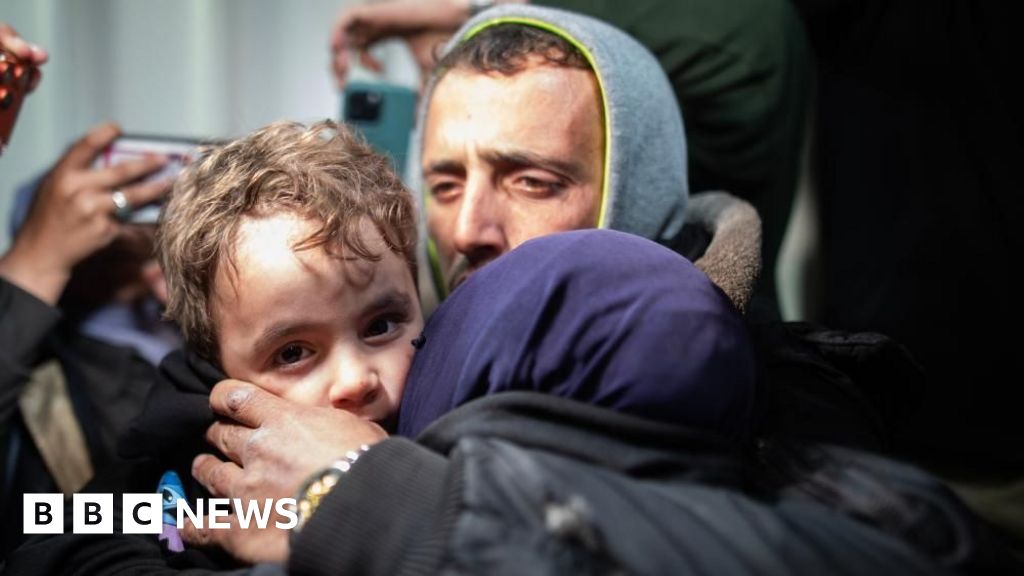
Gazans returning through Rafah crossing describe checks by Palestinian militiaImage Credit: BBC News
Key Points
- •RAFAH, GAZA STRIP – Palestinians braving the perilous journey back into the war-ravaged Gaza Strip are encountering a new and unsettling layer of control at the Rafah crossing: impromptu checkpoints manned by armed Palestinian militias. This development, described by numerous travelers and confirmed by regional observers, signals a significant fragmentation of power in southern Gaza and raises critical questions about governance, security, and the future of humanitarian aid distribution in the besieged territory.
- •Who is conducting the checks: Eyewitnesses identify the armed men as belonging to a mix of powerful local clans and political factions, including some reportedly aligned with Fatah, the rival to Hamas that governs the West Bank. This indicates a power vacuum left by Hamas is being actively filled by competing groups.
- •What they are checking: The militias are primarily inspecting identification documents, questioning individuals about their final destinations, and in some cases, searching their luggage. The stated purpose is often "maintaining order," but many travelers perceive it as an assertion of territorial control.
- •The atmosphere on the ground: Descriptions from the crossing paint a picture of tension. Returning Gazans, often carrying what little they own, must navigate not only the ruins of their homeland but also a gantlet of unpredictable armed authorities.
- •Hamas: While its military wing continues to engage in guerrilla warfare, its ability to govern and police areas like Rafah has been severely degraded. The group is attempting to reassert authority through informal networks, but its uniformed presence is gone.
Gazans returning through Rafah crossing describe checks by Palestinian militia
RAFAH, GAZA STRIP – Palestinians braving the perilous journey back into the war-ravaged Gaza Strip are encountering a new and unsettling layer of control at the Rafah crossing: impromptu checkpoints manned by armed Palestinian militias. This development, described by numerous travelers and confirmed by regional observers, signals a significant fragmentation of power in southern Gaza and raises critical questions about governance, security, and the future of humanitarian aid distribution in the besieged territory.
For many, the journey is already an ordeal of bureaucracy and uncertainty. Awad Abu Talha waited anxiously for eight of his cousins to cross from Egypt, a process that stretched from morning until night. After slowly progressing through the Egyptian side, some of his relatives made it onto Palestinian soil, only for the entire group to be sent back to Egypt due to an unspecified "technical problem." Their experience highlights the fragility of the crossing, which remains the sole, precarious entry and exit point for the vast majority of Gaza's 2.3 million residents.
But for those who do make it through, a new challenge awaits. Beyond the formal Egyptian and Palestinian Authority-affiliated border terminals, armed groups are asserting their presence.
A New Layer of Scrutiny
Travelers returning to Gaza describe being stopped by men in civilian clothes carrying firearms, positioned strategically on the roads leading from the Rafah crossing into the city and beyond. These are not the familiar faces of Hamas's pre-war police force, which has largely vanished from public view in the south following months of intense Israeli military operations.
The checks are creating an atmosphere of confusion and fear for Gazans already traumatized by war and displacement.
-
Who is conducting the checks: Eyewitnesses identify the armed men as belonging to a mix of powerful local clans and political factions, including some reportedly aligned with Fatah, the rival to Hamas that governs the West Bank. This indicates a power vacuum left by Hamas is being actively filled by competing groups.
-
What they are checking: The militias are primarily inspecting identification documents, questioning individuals about their final destinations, and in some cases, searching their luggage. The stated purpose is often "maintaining order," but many travelers perceive it as an assertion of territorial control.
-
The atmosphere on the ground: Descriptions from the crossing paint a picture of tension. Returning Gazans, often carrying what little they own, must navigate not only the ruins of their homeland but also a gantlet of unpredictable armed authorities.
Context: A Power Vacuum and Shifting Alliances
The emergence of these militias is a direct consequence of the collapse of Hamas's civil and security apparatus in southern Gaza. The Israeli military's stated goal of dismantling Hamas has created a void that various actors are now rushing to fill.
This complex dynamic includes several key players vying for influence:
-
Hamas: While its military wing continues to engage in guerrilla warfare, its ability to govern and police areas like Rafah has been severely degraded. The group is attempting to reassert authority through informal networks, but its uniformed presence is gone.
-
The Palestinian Authority (PA): The Fatah-led PA, which was violently ousted from Gaza by Hamas in 2007, sees an opportunity to regain a foothold. It has quietly endorsed efforts by its allies and associated clans to establish a presence, hoping to position itself as a viable alternative for post-war governance.
-
Local Clans and Factions: Gaza has a long history of powerful families and smaller armed groups. With the dominant power (Hamas) weakened, these clans are reasserting their traditional influence, protecting their own communities and, crucially, seeking control over resources.
The Economic and Humanitarian Dimensions
From a financial and logistical standpoint, control over the roads leading from Rafah is immensely valuable. The crossing is not just a passenger terminal; it is the primary conduit for all humanitarian aid entering Gaza.
For a senior correspondent, the economic implications are stark. The struggle for control is as much about financial power and resources as it is about political authority.
-
Control of Aid: Any group that can influence or "tax" the movement of aid trucks from the border into Gaza's interior holds immense power. They can ensure supplies reach their constituents, sell goods on the black market, and use aid as a tool to build loyalty and extract revenue.
-
The "Coordination" Economy: The journey out of Gaza has already become a multi-million dollar business, with reports of "coordination fees" reaching $5,000 to $10,000 per person paid to Egyptian companies to secure a spot on the exit list. The new checkpoints on the Palestinian side could introduce a similar, albeit more chaotic, economy of bribes and tolls for entry and movement.
-
Economic Desperation: With Gaza's formal economy completely destroyed, control over the informal and aid-based economy is paramount. The militias are positioning themselves as the new gatekeepers in a landscape of extreme scarcity.
The story of Awad Abu Talha's cousins, turned back by a "technical problem," is a microcosm of this chaos. Their day-long struggle, ending in failure, underscores the multiple layers of dysfunction—from the opaque Egyptian bureaucracy to the emerging anarchy on the Palestinian side—that define life for Gazans. Their return was not just a journey home but an entry into a newly fragmented and contested territory.
Implications and What Comes Next
The rise of these militias presents a formidable challenge to any "day after" plan for Gaza.
-
Fragmented Governance: Rather than a smooth transition to a new governing body, Gaza may be heading towards a period of warlordism, with different factions and clans controlling small fiefdoms. This would make reconstruction and stable governance nearly impossible.
-
Humanitarian Access at Risk: Aid organizations, already facing immense logistical and security challenges, will now have to negotiate with an array of armed groups. This complicates aid delivery, increases costs, and raises the risk of diversion and theft.
-
Dilemma for International Actors: Egypt, Israel, the U.S., and the UN must now contend with a reality far more complex than a simple Hamas-vs-PA dichotomy. Engaging with these new power brokers may be necessary to deliver aid but could also legitimize them, further undermining the authority of the PA and complicating long-term peace efforts.
The situation remains fluid, but the checks at Rafah are a clear and worrying indicator. As Palestinians attempt to return to what remains of their homes, they are finding that the war has not only destroyed buildings but has also shattered the old order, leaving a dangerous and uncertain vacuum in its place. The world is watching to see who, or what, will fill it.
Source: BBC News
Related Articles
Nationwide Protests Against ICE Enforcement Erupt in U.S.
Thousands are protesting ICE after the DOJ declined to investigate a fatal agent-involved shooting in Minneapolis, fueling a national movement and public anger.
Venezuela Amnesty Bill Could Free Political Prisoners
Learn about Venezuela's proposed amnesty bill to release political prisoners. The move could signal a major political shift and affect future economic sanctions
Pokémon Cancels Yasukuni Shrine Event After Backlash
The Pokémon Company has canceled an event at Tokyo's controversial Yasukuni Shrine after facing international backlash from China and South Korea.
US to Lose Measles Elimination Status: What It Means
The U.S. is poised to lose its measles elimination status due to escalating outbreaks. Learn what this downgrade means for public health and the economy.