Global Pandemic Treaty in 'Limbo': What's the Holdup?
There's a global pandemic treaty that's signed — and in 'limbo.' What's the holdup?Image Credit: NPR News
Key Points
- •The Core Dilemma: At issue is whether nations should be obligated to rapidly share genetic data and samples of new viruses, and what reciprocal obligations wealthy nations and corporations have to ensure the resulting medical products are distributed equitably.
- •Preventing History's Repeat: "There was staggering inequity during COVID-19, where rich countries had access to vaccines almost immediately, and were able to procure it multiple times over for their population," states Sangeeta Shashikant, a legal adviser for the Third World Network. Lower-income countries, she notes, received mere "scraps." The treaty is a direct attempt to build a system that prevents this from happening again.
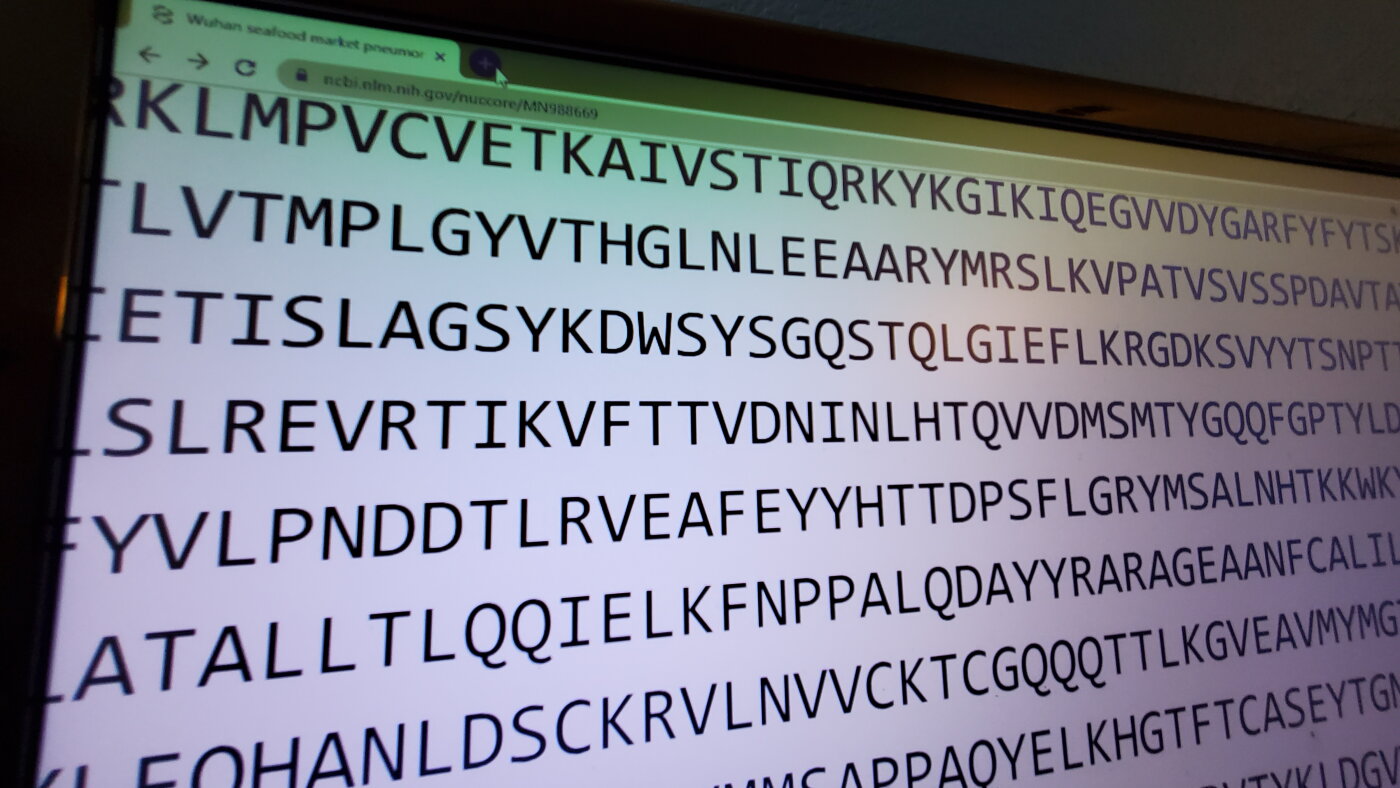
- •The Case for Openness: The rapid development of COVID-19 vaccines serves as their prime example. "In early January 2020, Chinese scientists uploaded the SARS-CoV-2 genome to a publicly available database," notes David Reddy, director general of the International Federation of Pharmaceutical Manufacturers and Associations. "That early access was part of why scientists were able to develop a vaccine so quickly. It worked incredibly well."
- •Fear of 'Friction': These countries argue that attaching contractual obligations or "strings" to data access will bog down the scientific process at the most critical moments. Amber Sholz, head of science policy at the Leibniz Institute, warns that putting boxes around data creates "a huge amount of friction that leaves us not super prepared for understanding pathogen biology."
- •'Bitter Memories': "I think they have very bitter memories of what happened during COVID-19," says Suerie Moon. The experience of sharing vital information only to be pushed to the back of the line for life-saving tools has hardened their stance.
There's a global pandemic treaty that's signed — and in 'limbo.' What's the holdup?
A landmark global pandemic agreement, adopted by the World Health Organization (WHO) in May 2025 to fortify the world against the next health crisis, is now mired in diplomatic gridlock. More than a year and a half after its initial signing, the treaty remains functionally stalled, as nations fail to finalize its most critical and contentious components, leaving global health security in a state of precarious uncertainty.
The core objective was to create a unified, equitable framework for pandemic prevention, preparedness, and response. Yet, the consensus needed to pass the treaty was achieved only by deferring the thorniest issues. Now, after eight rounds of negotiations, that deferral has become a prolonged impasse.
"The pandemic agreement is really in a state of continued limbo," warns Suerie Moon, co-director of the global health center at the Geneva Graduate Institute. "The mood is somber. I think a lot of countries know we have to make progress, and yet the path forward is not obvious."
The Heart of the Impasse: Access vs. Equity
The negotiations have deadlocked on the fundamental principles of access and equity. The debate revolves around a system designed to govern how countries share data on new pathogens and, crucially, how the benefits derived from that data—vaccines, diagnostics, and treatments—are shared in return.
This system, known as the Pathogen Access and Benefit Sharing (PABS) annex, is the treaty's engine, and right now, it is stalled on the assembly line.
-
The Core Dilemma: At issue is whether nations should be obligated to rapidly share genetic data and samples of new viruses, and what reciprocal obligations wealthy nations and corporations have to ensure the resulting medical products are distributed equitably.
-
Preventing History's Repeat: "There was staggering inequity during COVID-19, where rich countries had access to vaccines almost immediately, and were able to procure it multiple times over for their population," states Sangeeta Shashikant, a legal adviser for the Third World Network. Lower-income countries, she notes, received mere "scraps." The treaty is a direct attempt to build a system that prevents this from happening again.
A Global North-South Divide
The negotiating table is starkly divided, broadly pitting the economic and scientific interests of the Global North against the public health and equity demands of the Global South.
The Global North's Position: Speed and Open Science
Wealthy nations and their powerful pharmaceutical sectors are advocating for a system that prioritizes speed and minimal friction. Their primary goal is to ensure scientists have immediate, open access to pathogen data to accelerate research and development.
-
The Case for Openness: The rapid development of COVID-19 vaccines serves as their prime example. "In early January 2020, Chinese scientists uploaded the SARS-CoV-2 genome to a publicly available database," notes David Reddy, director general of the International Federation of Pharmaceutical Manufacturers and Associations. "That early access was part of why scientists were able to develop a vaccine so quickly. It worked incredibly well."
-
Fear of 'Friction': These countries argue that attaching contractual obligations or "strings" to data access will bog down the scientific process at the most critical moments. Amber Sholz, head of science policy at the Leibniz Institute, warns that putting boxes around data creates "a huge amount of friction that leaves us not super prepared for understanding pathogen biology."
The Global South's Position: Equity and Ironclad Guarantees
Conversely, developing nations are approaching the negotiations with deep-seated distrust, born from the experience of the last pandemic. They view their sovereign control over pathogen data as critical leverage to secure tangible benefits for their populations.
-
'Bitter Memories': "I think they have very bitter memories of what happened during COVID-19," says Suerie Moon. The experience of sharing vital information only to be pushed to the back of the line for life-saving tools has hardened their stance.
-
Demand for Guarantees: These countries are no longer willing to rely on goodwill. "Countries in the global south want ironclad guarantees that if they share a sample or a data today, tomorrow they will get the drugs or vaccines and diagnostics that are developed with them," Moon explains.
Proposed Solutions and Sticking Points
The divide is most visible in the competing proposals for how the PABS system should operate. While both sides agree in principle, they remain far apart on the practical mechanics.
-
The 'Closed Database' Model: Some developing nations propose that all pathogen data be held in a closed WHO database. Access would be granted only to parties who sign a standard contract, which could legally require them to provide a percentage of any resulting products (e.g., vaccines) to the WHO for distribution at affordable prices. A similar model already exists for the WHO's pandemic influenza preparedness network.
-
The '20% Commitment': In a significant concession, wealthy countries have agreed to a provision that would allocate 20% of all vaccines, therapeutics, and diagnostics produced during a pandemic for the WHO to distribute.
-
The Fundamental Disagreement: The stalemate persists because the Global North resists making this 20% commitment a precondition for accessing data, fearing it will stifle innovation. The Global South, however, sees this link as non-negotiable—the only way to guarantee that their contributions are met with tangible, life-saving benefits.
The Bottom Line: A Costly Delay
With negotiations seemingly at a standstill, the urgency is mounting. At the UN General Assembly, WHO Director-General Tedros Adhanom Ghebreyesus delivered a stark message to member states.
"Although differences remain, I am confident that countries will find common ground," he stated, before making an impassioned plea. "Get [it] done, as soon as possible. Further delays are not just delays in procedure or process. They are delays that cost all countries dearly when the next pandemic arrives."
Without a resolution on the PABS annex, the pandemic treaty is little more than a statement of intent. The search for a middle ground continues, but as each negotiation round concludes with little progress, the world remains without the robust, equitable, and functional pandemic response framework it desperately needs. The clock is ticking, and the cost of failure will be measured not in dollars, but in lives.
Source: NPR News
Related Articles
Nationwide Protests Against ICE Enforcement Erupt in U.S.
Thousands are protesting ICE after the DOJ declined to investigate a fatal agent-involved shooting in Minneapolis, fueling a national movement and public anger.
Venezuela Amnesty Bill Could Free Political Prisoners
Learn about Venezuela's proposed amnesty bill to release political prisoners. The move could signal a major political shift and affect future economic sanctions
Pokémon Cancels Yasukuni Shrine Event After Backlash
The Pokémon Company has canceled an event at Tokyo's controversial Yasukuni Shrine after facing international backlash from China and South Korea.
US to Lose Measles Elimination Status: What It Means
The U.S. is poised to lose its measles elimination status due to escalating outbreaks. Learn what this downgrade means for public health and the economy.