Gold & Silver Prices Plunge on Hawkish Fed Speculation
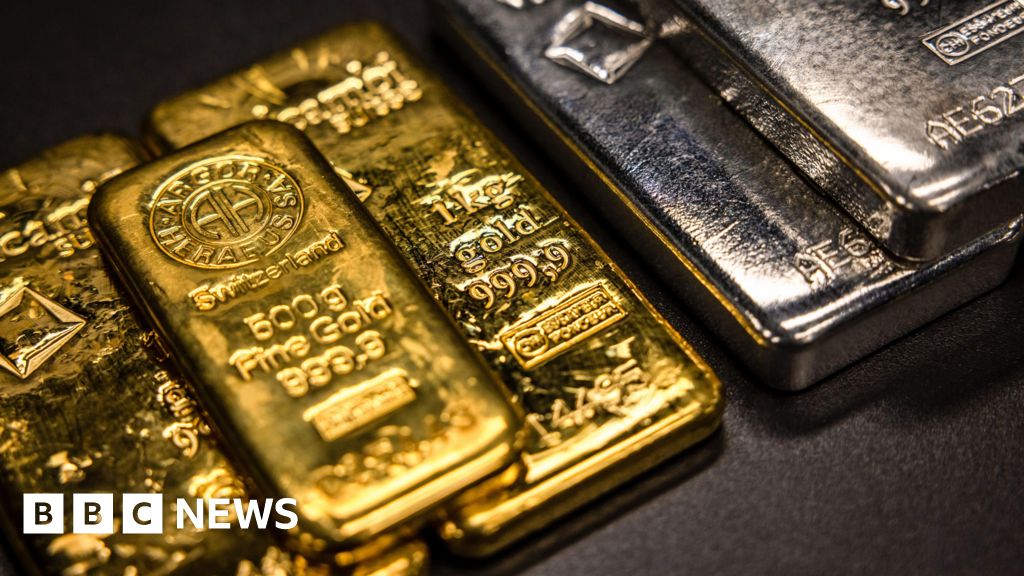
Gold and silver plunge deepens after Friday's lossesImage Credit: BBC News
Key Points
- •LONDON – A sharp sell-off in precious metals accelerated on Monday, extending significant losses from the end of last week as markets priced in a more aggressive U.S. monetary policy stance. The plunge was triggered by reports that President Donald Trump has identified Kevin Warsh, a former Federal Reserve governor with a reputation as a policy hawk, as his leading candidate to lead the central bank.
- •Gold's Decline: Gold futures for December delivery fell by more than 2.5% in early trading, breaking below key technical support levels. The move compounds a 1.5% drop on Friday, marking the worst two-day performance for the metal in over a year.
- •Silver's Slump: Silver prices were hit even harder, dropping over 3.2%. The industrial component of silver's value makes it more sensitive to economic outlooks, which are directly influenced by interest rate policy.
- •U.S. Dollar Strength: In a direct inverse correlation, the U.S. Dollar Index (DXY) surged to a multi-week high. A stronger dollar makes gold, which is priced in dollars, more expensive for buyers using other currencies, thereby dampening global demand.
- •Bond Yields Rise: Yields on U.S. Treasury bonds, particularly the 2-year and 10-year notes, climbed sharply. Higher yields on government bonds increase the opportunity cost of holding non-yielding assets like gold and silver, making them less attractive to investors.
Gold and Silver Plunge Deepens After Friday's Losses
LONDON – A sharp sell-off in precious metals accelerated on Monday, extending significant losses from the end of last week as markets priced in a more aggressive U.S. monetary policy stance. The plunge was triggered by reports that President Donald Trump has identified Kevin Warsh, a former Federal Reserve governor with a reputation as a policy hawk, as his leading candidate to lead the central bank.
The news sent shockwaves through commodity markets, which had been supported by a period of low interest rates and a relatively weaker dollar. Gold, often seen as a safe-haven asset, saw its value plummet as investors recalibrated expectations for the future of U.S. interest rates, a primary driver of the metal's appeal. Silver, which has both industrial and investment demand, fell in tandem.
This market shift represents a significant pivot in sentiment. For months, traders had balanced geopolitical risks against a backdrop of gradual, predictable moves from the Federal Reserve. The potential appointment of a more hawkish chair introduces a new variable, suggesting a faster pace of rate hikes could be on the horizon.
The Market Response in Numbers
The reaction was swift and decisive, reflecting the market's sensitivity to leadership changes at the world's most influential central bank.
-
Gold's Decline: Gold futures for December delivery fell by more than 2.5% in early trading, breaking below key technical support levels. The move compounds a 1.5% drop on Friday, marking the worst two-day performance for the metal in over a year.
-
Silver's Slump: Silver prices were hit even harder, dropping over 3.2%. The industrial component of silver's value makes it more sensitive to economic outlooks, which are directly influenced by interest rate policy.
-
U.S. Dollar Strength: In a direct inverse correlation, the U.S. Dollar Index (DXY) surged to a multi-week high. A stronger dollar makes gold, which is priced in dollars, more expensive for buyers using other currencies, thereby dampening global demand.
-
Bond Yields Rise: Yields on U.S. Treasury bonds, particularly the 2-year and 10-year notes, climbed sharply. Higher yields on government bonds increase the opportunity cost of holding non-yielding assets like gold and silver, making them less attractive to investors.
The Catalyst: Who is Kevin Warsh?
The market's dramatic reaction is tied directly to Kevin Warsh's public record and perceived policy leanings. A former Morgan Stanley executive and a Fed governor during the 2008 financial crisis, Warsh is viewed by analysts as a monetary policy "hawk."
Understanding the "Hawk" vs. "Dove" Distinction
Central bankers are often categorized by their approach to monetary policy, particularly concerning the trade-off between controlling inflation and promoting employment.
-
Hawkish Stance: A hawk prioritizes controlling inflation and is more inclined to raise interest rates to prevent the economy from overheating. They are generally more comfortable with a stronger currency and believe in preemptive action against rising prices. Mr. Warsh has, in the past, been critical of the Fed's extensive quantitative easing programs and has advocated for a more rules-based, predictable policy framework.
-
Dovish Stance: A dove, in contrast, prioritizes boosting employment and is more willing to keep interest rates low to stimulate economic growth. They are generally more tolerant of temporary spikes in inflation if it supports the labor market. The current Fed, under Chair Janet Yellen, has been widely characterized as dovish.
The potential transition from a dovish to a hawkish leadership is the fundamental driver behind the current market repricing.
Broader Context: The Fed, Rates, and Precious Metals
The value of gold and silver is intrinsically linked to the actions of the Federal Reserve. Understanding this relationship is key to interpreting the market's recent volatility.
-
Interest Rates and Opportunity Cost: Gold and silver do not pay dividends or interest. When interest rates on offer from other safe assets, like government bonds, rise, the appeal of holding a non-yielding metal diminishes. Investors can earn a return elsewhere with minimal risk, increasing the "opportunity cost" of holding gold.
-
The U.S. Dollar Connection: The Federal Reserve's policies are the single biggest driver of the U.S. dollar's value. Higher interest rates attract foreign capital from investors seeking better returns, which increases demand for the dollar and strengthens it. As gold is denominated in dollars, a stronger greenback makes the metal more expensive for foreign buyers, reducing overall demand.
-
Inflation Hedge Appeal: One of gold's traditional roles is as a hedge against inflation. When inflation rises, the purchasing power of currency declines, but gold's value tends to hold or increase. A hawkish Fed chair committed to fighting inflation before it becomes a problem reduces the perceived need for such a hedge, further weakening the case for holding gold.
Implications and What to Watch Next
While the market has reacted strongly, Mr. Warsh's appointment is not yet a certainty. Investors and analysts will be closely monitoring several key developments in the coming weeks.
The primary focus remains on the White House. An official nomination must be made by the President, and the timing of this announcement will be a major market event. Any indication that other, more dovish candidates are still in the running could cause a partial reversal of the recent moves in metals and the dollar.
-
Confirmation Process: If nominated, Mr. Warsh would face a rigorous confirmation process in the U.S. Senate. His testimony before the Senate Banking Committee will be scrutinized for clues about his precise policy intentions, his views on financial regulation, and his perspective on the Fed's independence.
-
Economic Data: Regardless of who leads the Fed, their decisions will be data-dependent. Upcoming reports on inflation (CPI), employment (Non-Farm Payrolls), and economic growth (GDP) will be critical. Stronger-than-expected data would support the case for rate hikes and could add further pressure on precious metals.
-
Market Sentiment: The initial worry about the Fed's independence, cited by some analysts, has been overshadowed by the more immediate financial implications of a hawkish chair. The market has chosen to react to the policy signal over the political one. The prevailing question for gold and silver investors is no longer if rates will rise, but how quickly and how high they will go under new leadership. Until that path becomes clear, volatility is expected to remain the dominant theme.
Source: BBC News
Related Articles
Nationwide Protests Against ICE Enforcement Erupt in U.S.
Thousands are protesting ICE after the DOJ declined to investigate a fatal agent-involved shooting in Minneapolis, fueling a national movement and public anger.
Venezuela Amnesty Bill Could Free Political Prisoners
Learn about Venezuela's proposed amnesty bill to release political prisoners. The move could signal a major political shift and affect future economic sanctions
Pokémon Cancels Yasukuni Shrine Event After Backlash
The Pokémon Company has canceled an event at Tokyo's controversial Yasukuni Shrine after facing international backlash from China and South Korea.
US to Lose Measles Elimination Status: What It Means
The U.S. is poised to lose its measles elimination status due to escalating outbreaks. Learn what this downgrade means for public health and the economy.