Gold Price Surges Past $5,000 After US-Iran Drone Incident
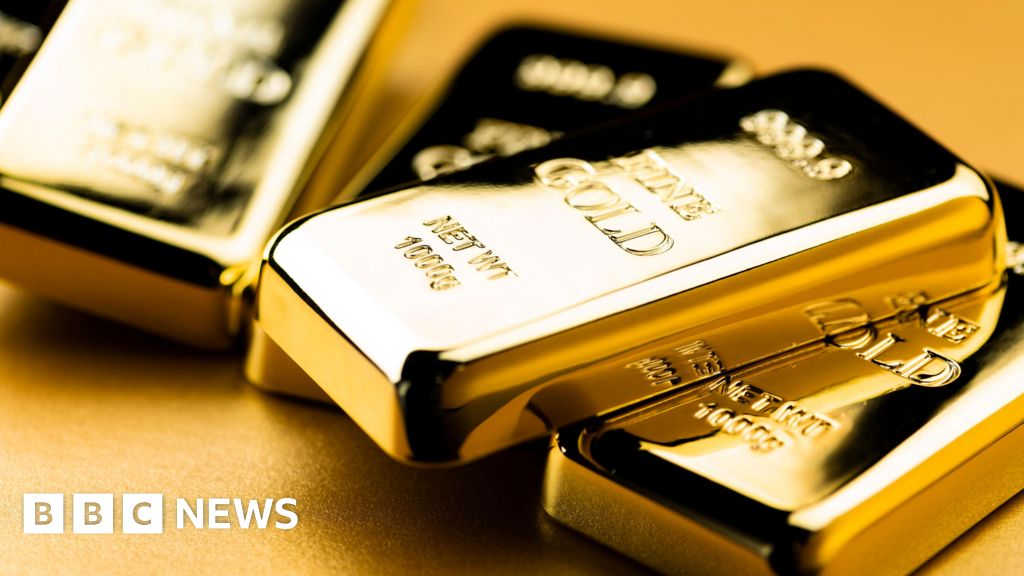
Gold rebounds above $5,000 after US downs Iran droneImage Credit: BBC News
Key Points
- •LONDON – Gold surged past the historic $5,000 per ounce threshold in frantic trading on Tuesday, as investors scrambled for safe-haven assets after the Pentagon confirmed a U.S. warship had downed an Iranian military drone over the Strait of Hormuz. The incident, which Tehran has labelled a "hostile act," has ignited fears of a direct military confrontation in the world's most critical oil chokepoint, sending shockwaves through global financial markets.
- •Brent Crude: The global benchmark for oil, soared 12% to trade above $140 a barrel, its highest level since the 2008 financial crisis.
- •WTI Crude: The U.S. benchmark followed suit, climbing past $135 a barrel. Energy analysts warned that a full-scale closure of the strait could send prices spiralling well above $200.
- •Persistent Inflation and Central Banks: Despite aggressive interest rate hikes by the U.S. Federal Reserve and other central banks, inflation remains stubbornly high in major economies. This has eroded the value of fiat currencies and created a powerful incentive for investors to seek refuge in hard assets like gold. The Fed's actions have also stoked fears of a hard landing, pushing the U.S. and global economies into a deep recession.
- •Geopolitical Instability: The ongoing war in Ukraine continues to disrupt energy and food supplies, adding to inflationary pressures and geopolitical uncertainty. The new flashpoint in the Middle East now raises the terrifying prospect of a multi-front crisis that could stretch military and economic resources to their breaking point.
Gold Rebounds Above $5,000 After US Downs Iran Drone
LONDON – Gold surged past the historic $5,000 per ounce threshold in frantic trading on Tuesday, as investors scrambled for safe-haven assets after the Pentagon confirmed a U.S. warship had downed an Iranian military drone over the Strait of Hormuz. The incident, which Tehran has labelled a "hostile act," has ignited fears of a direct military confrontation in the world's most critical oil chokepoint, sending shockwaves through global financial markets.
The precious metal, a traditional barometer of global fear, jumped over 8% in the hours following the news. The dramatic rally builds on months of gains fueled by persistent inflation, recessionary fears, and the protracted war in Ukraine. The breach of the $5,000 level represents a significant psychological milestone, signalling a profound loss of confidence in economic stability and a global flight from risk.
A Market on Edge
The reaction across financial markets was swift and severe. The drone incident acted as a catalyst on a system already strained by a confluence of economic and geopolitical pressures.
Equities Tumble, Oil Skyrockets
Global stock markets plummeted as the spectre of a wider Middle Eastern conflict loomed. The S&P 500 futures pointed to a sharply lower open on Wall Street, while in Europe, the FTSE 100 fell 3.5% and Germany's DAX shed over 4%. Asian markets, which were open as the news broke, closed deep in the red.
Conversely, oil prices surged on fears of supply disruptions. The Strait of Hormuz is the transit route for approximately one-fifth of the world's oil supply.
- Brent Crude: The global benchmark for oil, soared 12% to trade above $140 a barrel, its highest level since the 2008 financial crisis.
- WTI Crude: The U.S. benchmark followed suit, climbing past $135 a barrel. Energy analysts warned that a full-scale closure of the strait could send prices spiralling well above $200.
Other safe-haven assets also saw intense demand. The U.S. dollar, Swiss franc, and Japanese yen all strengthened against a basket of currencies, while yields on U.S. Treasury bonds fell sharply as investors piled into government debt.
The Bigger Picture: A Tinderbox of Risk
While the drone downing was the immediate trigger, market analysts stress that Tuesday's violent price action is the culmination of months of deteriorating global conditions. Gold's ascent to $5,000 was not an overnight event but a symptom of deep-seated anxiety.
"We have been warning for months that the market was a coiled spring, and the incident in the Gulf was the event that finally sprung the trap," said Dr. Annelise Thorne, Chief Economist at Global Macro Investors. "This is not just about one drone; it's about the erosion of stability on multiple fronts."
Dr. Thorne's analysis aligns with a growing consensus that a "polycrisis" of interconnected risks has left the global financial system exceptionally vulnerable to shocks. She warned that there is likely to be more volatility to come, with interest rate decisions in the US, mid-term elections in November and continuing tensions in Ukraine and the Middle East.
Key Drivers of Market Anxiety
-
Persistent Inflation and Central Banks: Despite aggressive interest rate hikes by the U.S. Federal Reserve and other central banks, inflation remains stubbornly high in major economies. This has eroded the value of fiat currencies and created a powerful incentive for investors to seek refuge in hard assets like gold. The Fed's actions have also stoked fears of a hard landing, pushing the U.S. and global economies into a deep recession.
-
Geopolitical Instability: The ongoing war in Ukraine continues to disrupt energy and food supplies, adding to inflationary pressures and geopolitical uncertainty. The new flashpoint in the Middle East now raises the terrifying prospect of a multi-front crisis that could stretch military and economic resources to their breaking point.
-
Political Uncertainty: The upcoming U.S. mid-term elections in November are adding another layer of unpredictability. Markets are bracing for potential political gridlock or significant policy shifts that could impact everything from fiscal spending to international trade relations.
Gold's Role in a Volatile World
The surge in gold underscores its enduring role as the ultimate safe haven. In a world of geopolitical conflict and currency debasement, the metal's appeal has grown exponentially.
-
Geopolitical Barometer: Gold prices are increasingly seen as a direct reflection of global tensions. The current rally indicates that investors are pricing in a significantly higher probability of a major military conflict than at any point in the last decade.
-
Inflation Hedge: With consumer prices rising at their fastest pace in forty years, investors are using gold to protect their purchasing power. Unlike cash, gold cannot be printed by central banks and is expected to retain its value over the long term.
-
Portfolio Diversification: The simultaneous fall in both stocks and bonds in recent months has upended traditional investment strategies. Gold has proven to be one of the few assets providing positive returns, reinforcing its importance as a portfolio diversifier.
-
Market Psychology: Fear is now the dominant driver in financial markets. The breach of the $5,000 level could trigger a further wave of panic buying from both institutional and retail investors, creating a self-reinforcing rally.
What to Watch Next
The coming days will be critical. All eyes are on the diplomatic fallout from the Strait of Hormuz incident. De-escalation efforts will be paramount, but the initial rhetoric from both Washington and Tehran has been uncompromising.
Markets will be watching for several key developments:
- Official Responses: Statements from the White House, the Kremlin, and Beijing will be scrutinized for signs of whether the crisis can be contained.
- Military Posture: Any movement of naval assets or military personnel in the Persian Gulf will be a major source of market volatility.
- Central Bank Action: The Federal Reserve may be forced to reconsider its aggressive tightening path if a full-blown crisis threatens to crash the global economy. Any hint of a "pivot" could have massive implications for all asset classes.
For now, uncertainty reigns. The surge in gold above $5,000 is more than just a new record; it is a stark warning that the global landscape has become fundamentally more dangerous, and investors are running out of places to hide.
Source: BBC News
Related Articles
Nationwide Protests Against ICE Enforcement Erupt in U.S.
Thousands are protesting ICE after the DOJ declined to investigate a fatal agent-involved shooting in Minneapolis, fueling a national movement and public anger.
Venezuela Amnesty Bill Could Free Political Prisoners
Learn about Venezuela's proposed amnesty bill to release political prisoners. The move could signal a major political shift and affect future economic sanctions
Pokémon Cancels Yasukuni Shrine Event After Backlash
The Pokémon Company has canceled an event at Tokyo's controversial Yasukuni Shrine after facing international backlash from China and South Korea.
US to Lose Measles Elimination Status: What It Means
The U.S. is poised to lose its measles elimination status due to escalating outbreaks. Learn what this downgrade means for public health and the economy.