Google Workers Demand End to Controversial ICE Contracts
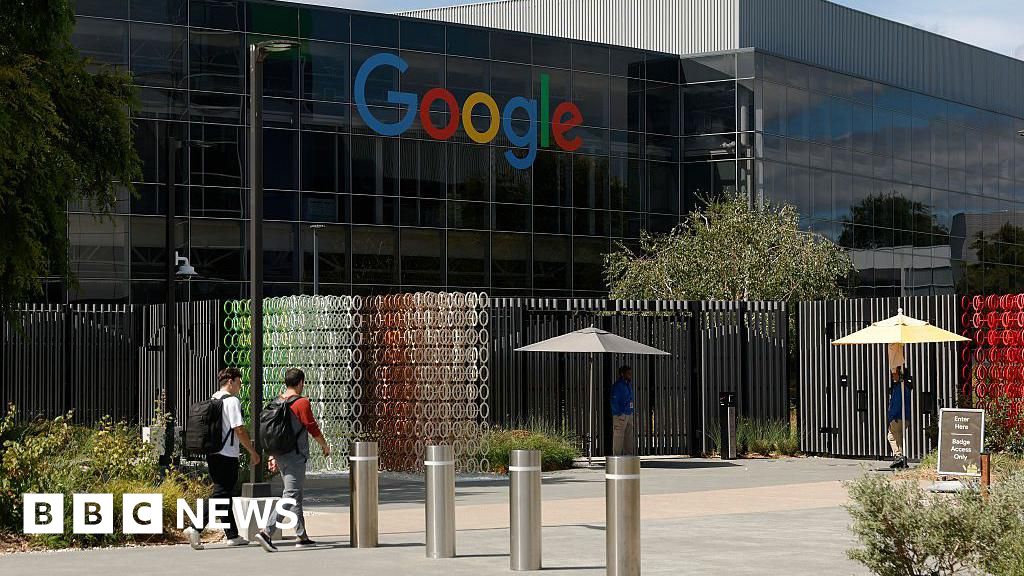
Hundreds of Google workers demand firm cuts ties with ICEImage Credit: BBC Business (Finance)
Key Points
- •LONDON – A fresh wave of employee activism is roiling Google, as hundreds of its workers have signed an internal petition demanding the technology giant publicly commit to not working with U.S. Immigration and Customs Enforcement (ICE). The protest reignites a long-simmering ethical debate within Silicon Valley over the use of its powerful technologies by government agencies, creating a significant test of corporate strategy and a potential drag on talent retention.
- •Why it matters: For investors and market watchers, this internal friction is more than a human resources issue. It strikes at the heart of a core strategic dilemma for Big Tech: balancing the immense revenue potential of public sector work against the reputational risk and employee backlash that often accompanies it. The outcome could influence Google's ability to compete for top engineering talent and shape its future government bidding strategies.
- •Primary Demand: Immediate cancellation of any cloud computing contract that supports the operations of ICE, CBP, or ORR.
- •Public Commitment: A public declaration from Google leadership that the company will not pursue such contracts in the future.
- •Transparency and Oversight: A call for greater employee oversight and transparency regarding the ethical review process for all government and military contracts.
Hundreds of Google workers demand firm cuts ties with ICE
A growing internal revolt at Google puts a spotlight on the lucrative but controversial world of government tech contracts, posing a significant challenge to the leadership of parent company Alphabet.
LONDON – A fresh wave of employee activism is roiling Google, as hundreds of its workers have signed an internal petition demanding the technology giant publicly commit to not working with U.S. Immigration and Customs Enforcement (ICE). The protest reignites a long-simmering ethical debate within Silicon Valley over the use of its powerful technologies by government agencies, creating a significant test of corporate strategy and a potential drag on talent retention.
The petition, viewed by financial correspondents, specifically calls for Google to terminate any existing or future business with ICE, the U.S. Customs and Border Protection (CBP), and the Office of Refugee Resettlement (ORR). This movement represents the latest, and one of the most direct, challenges by employees to the company's pursuit of profitable government contracts.
Why it matters: For investors and market watchers, this internal friction is more than a human resources issue. It strikes at the heart of a core strategic dilemma for Big Tech: balancing the immense revenue potential of public sector work against the reputational risk and employee backlash that often accompanies it. The outcome could influence Google's ability to compete for top engineering talent and shape its future government bidding strategies.
The Core of the Conflict
The current employee protest centers on allegations that Google technology, specifically its cloud computing platform, is being used to support ICE operations. While Google maintains its cloud services are for general-purpose computing, activists within the company argue that providing any infrastructure makes the firm complicit in the agency's controversial immigration enforcement policies.
The petition's demands are unambiguous and reflect a deep-seated moral opposition among a vocal segment of the workforce.
- Primary Demand: Immediate cancellation of any cloud computing contract that supports the operations of ICE, CBP, or ORR.
- Public Commitment: A public declaration from Google leadership that the company will not pursue such contracts in the future.
- Transparency and Oversight: A call for greater employee oversight and transparency regarding the ethical review process for all government and military contracts.
The sentiment driving the protest highlights a growing challenge for Google in the hyper-competitive war for talent. One employee, who identified herself only as "S" for fear of retaliation, articulated this risk directly. She noted that she came to work for Google about three years ago, but said that had she known then of its work with federal agencies, she would not have joined the company. This view underscores the potential for these contracts to act as a significant deterrent for prospective and current employees who are driven by mission as much as compensation.
A Pattern of Activism
This is not an isolated incident for Google. The company has a well-documented history of employee-led campaigns against controversial projects, which have had material consequences for its business.
-
Project Maven (2018): This was a watershed moment. A contract with the U.S. Department of Defense to use Google's AI for analyzing drone footage sparked a massive internal uproar. Thousands of employees signed a petition and several high-profile engineers resigned in protest. The backlash ultimately forced Google to let the contract expire and, crucially, led to the creation of its official AI Principles.
-
Google's AI Principles: Published in the wake of the Maven controversy, these principles state that Google will not design or deploy AI for weapons, illegal surveillance, or technologies that violate "widely accepted principles of international law and human rights." Protesters are now using these very principles as leverage, arguing that work with ICE violates the company's own ethical framework.
-
Project Dragonfly (2018-2019): Another significant internal revolt erupted over a secret project to develop a censored search engine for the Chinese market. Employee outrage over complicity in state censorship, combined with external pressure, led Google to effectively shutter the project.
These historical precedents demonstrate that employee activism at Google is not performative; it has a track record of forcing management to abandon lucrative but ethically contentious initiatives.
The Broader Industry Dilemma
Google's internal struggles mirror a sector-wide reckoning. As tech companies pivot towards the stable, high-margin revenue streams of government and defense contracts, they are increasingly clashing with a workforce steeped in the idealistic, world-changing rhetoric of Silicon Valley's early days.
- Microsoft: The company has faced sustained employee protests over its $480 million HoloLens contract with the U.S. Army and its separate cloud contracts with ICE.
- Amazon: Employees and shareholders have repeatedly pressured the company to stop selling its facial recognition software, Rekognition, to police forces and to sever its cloud hosting ties with data analytics firms that work with ICE.
- Salesforce: CEO Marc Benioff has faced public and internal pressure over the company's contract to provide software to U.S. Customs and Border Protection.
Financial and Strategic Implications
For Alphabet's leadership, navigating this issue is a high-stakes balancing act with tangible financial consequences.
- The Government Cloud Market: The public sector cloud market is a multi-billion dollar prize. Seceding this territory to rivals like Amazon Web Services (AWS) and Microsoft Azure on ethical grounds would be a major strategic and financial concession.
- Talent Retention: As the testimony from employee "S" indicates, the reputational cost can translate directly into a human capital cost. In an industry where talent is the primary asset, an inability to attract or retain top-tier engineers and data scientists represents a fundamental threat to innovation and long-term growth.
- Brand and Reputation: Google has cultivated a brand image centered on organizing the world's information and upholding its former motto, "Don't Be Evil." Public disputes that pit this image against its commercial activities create brand dissonance that can erode public trust.
Next Steps
Google's management has so far remained publicly quiet on this specific petition, though in the past it has defended its work with government agencies, stating that it is proud to help them with their digital transformation and that its technology is used for general administrative purposes.
The immediate question is whether this protest will gain the critical mass seen during the Project Maven backlash. The next steps will be telling:
- Leadership's Response: A non-committal corporate statement may no longer be sufficient to quell the dissent. The market will be watching for any substantive change in policy or tone from Google Cloud CEO Thomas Kurian and Alphabet CEO Sundar Pichai.
- Potential Escalation: If their demands are not met, employees could escalate their actions, with the possibility of walkouts similar to the one organized in 2018 over the company's handling of sexual misconduct allegations.
- Impact on Bidding: The most significant long-term indicator will be Google's behavior in future government contract bidding. A quiet withdrawal from competing for certain sensitive contracts would signal that the internal pressure is having its intended effect, even without a public declaration.
As Silicon Valley's giants mature into critical infrastructure providers for governments worldwide, they will find that the code they write and the platforms they build are inextricably linked to complex geopolitical and ethical questions. For Google, this latest internal firestorm is a stark reminder that its most valuable asset—its people—is demanding a voice in answering them.
Source: BBC Business (Finance)
Related Articles
Nationwide Protests Against ICE Enforcement Erupt in U.S.
Thousands are protesting ICE after the DOJ declined to investigate a fatal agent-involved shooting in Minneapolis, fueling a national movement and public anger.
Venezuela Amnesty Bill Could Free Political Prisoners
Learn about Venezuela's proposed amnesty bill to release political prisoners. The move could signal a major political shift and affect future economic sanctions
Pokémon Cancels Yasukuni Shrine Event After Backlash
The Pokémon Company has canceled an event at Tokyo's controversial Yasukuni Shrine after facing international backlash from China and South Korea.
US to Lose Measles Elimination Status: What It Means
The U.S. is poised to lose its measles elimination status due to escalating outbreaks. Learn what this downgrade means for public health and the economy.