Guardiola Demands EFL Cup Rule Change for Marc Guehi
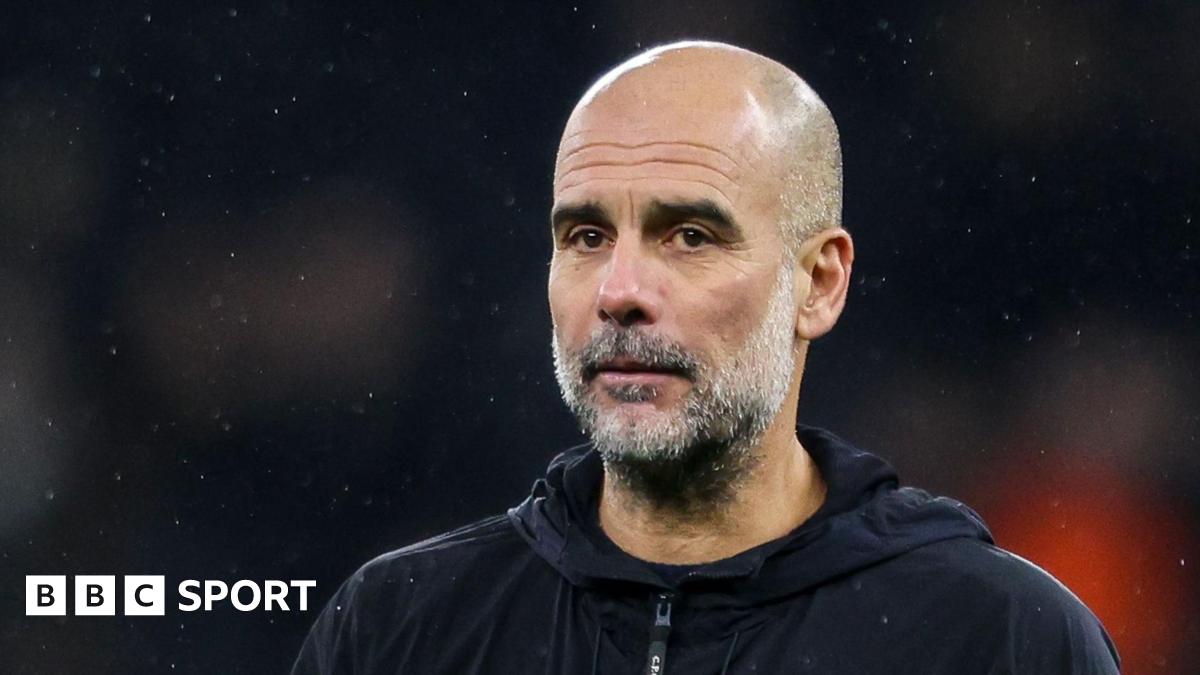
Manchester City: Pep Guardiola calls for EFL Cup rule change so Marc Guehi can play in Wembley finalImage Credit: BBC News
Key Points
- •LONDON – Manchester City manager Pep Guardiola has publicly challenged the English Football League (EFL) to amend its competition rules, branding them illogical after a key January signing was ruled ineligible for the upcoming Carabao Cup final. The dispute centres on the availability of defender Marc Guehi, a multi-million-pound acquisition, and brings into sharp focus the growing tension between football's regulatory frameworks and the financial realities of the modern transfer market.
- •The Ineligible Asset: Marc Guehi was signed from Crystal Palace after Manchester City had already played the first leg of their semi-final tie against Newcastle. Under current EFL rules (specifically, Rule 6.5), a player is not eligible to play in the final if they were not registered with the club by the deadline for the first leg of the semi-final. This administrative cut-off renders the expensive defender unavailable for the Wembley showpiece.
- •The Eligible Counterpart: In contrast, winger Antoine Semenyo, who arrived from Bournemouth just four days before the first leg, was successfully registered in time. He subsequently featured and scored in that match, making him fully eligible for the final. This discrepancy forms the basis of Guardiola's complaint. "Antoine arrived before the first [game] so could play," he explained. "And now it's the final. Why should he [Guehi] not play?"
- •Beneficiaries of Change: Both Antoine Semenyo and fellow squad member Max Alleyne had appeared for their former clubs (Bournemouth and Watford, respectively) in earlier rounds of this season's Carabao Cup. The removal of the cup-tied rule allowed them to feature for City in the semi-finals, demonstrating the EFL's capacity for regulatory evolution.
Manchester City: Pep Guardiola calls for EFL Cup rule change so Marc Guehi can play in Wembley final
LONDON – Manchester City manager Pep Guardiola has publicly challenged the English Football League (EFL) to amend its competition rules, branding them illogical after a key January signing was ruled ineligible for the upcoming Carabao Cup final. The dispute centres on the availability of defender Marc Guehi, a multi-million-pound acquisition, and brings into sharp focus the growing tension between football's regulatory frameworks and the financial realities of the modern transfer market.
Guardiola voiced his bewilderment and frustration following his team's semi-final victory over Newcastle United, which secured their place at Wembley. He confirmed that Manchester City would formally petition the EFL to grant Guehi an exemption, although he conceded the request was likely to be denied.
The manager's argument is rooted in a simple economic principle: a club should be able to utilize an asset it has purchased and is paying for. "You buy a player for a lot of money and he is not able to play for a rule I don't understand," Guardiola stated. "We pay his salary, he is our player. Why should he not play?"
The Crux of the Matter: A Tale of Two Signings
The core of the issue lies in the EFL's regulations regarding player registration for the semi-final and final stages of the Carabao Cup. The timing of Manchester City's January transfer business has created a stark contrast in player eligibility, highlighting what Guardiola perceives as an arbitrary and outdated rule.
A detailed look at the situation reveals a clear dividing line based on the date of the first semi-final leg.
-
The Ineligible Asset: Marc Guehi was signed from Crystal Palace after Manchester City had already played the first leg of their semi-final tie against Newcastle. Under current EFL rules (specifically, Rule 6.5), a player is not eligible to play in the final if they were not registered with the club by the deadline for the first leg of the semi-final. This administrative cut-off renders the expensive defender unavailable for the Wembley showpiece.
-
The Eligible Counterpart: In contrast, winger Antoine Semenyo, who arrived from Bournemouth just four days before the first leg, was successfully registered in time. He subsequently featured and scored in that match, making him fully eligible for the final. This discrepancy forms the basis of Guardiola's complaint. "Antoine arrived before the first [game] so could play," he explained. "And now it's the final. Why should he [Guehi] not play?"
Precedent and The "Cup-Tied" Rule Change
Guardiola's call for "pure logic" is bolstered by a significant rule change the EFL has already implemented this season. The league abolished the traditional "cup-tied" rule, which previously prevented a player from representing more than one club in the competition in the same season.
This modernizing step has already benefited Manchester City directly.
- Beneficiaries of Change: Both Antoine Semenyo and fellow squad member Max Alleyne had appeared for their former clubs (Bournemouth and Watford, respectively) in earlier rounds of this season's Carabao Cup. The removal of the cup-tied rule allowed them to feature for City in the semi-finals, demonstrating the EFL's capacity for regulatory evolution.
This recent flexibility makes the rigid stance on the semi-final registration deadline seem inconsistent to the City manager. He argues that if the principle of being tied to one club has been removed, the logic should extend to a player who has joined a finalist club during the open, FIFA-sanctioned transfer window.
"The rules to buy a player depends on Fifa, Uefa, the Premier League who say, OK the transfer window is open, when you buy a player you have to play, no? It's logic," Guardiola asserted.
The Governance Perspective
While Guardiola's argument centres on investment and asset utilisation, the EFL's regulations are designed to uphold sporting integrity and administrative order.
The rule in question is not aimed at any specific club but provides a clear, unambiguous deadline for all four semi-finalists. Its purpose is to ensure that the squads competing for a place in the final are fixed at a specific point, preventing teams from making strategic, last-minute acquisitions solely for the final match.
Changing a rule mid-competition to accommodate one club, regardless of its financial investment, would set a contentious precedent. It could be viewed as unfair to the other finalist and to the semi-finalists who were eliminated while adhering to the existing regulations. The EFL's primary responsibility is to maintain a level playing field governed by rules known to all participants from the outset.
Next Steps and Broader Implications
Manchester City's leadership, prompted by their manager, is expected to formally contact the EFL to plead their case for Guehi's inclusion. "I said to the club, they have to ask, definitely," Guardiola confirmed.
However, the manager is realistic about the potential for success, predicting the answer will be "No. But we will try."
The incident raises broader questions about the alignment of domestic cup competition rules with the high-stakes, high-spending environment of elite football. As transfer fees and player salaries spiral, top clubs are increasingly viewing players as high-value assets. Regulations that restrict the deployment of these assets are likely to face growing scrutiny and challenge.
While Marc Guehi is almost certain to be a spectator at Wembley, this high-profile case may serve as a catalyst for the EFL to review its registration deadlines for future seasons. The debate between upholding traditional sporting regulations and adapting to the commercial realities of the global football industry is set to continue long after the final whistle.
Source: BBC News
Related Articles
Nationwide Protests Against ICE Enforcement Erupt in U.S.
Thousands are protesting ICE after the DOJ declined to investigate a fatal agent-involved shooting in Minneapolis, fueling a national movement and public anger.
Venezuela Amnesty Bill Could Free Political Prisoners
Learn about Venezuela's proposed amnesty bill to release political prisoners. The move could signal a major political shift and affect future economic sanctions
Pokémon Cancels Yasukuni Shrine Event After Backlash
The Pokémon Company has canceled an event at Tokyo's controversial Yasukuni Shrine after facing international backlash from China and South Korea.
US to Lose Measles Elimination Status: What It Means
The U.S. is poised to lose its measles elimination status due to escalating outbreaks. Learn what this downgrade means for public health and the economy.