How ICE Raids Impact a Chicago Neighborhood's Economy
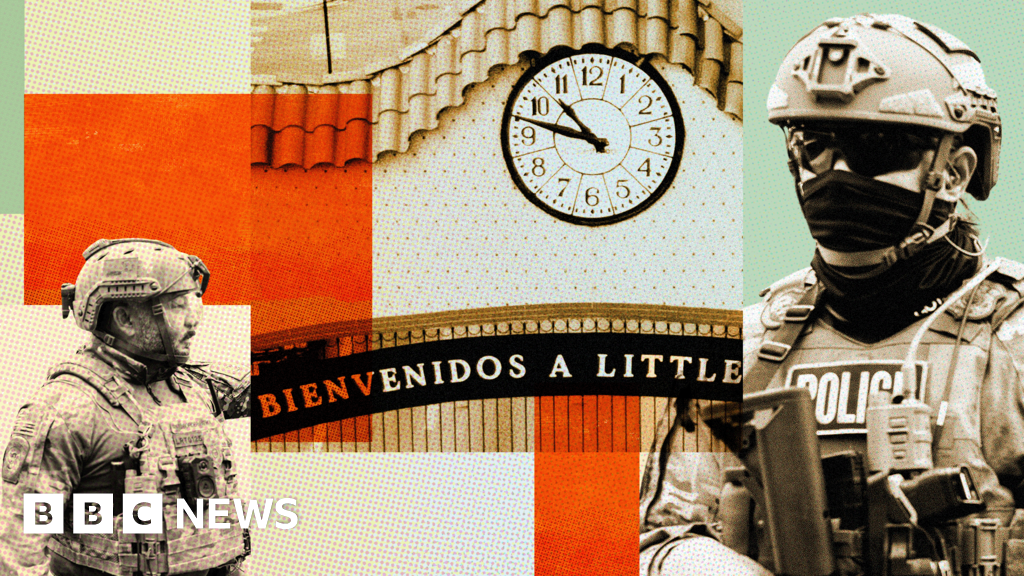
After ICE raids... a once bustling Chicago neighbourhood has changedImage Credit: BBC News
Key Points
- •CHICAGO – The silence on what was once a vibrant commercial street on Chicago's West Side is the most telling indicator of change. Where the scents of baking bread and grilled meats once mixed with the sounds of Spanish-language music and bustling crowds, a palpable quiet has now settled. Storefronts that were the lifeblood of this predominantly immigrant community now sit dark, with "For Lease" signs gathering dust in their windows. This is the economic aftermath of recent, large-scale Immigration and Customs Enforcement (ICE) operations, a story of how federal policy is reshaping a local economy, block by block.
- •Consumer Spending Collapse: With residents fearful of venturing out, daily commerce has ground to a halt. Local grocers, restaurants, bakeries, and service providers have lost their core customer base. Discretionary spending has all but vanished, and even essential purchases are being consolidated to minimize time spent in public.
- •Labor Market Disruption: Many of the area's small businesses, particularly in the construction, hospitality, and cleaning service sectors, relied on a workforce that included undocumented immigrants. The raids and subsequent fear have led to acute labor shortages, leaving businesses unable to fulfill orders, complete projects, or even open their doors.
- •Commercial Real Estate Vacancies: The financial strain has forced dozens of small, family-owned businesses to close permanently. This has led to a spike in commercial vacancies, depressing property values and creating a domino effect for landlords who now face their own financial peril from lost rental income.
- •A Mixed-Status Community: It is a misconception that these neighborhoods are composed entirely of undocumented individuals. The majority of households are often "mixed-status." A U.S.-born child may live with a parent who is a legal resident and another who is undocumented. This dynamic means that an enforcement action against one person effectively sends an entire family, including citizens and legal residents, into the shadows.
After ICE raids... a once bustling Chicago neighbourhood has changed
CHICAGO – The silence on what was once a vibrant commercial street on Chicago's West Side is the most telling indicator of change. Where the scents of baking bread and grilled meats once mixed with the sounds of Spanish-language music and bustling crowds, a palpable quiet has now settled. Storefronts that were the lifeblood of this predominantly immigrant community now sit dark, with "For Lease" signs gathering dust in their windows. This is the economic aftermath of recent, large-scale Immigration and Customs Enforcement (ICE) operations, a story of how federal policy is reshaping a local economy, block by block.
The immediate commercial shockwave has been profound. Business owners who remain report a catastrophic drop in foot traffic, with sales plummeting by as much as 50-70% in the weeks following the enforcement actions. The fear is not just among the undocumented; it has created a chilling effect across the entire community, where mixed-status families—composed of U.S. citizens, legal residents, and undocumented individuals—are the norm. The result is a self-imposed lockdown, keeping a significant portion of the consumer base at home and away from local businesses.
The Immediate Economic Fallout
The neighborhood’s intricate economic fabric, woven over decades, began to unravel almost overnight. The primary drivers of this disruption are a sudden evaporation of both labor and consumer spending, creating a dual crisis for small businesses.
-
Consumer Spending Collapse: With residents fearful of venturing out, daily commerce has ground to a halt. Local grocers, restaurants, bakeries, and service providers have lost their core customer base. Discretionary spending has all but vanished, and even essential purchases are being consolidated to minimize time spent in public.
-
Labor Market Disruption: Many of the area's small businesses, particularly in the construction, hospitality, and cleaning service sectors, relied on a workforce that included undocumented immigrants. The raids and subsequent fear have led to acute labor shortages, leaving businesses unable to fulfill orders, complete projects, or even open their doors.
-
Commercial Real Estate Vacancies: The financial strain has forced dozens of small, family-owned businesses to close permanently. This has led to a spike in commercial vacancies, depressing property values and creating a domino effect for landlords who now face their own financial peril from lost rental income.
Background: Policy and Enforcement
The ICE operations are part of a broader federal strategy to enforce U.S. immigration laws. While officially targeting individuals with outstanding deportation orders or criminal records, the scale and visibility of these raids inevitably impact the wider community.
Understanding the local context is critical to understanding the economic impact. This Chicago neighborhood, like many similar enclaves across the country, functions as a unique economic ecosystem.
-
A Mixed-Status Community: It is a misconception that these neighborhoods are composed entirely of undocumented individuals. The majority of households are often "mixed-status." A U.S.-born child may live with a parent who is a legal resident and another who is undocumented. This dynamic means that an enforcement action against one person effectively sends an entire family, including citizens and legal residents, into the shadows.
-
The Role of the Informal Economy: A significant, albeit hard to measure, portion of the local economy operates informally. This cash-based system, while outside the formal tax structure, is deeply integrated with the formal economy. An undocumented worker paid in cash still spends that money at a local, tax-paying grocery store or pays rent to a property owner who pays taxes. Disrupting the informal workforce has direct and immediate consequences for formal, registered businesses.
The Ripple Effect on a Fragile Ecosystem
The economic damage extends far beyond the shuttered storefronts. The interconnected nature of the local economy means that the failure of one sector quickly cascades into others, threatening a systemic breakdown.
Strain on Small and Medium-Sized Enterprises (SMEs)
The neighborhood’s backbone is its SMEs—the family-run taquerias, bodegas, and construction contractors. These businesses typically operate on thin margins and lack the capital reserves to withstand a prolonged revenue shock. Many owners, themselves immigrants who followed a legal path, now find their life's work in jeopardy because their customer and employee base has vanished.
The Widening Cracks in the Property Market
The crisis is not confined to commercial real estate.
- Residential Vacancies: As families are broken up by deportation or choose to relocate to areas perceived as safer, residential landlords are experiencing a surge in vacancies and unpaid rent.
- Financial Risk: This loss of income puts property owners at risk of defaulting on their mortgages, which in turn poses a threat to the community banks that finance many of these local properties. The potential for a localized foreclosure crisis is a growing concern among city officials.
The Toll on Municipal Finances
The economic contraction has direct implications for the City of Chicago's budget.
- Tax Revenue: A decline in business activity translates directly to lower sales tax collections. A depressed property market will eventually lead to lower property tax revenues.
- Increased Social Costs: While one segment of the population disappears, another—U.S. citizen children left behind, for instance—may require greater social support from the city and state, further straining public resources.
The National Debate on Main Street
The situation has turned this Chicago neighborhood into a microcosm of the polarized national debate on immigration. The tension is palpable in conversations with the few residents still on the streets. One local property owner, who asked to remain anonymous, expressed a view that reflects one side of the political divide.
"I'm sorry it had to come to this point, but this is the Democrats' fault," he said. "There are rules in this country. You can come in, but do it the right way. Then you can stay here and pursue the life you want."
This perspective, emphasizing the rule of law, contrasts sharply with that of local business leaders and community advocates. They argue that the current enforcement strategy is economically self-defeating and inhumane, punishing not only the undocumented but also the U.S. citizens, legal residents, and business owners who form the fabric of the community. They call for comprehensive immigration reform that includes a pathway to legal status, arguing it would bring workers out of the shadows and create a more stable and prosperous economy for all.
The Path Forward: Uncertainty and Adaptation
The future of this once-bustling neighborhood is deeply uncertain. The economic damage is clear, but the path to recovery is not.
-
Long-Term Implications: The key question is whether this economic disruption is temporary or signals a permanent demographic and commercial shift. If the immigrant population does not return, the neighborhood may gentrify, or it may enter a long period of economic decline.
-
Community and City Response: Local advocacy groups are working to provide legal aid and social services. City officials are exploring potential relief measures for small businesses, but their tools are limited in the face of federal policy.
Ultimately, the fate of this Chicago community, and many others like it, hinges on the resolution of the national immigration debate. For now, it stands as a stark case study in how federal enforcement actions create powerful economic headwinds, turning vibrant main streets into symbols of division and uncertainty.
Source: BBC News
Related Articles
Nationwide Protests Against ICE Enforcement Erupt in U.S.
Thousands are protesting ICE after the DOJ declined to investigate a fatal agent-involved shooting in Minneapolis, fueling a national movement and public anger.
Venezuela Amnesty Bill Could Free Political Prisoners
Learn about Venezuela's proposed amnesty bill to release political prisoners. The move could signal a major political shift and affect future economic sanctions
Pokémon Cancels Yasukuni Shrine Event After Backlash
The Pokémon Company has canceled an event at Tokyo's controversial Yasukuni Shrine after facing international backlash from China and South Korea.
US to Lose Measles Elimination Status: What It Means
The U.S. is poised to lose its measles elimination status due to escalating outbreaks. Learn what this downgrade means for public health and the economy.