Perth Invasion Day Rally Attacker Faces Terrorism Charge
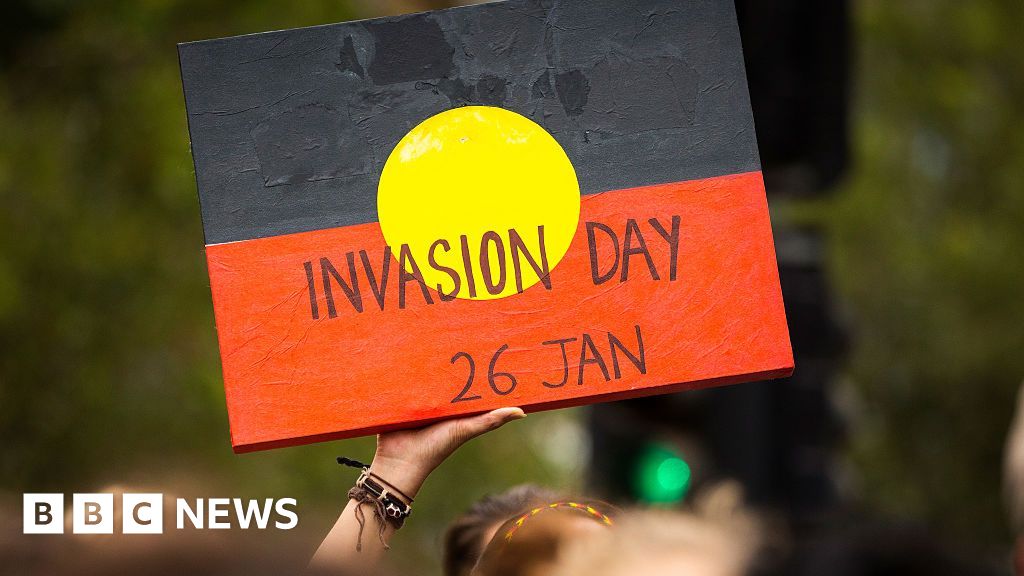
Invasion Day: Man charged with terrorism over attack on Perth rallyImage Credit: BBC News
Key Points
- •PERTH, AUSTRALIA – A man accused of detonating an improvised explosive device at an "Invasion Day" rally in Perth now faces a federal terrorism charge, a significant escalation in a case that has exposed the volatile tensions surrounding Australia's national day. The new charge, laid by the Australian Federal Police, elevates the incident from a state-level crime to an act of national security concern.
- •New Terrorism Offence: The man has been charged with one count of engaging in a terrorist act under Section 101.1 of the Commonwealth Criminal Code Act 1995. This is the most serious charge and will be prosecuted at the federal level.
- •Previous State Charges: He remains charged by Western Australia Police with committing an unlawful act with intent to harm, which addresses the direct physical danger posed to rally attendees.
- •Explosives Possession: A further state charge includes one count of making or possessing explosives under suspicious circumstances, relating to the construction of the improvised device used in the attack.
- •Official Celebration: For many, Australia Day commemorates the 1788 arrival of the First Fleet of British ships at Port Jackson and the raising of the Flag of Great Britain at Sydney Cove. It is a public holiday marked by citizenship ceremonies, barbecues, and official events.
Invasion Day: Man charged with terrorism over attack on Perth rally
PERTH, AUSTRALIA – A man accused of detonating an improvised explosive device at an "Invasion Day" rally in Perth now faces a federal terrorism charge, a significant escalation in a case that has exposed the volatile tensions surrounding Australia's national day. The new charge, laid by the Australian Federal Police, elevates the incident from a state-level crime to an act of national security concern.
The suspect, whose identity has been suppressed by the courts to ensure his safety, was arrested shortly after the attack in Sir James Mitchell Park on January 26th. He was initially held on state charges, but a joint investigation has since concluded that the alleged act meets the federal definition of terrorism.
A Significant Legal Escalation
The decision to lay a terrorism charge was made by the Commonwealth Director of Public Prosecutions following a detailed investigation by the Western Australia Joint Counter Terrorism Team (JCTT), which comprises state and federal police and intelligence officers.
This move reframes the alleged crime from an act of violence to one intended to coerce the public and government through intimidation, carrying a potential sentence of life imprisonment.
Breakdown of Charges
The accused now faces a combination of Commonwealth and state charges, reflecting the multi-jurisdictional nature of the investigation.
-
New Terrorism Offence: The man has been charged with one count of engaging in a terrorist act under Section 101.1 of the Commonwealth Criminal Code Act 1995. This is the most serious charge and will be prosecuted at the federal level.
-
Previous State Charges: He remains charged by Western Australia Police with committing an unlawful act with intent to harm, which addresses the direct physical danger posed to rally attendees.
-
Explosives Possession: A further state charge includes one count of making or possessing explosives under suspicious circumstances, relating to the construction of the improvised device used in the attack.
The Incident at Sir James Mitchell Park
The attack occurred as thousands gathered for a peaceful march and rally, one of many held across Australia on a day that is officially celebrated as Australia Day but condemned by many Indigenous Australians and their allies as "Invasion Day."
Witnesses described a loud explosion followed by panic as smoke filled a section of the park. While the device was described by authorities as "crude," it was functional and detonated in proximity to a crowd. Several people were treated for minor injuries and shock, but no fatalities were reported.
In a press conference, WA Police Assistant Commissioner for Counter-Terrorism, Marcus Fillinger, stated the investigation quickly focused on the suspect's motivations. "The evidence gathered suggests the alleged act was not random," Fillinger said. "It was premeditated, and the intent was to incite terror and disrupt a lawful public assembly based on a political and ideological motive."
Context: The Contentious Heart of Australia Day
For an international audience, the context of January 26th is crucial to understanding the incident's gravity. The date marks a deep and painful division in Australian society.
-
Official Celebration: For many, Australia Day commemorates the 1788 arrival of the First Fleet of British ships at Port Jackson and the raising of the Flag of Great Britain at Sydney Cove. It is a public holiday marked by citizenship ceremonies, barbecues, and official events.
-
Indigenous Perspective: For most First Nations people, the date marks the beginning of colonial violence, dispossession of land, and the suppression of their culture. It is a day of mourning and protest, referred to as Invasion Day or Survival Day, with rallies calling for treaty, sovereignty, and a change of the national holiday's date.
The Perth rally was one of the largest in the country, drawing a diverse crowd to hear speeches from Indigenous elders and community leaders. The attack is believed to be the first instance of politically motivated explosive violence targeting such an event in Australia.
Legal and Political Ramifications
The terrorism charge carries immense legal and symbolic weight. Legal experts note that prosecutors must prove not only that the person committed the act but also that they did so with the specific intention of advancing a political, religious, or ideological cause through fear and intimidation.
The court's decision to suppress the accused's identity is a rare but necessary measure in high-profile cases. A magistrate granted the suppression order citing a "credible and serious risk" of harm to the individual, potentially from vigilante action, and to ensure the integrity of the ongoing legal process.
Dr. Alana Reece, a terrorism and law expert at the University of Western Australia, commented on the significance. "Laying a terrorism charge is not done lightly. It signals that law enforcement views this not as a simple assault, but as an attack on the very fabric of our democratic right to protest and assemble peacefully," she noted. "It fundamentally changes the narrative and the potential legal outcome."
The Path Forward
The accused has been remanded in custody after bail was formally refused. He is scheduled to appear before the Supreme Court of Western Australia next month, where the complex legal proceedings will begin to unfold.
The investigation remains active, with the JCTT continuing to examine the man's background, online activities, and any potential associates or networks. Security protocols for large public gatherings, particularly politically sensitive ones, are now under urgent review by authorities across the country.
This case has thrust the deep-seated divisions over Australia's national identity into the realm of national security, forcing a difficult conversation about political extremism and the safety of public discourse. As the legal process moves forward, the nation will be watching closely, grappling with the implications of an act designed to terrorize and silence.
Source: BBC News
Related Articles
Nationwide Protests Against ICE Enforcement Erupt in U.S.
Thousands are protesting ICE after the DOJ declined to investigate a fatal agent-involved shooting in Minneapolis, fueling a national movement and public anger.
Venezuela Amnesty Bill Could Free Political Prisoners
Learn about Venezuela's proposed amnesty bill to release political prisoners. The move could signal a major political shift and affect future economic sanctions
Pokémon Cancels Yasukuni Shrine Event After Backlash
The Pokémon Company has canceled an event at Tokyo's controversial Yasukuni Shrine after facing international backlash from China and South Korea.
US to Lose Measles Elimination Status: What It Means
The U.S. is poised to lose its measles elimination status due to escalating outbreaks. Learn what this downgrade means for public health and the economy.