Israel's Iran Strategy Shifts as Regime Change Hopes Fade
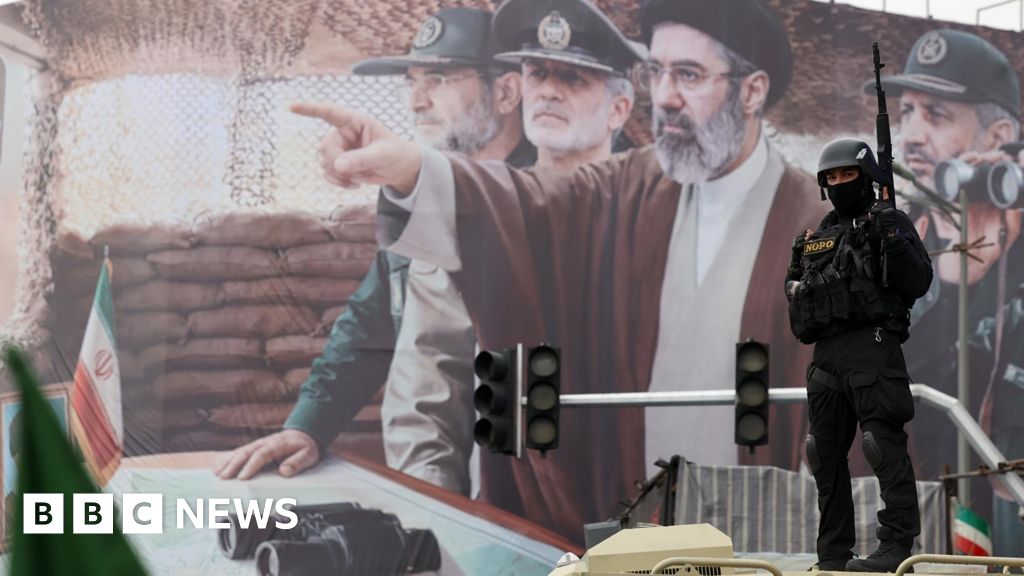
As hopes of regime change in Iran fade, Netanyahu faces political testImage Credit: BBC News
Key Points
- •JERUSALEM – A strategic gamble that once underpinned Israeli policy toward Iran—that a combination of crippling sanctions, covert action, and internal dissent would eventually lead to the regime's collapse—is now widely seen as a failed bet. This stark realization is forcing a dramatic and perilous shift in Middle Eastern geopolitics, pushing the long-running shadow war into direct, state-on-state confrontation and placing Israeli Prime Minister Benjamin Netanyahu at the center of his most significant political and military test.
- •The Old Doctrine: Relied on covert operations, cyberattacks, and targeted assassinations, primarily aimed at slowing Iran's nuclear program and disrupting its support for proxy groups. The core assumption was that the regime was inherently unstable.
- •The New Doctrine: Involves direct military strikes on Iranian assets and, now, its sovereign territory. This approach accepts the regime's stability as a medium-term reality and seeks to impose a direct, painful cost for its aggression.
- •The Southern Front: The ongoing operation in Gaza to dismantle Hamas's military and governing capabilities remains the immediate priority, but it is now understood as just one theater in a wider war.
- •The Northern Front: Daily skirmishes with Hezbollah in Lebanon represent a constant threat of escalation into a full-scale war, which would be far more devastating than the conflict in Gaza.
As hopes of regime change in Iran fade, Netanyahu faces political test
JERUSALEM – A strategic gamble that once underpinned Israeli policy toward Iran—that a combination of crippling sanctions, covert action, and internal dissent would eventually lead to the regime's collapse—is now widely seen as a failed bet. This stark realization is forcing a dramatic and perilous shift in Middle Eastern geopolitics, pushing the long-running shadow war into direct, state-on-state confrontation and placing Israeli Prime Minister Benjamin Netanyahu at the center of his most significant political and military test.
The recent exchange of direct fire between Iran and Israel, a line neither side had previously crossed, marks the culmination of this strategic pivot. For years, the prevailing wisdom in Jerusalem and Washington was that the Islamic Republic, beset by economic woes and a restive population, was a brittle power that could be contained and ultimately broken from within. That hope has now all but evaporated.
A New Strategic Reality
The Iranian regime has proven more resilient than many Western and Israeli analysts had anticipated. It has brutally suppressed internal protests, adapted its economy to sanctions by forging deeper ties with China and Russia, and successfully armed a network of regional proxies—the "Axis of Resistance"—that now encircles Israel.
This has forced a fundamental rethink in Israel's security establishment. The strategy of "death by a thousand cuts" has been replaced by a more assertive and high-stakes doctrine aimed at re-establishing deterrence not just against proxies like Hamas and Hezbollah, but against their patron state itself.
- The Old Doctrine: Relied on covert operations, cyberattacks, and targeted assassinations, primarily aimed at slowing Iran's nuclear program and disrupting its support for proxy groups. The core assumption was that the regime was inherently unstable.
- The New Doctrine: Involves direct military strikes on Iranian assets and, now, its sovereign territory. This approach accepts the regime's stability as a medium-term reality and seeks to impose a direct, painful cost for its aggression.
The "War of Redemption"
Analysts suggest this new phase is being framed within Netanyahu’s inner circle as an existential struggle. The conflict that began with the Hamas-led attacks on October 7 is now viewed as part of a much larger campaign against the Iranian-led axis.
"This is the culmination of what [Netanyahu] has tried to rebrand as the War of Redemption, which in his mind started on October 7, 2023. And this is - if not the last war - then the big war against Iran," said Neri Zilber, a Tel Aviv-based journalist and policy advisor to the Israel Policy Forum.
This reframing serves a dual purpose: it galvanizes a traumatized Israeli public for a potentially long and costly conflict, and it defines the stakes for Netanyahu's own political survival. The war is no longer just about dismantling Hamas in Gaza; it is about reshaping the entire regional security architecture.
Key Fronts in the Conflict:
- The Southern Front: The ongoing operation in Gaza to dismantle Hamas's military and governing capabilities remains the immediate priority, but it is now understood as just one theater in a wider war.
- The Northern Front: Daily skirmishes with Hezbollah in Lebanon represent a constant threat of escalation into a full-scale war, which would be far more devastating than the conflict in Gaza.
- The Iranian Core: The direct strikes—from the bombing of an Iranian consular building in Damascus to Israel's retaliatory response to Iran's massive drone and missile barrage—signal a new willingness to engage the command-and-control center of the Axis of Resistance.
Netanyahu's Political Crucible
For Prime Minister Netanyahu, this escalating conflict is inextricably linked to his political future. He is navigating a treacherous landscape of competing domestic and international pressures that will determine not only the outcome of the war but also his own legacy.
His leadership is being tested on multiple fronts:
- Domestic Coalition: Netanyahu's government relies on far-right partners, such as Finance Minister Bezalel Smotrich and National Security Minister Itamar Ben-Gvir, who are pushing for a more aggressive and uncompromising military response against Iran and its proxies. Their influence limits his diplomatic flexibility.
- War Cabinet Divisions: The more centrist members of the emergency war cabinet, primarily Benny Gantz and Gadi Eisenkot, have advocated for a more measured and strategic approach, prioritizing the return of hostages and the preservation of key alliances, particularly with the United States.
- Public Pressure: The Israeli public is deeply divided. While there is broad support for the war's initial goals, massive weekly protests demand the government prioritize a deal to release the remaining hostages held in Gaza and call for new elections.
- International Relations: The Biden administration, while reaffirming its "ironclad" commitment to Israel's security, has simultaneously urged restraint to avoid a full-blown regional war. Global condemnation over the humanitarian crisis in Gaza has left Israel increasingly isolated on the world stage, straining diplomatic and economic ties.
The Bottom Line: A Region on Edge
The fading prospect of a popular uprising or internal collapse in Iran has closed a perceived off-ramp for Israeli strategists. The assumption that time was on their side has been inverted; many now believe that a nuclear-armed Iran is an inevitability without direct, preemptive action.
This leaves the region in its most volatile state in decades. The "rules of the game" that governed the shadow war have been shattered, replaced by a dangerous cycle of direct escalation. For Netanyahu, success is now defined by his ability to navigate these pressures—to cripple his enemies without igniting a catastrophic regional war and to hold his fragile coalition together while facing a deeply skeptical public.
The coming weeks will be critical. The world is watching to see whether the path forward is one of calculated de-escalation or a deliberate march toward a wider conflict, the consequences of which would extend far beyond the Middle East, impacting global energy markets, supply chains, and international security.
Source: BBC News
Related Articles
Nationwide Protests Against ICE Enforcement Erupt in U.S.
Thousands are protesting ICE after the DOJ declined to investigate a fatal agent-involved shooting in Minneapolis, fueling a national movement and public anger.
Venezuela Amnesty Bill Could Free Political Prisoners
Learn about Venezuela's proposed amnesty bill to release political prisoners. The move could signal a major political shift and affect future economic sanctions
Pokémon Cancels Yasukuni Shrine Event After Backlash
The Pokémon Company has canceled an event at Tokyo's controversial Yasukuni Shrine after facing international backlash from China and South Korea.
US to Lose Measles Elimination Status: What It Means
The U.S. is poised to lose its measles elimination status due to escalating outbreaks. Learn what this downgrade means for public health and the economy.