Iran in 'Serious Discussions' with US Amid Military Threat
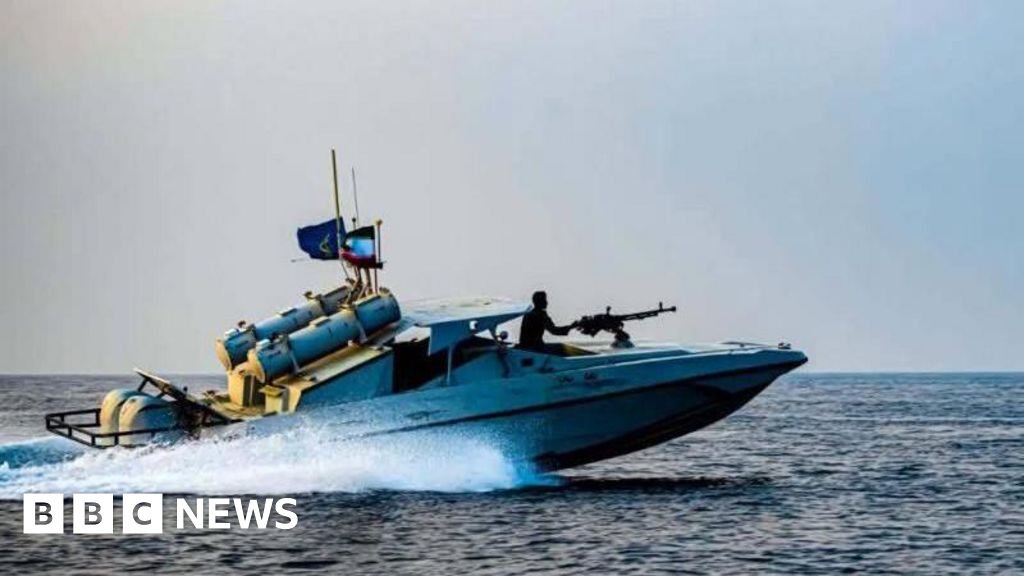
Iran in 'serious discussions' with US, Trump says, as military threat loomsImage Credit: BBC News
Key Points
- •WASHINGTON – Global financial markets are on a knife's edge this week, caught between conflicting signals of potential diplomacy and escalating military posturing in the Persian Gulf. President Trump's assertion that the U.S. is engaged in "serious discussions" with Iran has done little to calm nerves as the Pentagon reinforces its presence in the region, placing the world's most critical oil chokepoint, the Strait of Hormuz, at the center of a high-stakes geopolitical standoff.
- •Crude Volume: Approximately 21 million barrels of crude oil and refined petroleum products pass through the Strait every day, according to the U.S. Energy Information Administration (EIA).
- •Global Consumption: This volume represents about 21% of global petroleum liquids consumption, making it the world's most important oil transit chokepoint.
- •Key Destinations: The vast majority of this oil is destined for Asian markets, including China, Japan, India, and South Korea, which are heavily reliant on Persian Gulf producers.
- •LNG Traffic: The Strait is also the primary route for nearly all of Qatar's liquefied natural gas (LNG) exports, accounting for about a third of the global LNG trade.
Iran in 'serious discussions' with US, Trump says, as military threat looms
WASHINGTON – Global financial markets are on a knife's edge this week, caught between conflicting signals of potential diplomacy and escalating military posturing in the Persian Gulf. President Trump's assertion that the U.S. is engaged in "serious discussions" with Iran has done little to calm nerves as the Pentagon reinforces its presence in the region, placing the world's most critical oil chokepoint, the Strait of Hormuz, at the center of a high-stakes geopolitical standoff.
The mixed messaging from Washington—touting dialogue while deploying aircraft carriers and bombers—has created a volatile environment for investors and policymakers. The core tension lies between the White House's stated desire to avoid conflict and its "maximum pressure" campaign, which Tehran views as an act of economic warfare.
The Big Picture
The situation represents a classic case of brinkmanship, where any miscalculation could have catastrophic consequences for the global economy. At stake is the free flow of nearly a fifth of the world's oil supply, which passes daily through the narrow Strait of Hormuz. Iran has repeatedly threatened to disrupt or close this waterway if it is attacked or if its own oil exports are completely choked off by U.S. sanctions.
For global markets, the primary concern is not the rhetoric of talks, but the reality of military hardware in motion. The risk premium on crude oil is rising, and commodity traders are pricing in a growing possibility of a supply disruption that would dwarf previous incidents in the region.
By the Numbers: The Strait of Hormuz
The economic significance of this narrow waterway cannot be overstated. A closure, even for a short period, would send shockwaves through the global energy market.
- Crude Volume: Approximately 21 million barrels of crude oil and refined petroleum products pass through the Strait every day, according to the U.S. Energy Information Administration (EIA).
- Global Consumption: This volume represents about 21% of global petroleum liquids consumption, making it the world's most important oil transit chokepoint.
- Key Destinations: The vast majority of this oil is destined for Asian markets, including China, Japan, India, and South Korea, which are heavily reliant on Persian Gulf producers.
- LNG Traffic: The Strait is also the primary route for nearly all of Qatar's liquefied natural gas (LNG) exports, accounting for about a third of the global LNG trade.
Driving the News
The latest escalation was triggered by a series of rapid-fire developments. President Trump told reporters at the White House that "Iran will be calling us" and that "we are in serious discussions," a claim that was swiftly and publicly denied by Iranian officials, who stated no direct or indirect talks are underway.
This diplomatic dissonance is playing out against a stark military backdrop. The Pentagon has confirmed the deployment of the USS Abraham Lincoln Carrier Strike Group and a B-52 bomber task force to the U.S. Central Command region. This has been followed by the repositioning of the USS Arlington and a Patriot missile battery to counter what U.S. officials describe as "credible threats" from Iran and its proxy forces.
The View from Tehran
From Iran's perspective, the U.S. actions are a continuation of a hostile policy designed to cripple its economy and force regime change. Officials in Tehran have responded with defiance, emphasizing their right to self-defense and reiterating their long-standing threat regarding the Strait of Hormuz.
Iranian leaders believe the "maximum pressure" campaign, which followed the U.S. withdrawal from the 2015 nuclear deal (JCPOA), has left them with few options. The recent U.S. decision to end sanctions waivers for Iran's remaining oil customers was seen as a move to reduce its exports to zero—a red line for Tehran.
- Asymmetric Strategy: Lacking a conventional military that can match the U.S., Iran's defense doctrine relies on asymmetric warfare. This includes the use of naval mines, fast-attack craft, anti-ship missiles, and proxy forces to inflict significant economic and military pain, thereby deterring a full-scale attack.
The Flashpoints
The current crisis did not emerge in a vacuum. It is the culmination of several key policy decisions and escalating tensions that have systematically dismantled the fragile détente established by the 2015 nuclear accord.
- The Nuclear Deal (JCPOA): In May 2018, the Trump administration unilaterally withdrew the U.S. from the JCPOA, calling it a "terrible, one-sided deal." It immediately began re-imposing stringent sanctions on Iran's energy, shipping, and financial sectors.
- 'Maximum Pressure' Campaign: The administration's stated goal has been to apply maximum economic pressure to force Iran back to the negotiating table to secure a more comprehensive deal that also addresses its ballistic missile program and regional influence.
- IRGC Designation: In April 2019, the U.S. took the unprecedented step of designating a part of another nation's military, the Islamic Revolutionary Guard Corps (IRGC), as a Foreign Terrorist Organization. Iran retaliated by labeling the U.S. Central Command as a terrorist group.
- End of Oil Waivers: The final trigger was the White House's announcement in late April that it would not renew sanctions waivers for the eight countries still importing Iranian oil, aiming to completely halt Iran's primary source of revenue.
The Bottom Line
For financial markets, the ambiguity is toxic. The stark contrast between claims of "serious discussions" and the visible military buildup creates profound uncertainty. Traders are forced to weigh the low probability of a deliberate war against the high risk of an accidental conflict.
A military clash in the Persian Gulf, however limited, would likely cause Brent crude prices to spike well above $100 per barrel, roiling equity markets and threatening a global economic slowdown. The cost of shipping insurance for tankers transiting the Strait has already begun to climb, a tangible sign of market anxiety.
What's Next
The international community is watching with deep concern. European allies, who remain party to the JCPOA, are urging de-escalation, but their influence on both Washington and Tehran is limited.
- Diplomatic Channels: All eyes will be on whether any credible, back-channel communications are established, likely through intermediaries such as Oman or Switzerland, to create an off-ramp.
- Military Movements: Analysts will closely monitor the positioning of both U.S. and Iranian naval assets in the Persian Gulf for any signs of imminent confrontation.
- Oil Market Volatility: Crude oil prices will remain a key barometer of geopolitical risk. Any incident in or near the Strait of Hormuz will trigger an immediate and sharp market reaction. The coming weeks will be a critical test of nerve, with the stability of the global economy hanging in the balance.
Source: BBC News
Related Articles
Nationwide Protests Against ICE Enforcement Erupt in U.S.
Thousands are protesting ICE after the DOJ declined to investigate a fatal agent-involved shooting in Minneapolis, fueling a national movement and public anger.
Venezuela Amnesty Bill Could Free Political Prisoners
Learn about Venezuela's proposed amnesty bill to release political prisoners. The move could signal a major political shift and affect future economic sanctions
Pokémon Cancels Yasukuni Shrine Event After Backlash
The Pokémon Company has canceled an event at Tokyo's controversial Yasukuni Shrine after facing international backlash from China and South Korea.
US to Lose Measles Elimination Status: What It Means
The U.S. is poised to lose its measles elimination status due to escalating outbreaks. Learn what this downgrade means for public health and the economy.