Israeli Strikes Kill 23 Palestinians Amid Gaza Ceasefire
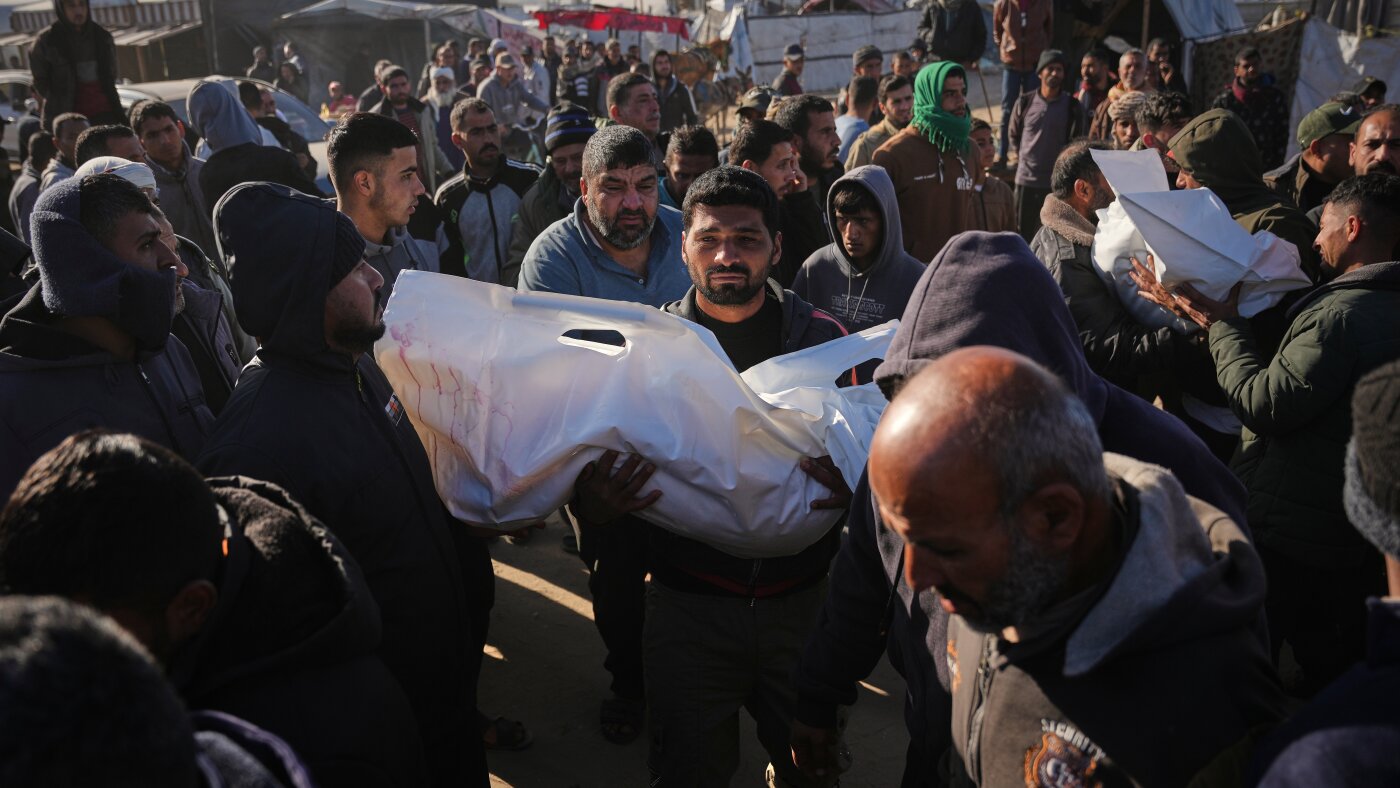
Israeli strikes kill 23 Palestinians as Gaza ceasefire inches forwardImage Credit: NPR News
Key Points
- •Israeli strikes kill 23 Palestinians as Gaza ceasefire inches forward
- •By a Senior Financial Correspondent*
- •Khan Younis Tent Camp: An airstrike on a tent camp in the southern city of Khan Younis sparked a fire, killing seven people. Nasser Hospital, which received the bodies, identified the victims as a father, his three children, and three of his grandchildren.
- •Gaza City Apartment: A separate strike on an apartment building in Gaza City killed five members of a single family. Shifa Hospital officials confirmed the dead included three children, their aunt, and their grandmother.
- •Gaza City Police Station: A strike on a police station in Gaza City resulted in at least 11 fatalities and numerous injuries. According to Shifa Hospital's director, the dead included police officers—four of whom were women—and inmates being held at the facility. The Hamas-run Interior Ministry added that Palestinian civilians were also among those killed in this attack.
Israeli strikes kill 23 Palestinians as Gaza ceasefire inches forward
By a Senior Financial Correspondent
A fragile U.S.-brokered ceasefire in Gaza is facing its most severe test, as Israeli airstrikes killed at least 23 Palestinians on Saturday in one of the deadliest days since the truce began in October. The violence casts a long shadow over delicate diplomatic progress, including the planned reopening of the vital Rafah border crossing with Egypt.
The weekend's events highlight the deep-seated friction between military action and diplomatic maneuvering. While negotiators work to implement the second phase of the ceasefire agreement, the cycle of strike and counter-strike on the ground threatens to unravel the tenuous peace. The rising death toll underscores the immense human cost of each setback.
The Situation on the Ground
Hospital officials across the Gaza Strip reported a series of lethal Israeli strikes on Saturday, marking a significant escalation since the ceasefire was enacted on October 10. The attacks targeted disparate locations, from a crowded apartment building to a camp for displaced persons.
According to reports from Shifa and Nasser hospitals, the casualties included numerous civilians, among them women and children.
-
Khan Younis Tent Camp: An airstrike on a tent camp in the southern city of Khan Younis sparked a fire, killing seven people. Nasser Hospital, which received the bodies, identified the victims as a father, his three children, and three of his grandchildren.
-
Gaza City Apartment: A separate strike on an apartment building in Gaza City killed five members of a single family. Shifa Hospital officials confirmed the dead included three children, their aunt, and their grandmother.
-
Gaza City Police Station: A strike on a police station in Gaza City resulted in at least 11 fatalities and numerous injuries. According to Shifa Hospital's director, the dead included police officers—four of whom were women—and inmates being held at the facility. The Hamas-run Interior Ministry added that Palestinian civilians were also among those killed in this attack.
The Gaza Health Ministry, whose casualty records are considered generally reliable by United Nations agencies and independent observers, has now recorded 509 Palestinians killed by Israeli fire since the ceasefire began.
A Fragile Ceasefire Under Strain
The weekend's violence creates a stark contrast with the painstaking diplomatic efforts underway. The strikes occurred just one day before the scheduled reopening of the Rafah crossing, a move seen as a cornerstone of the ceasefire's second phase.
The View from Israel
The Israeli military has maintained that its actions are retaliatory, conducted in response to ceasefire violations by Hamas.
-
Official Stance: A military official, speaking on condition of anonymity in line with protocol, confirmed that Israel carried out strikes overnight and on Saturday. They stated the operations were a response to what the army identified as ceasefire violations by Hamas on the preceding day.
-
Cited Violation: In a statement on Friday, the Israeli military said its forces had killed three militants who were seen exiting a tunnel in an Israeli-controlled zone near Rafah. Israel has consistently stated that any strikes since the October 10 agreement have been in direct response to such violations.
The View from Hamas
Hamas, which governs the Gaza Strip, condemned the attacks and appealed for international intervention to preserve the ceasefire.
-
Official Response: The group labeled Saturday's strikes a "renewed flagrant violation" of the truce agreement.
-
Call for Intervention: Hamas publicly urged the United States and other mediating countries to apply pressure on Israel to halt the strikes and adhere to the terms of the ceasefire.
Context: A Ceasefire in Phases
The U.S.-brokered agreement that went into effect on October 10 is designed as a multi-stage process aimed at long-term de-escalation, demilitarization, and reconstruction. The current stage is fraught with complex challenges that go far beyond simply halting active combat.
-
Border Crossings: The reopening of Gaza's borders, which have been almost entirely sealed throughout the conflict, is a primary goal. The initial, limited opening of the Rafah crossing is the first tangible step. For Palestinians, it represents a critical lifeline for medical evacuations and the entry of essential goods.
-
Demilitarization: A core, and highly contentious, objective is the demilitarization of the Gaza Strip after nearly two decades of Hamas rule. This long-term goal involves dismantling the military infrastructure of Hamas and other militant groups.
-
Governance and Reconstruction: The plan envisions the installation of a new government to oversee a massive reconstruction effort. The destruction of medical facilities, housing, and public infrastructure presents a staggering economic challenge, with estimates for rebuilding running into the tens of billions of dollars. Securing international funding for this effort is contingent on a stable and durable peace.
The Bottom Line: A Precarious Path Forward
Saturday's deadly strikes serve as a brutal reminder that the path to a lasting peace in Gaza is not linear. The diplomatic process and the reality on the ground are moving on parallel, and often conflicting, tracks.
-
Immediate Test: The immediate focus will be on the Rafah crossing. Whether its scheduled opening proceeds on Sunday will be a key indicator of the ceasefire's resilience. A delay or cancellation would signal a grave setback for both the humanitarian situation and the diplomatic process.
-
Long-Term Hurdles: Even if the border opening succeeds, the fundamental challenges of demilitarization and political transition remain. These issues require a level of trust and sustained negotiation that is currently undermined by each new round of violence.
The international community, particularly the U.S. and regional mediators, now faces the critical task of de-escalating the immediate violence while keeping the long-term framework for peace intact. The events of this weekend demonstrate that without a robust mechanism to enforce the truce and manage violations, the entire ceasefire agreement remains perilously close to collapse.
Source: NPR News
Related Articles
Nationwide Protests Against ICE Enforcement Erupt in U.S.
Thousands are protesting ICE after the DOJ declined to investigate a fatal agent-involved shooting in Minneapolis, fueling a national movement and public anger.
Venezuela Amnesty Bill Could Free Political Prisoners
Learn about Venezuela's proposed amnesty bill to release political prisoners. The move could signal a major political shift and affect future economic sanctions
Pokémon Cancels Yasukuni Shrine Event After Backlash
The Pokémon Company has canceled an event at Tokyo's controversial Yasukuni Shrine after facing international backlash from China and South Korea.
US to Lose Measles Elimination Status: What It Means
The U.S. is poised to lose its measles elimination status due to escalating outbreaks. Learn what this downgrade means for public health and the economy.