Judge Blocks Trump on Kennedy Center; Suits Target Voter Law
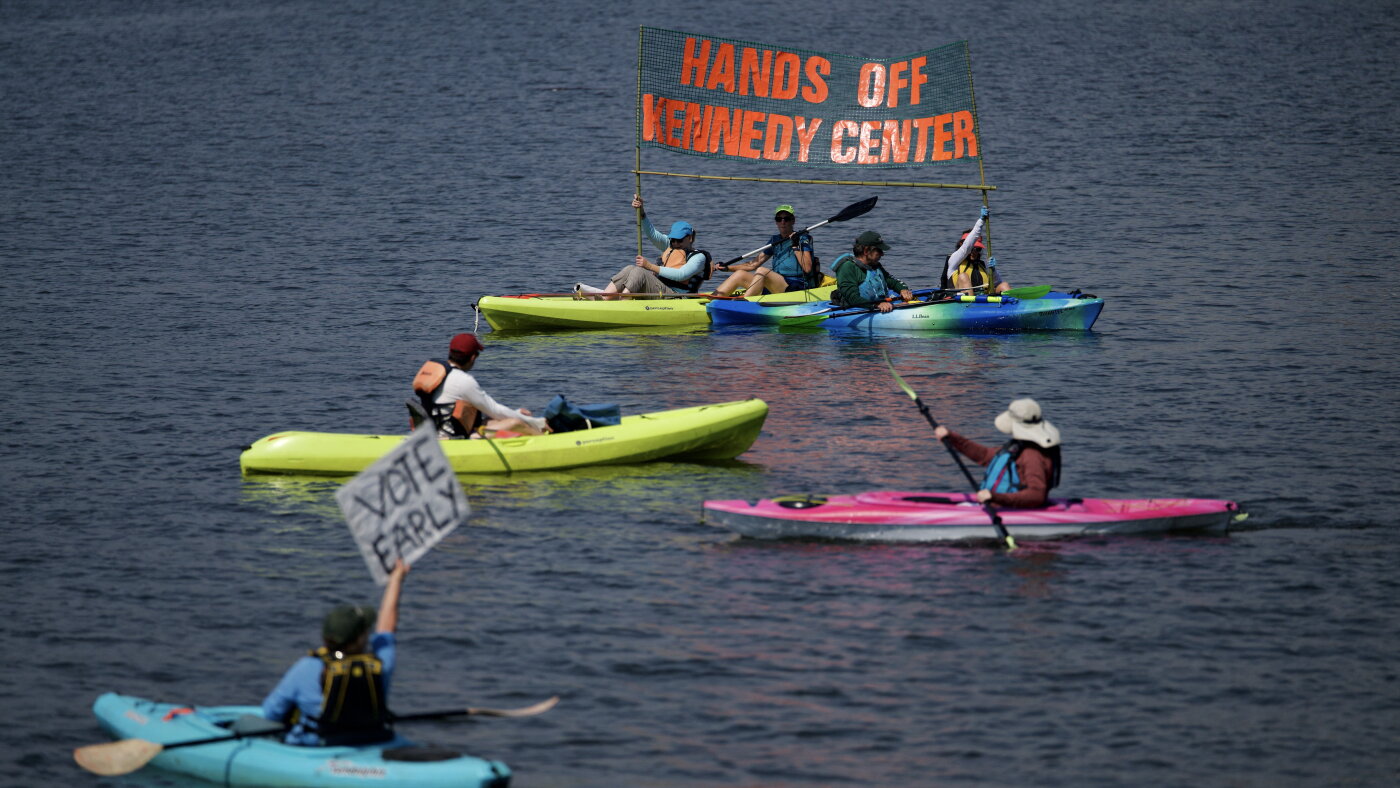
Judge says Trump can't demolish Kennedy Center. And, lawsuits target voter intimidationImage Credit: NPR News
Key Points
- •Conflicting Signals: Confusion has shrouded the center's status. While the board voted for closure, Executive Director Matt Floca described the move as "temporary" on Wednesday. This ambiguity has fueled concerns among preservationists and political opponents.
- •On-the-Ground Concerns: The legal battle has been amplified by alarming reports from the site. A sworn statement submitted in a lawsuit filed by Ohio Congresswoman Joyce Beatty alleges that construction crews were seen installing barriers as a forklift "repeatedly hit the building's pillars," suggesting demolition or destabilization efforts may have already been underway.
- •Call for Oversight: In response to these developments, a coalition of eight prominent architecture and cultural preservation groups has petitioned the court to appoint an independent monitor. They argue a neutral third party is necessary to protect the physical integrity of the landmark building and the institution it houses from further politicization or damage.
- •The Core Allegation: The plaintiffs argue that a visible presence of federal law enforcement, particularly immigration officers, near voting centers would have a chilling effect on voters. The latest lawsuit, first reported by NPR, alleges the administration is pursuing noncitizen voters using "flawed methodologies and faulty data."
- •Targeted Communities: The legal filings warn that these tactics "will almost certainly result in the surveillance, investigation, and even unlawful detention of U.S. citizens, particularly those from communities of color," constituting unlawful intimidation under federal law.
Legal Battles Escalate Over Kennedy Center and Voter Rights as Geopolitical Tensions Rise
A confluence of high-stakes legal and geopolitical developments unfolded Thursday, placing the Trump administration at the center of domestic disputes over cultural landmarks and voting rights, even as allies issued stark warnings about Russian military intentions against NATO. A federal judge has temporarily blocked the demolition of the Kennedy Center, while separate federal lawsuits challenge the administration's plans to deploy law enforcement to polling sites, citing voter intimidation.
The day's events paint a picture of a government facing significant challenges on multiple fronts. Domestically, the administration is contending with legal pushback against executive actions and rhetoric. Internationally, the strategic landscape in Eastern Europe is growing more complex, demanding careful navigation from Washington and its allies.
Federal Judge Halts Kennedy Center Demolition Amidst Presidential Pressure
A federal judge intervened Thursday to prevent the immediate demolition of the John F. Kennedy Center for the Performing Arts, ruling that President Trump cannot proceed with any destruction without first providing a 30-day notice. The ruling injects a legal roadblock into a rapidly escalating conflict over the future of the iconic Washington, D.C. institution.
The court’s decision follows a vote by the center's own board of directors to close the facility, citing its deteriorating physical condition and precarious finances. The situation intensified Wednesday when President Trump, who has long sought to have his name displayed on the main building, stated the complex could be "ripped down" if his demand is not met. The president also claimed, without providing evidence, that the Kennedy Center has lost millions of dollars.
-
Conflicting Signals: Confusion has shrouded the center's status. While the board voted for closure, Executive Director Matt Floca described the move as "temporary" on Wednesday. This ambiguity has fueled concerns among preservationists and political opponents.
-
On-the-Ground Concerns: The legal battle has been amplified by alarming reports from the site. A sworn statement submitted in a lawsuit filed by Ohio Congresswoman Joyce Beatty alleges that construction crews were seen installing barriers as a forklift "repeatedly hit the building's pillars," suggesting demolition or destabilization efforts may have already been underway.
-
Call for Oversight: In response to these developments, a coalition of eight prominent architecture and cultural preservation groups has petitioned the court to appoint an independent monitor. They argue a neutral third party is necessary to protect the physical integrity of the landmark building and the institution it houses from further politicization or damage.
Lawsuits Challenge White House Over Alleged Voter Intimidation Tactics
In a separate legal challenge with significant implications for upcoming elections, voting officials and civil rights groups have filed federal lawsuits arguing that the Trump administration's proposal to deploy federal agents to polling places is an illegal form of voter intimidation.
The lawsuits contend that such a move would violate the 1965 Voting Rights Act, which explicitly prohibits actions intended to intimidate, threaten, or coerce any person for voting or attempting to vote. The White House has not yet issued a response to the allegations.
-
The Core Allegation: The plaintiffs argue that a visible presence of federal law enforcement, particularly immigration officers, near voting centers would have a chilling effect on voters. The latest lawsuit, first reported by NPR, alleges the administration is pursuing noncitizen voters using "flawed methodologies and faulty data."
-
Targeted Communities: The legal filings warn that these tactics "will almost certainly result in the surveillance, investigation, and even unlawful detention of U.S. citizens, particularly those from communities of color," constituting unlawful intimidation under federal law.
-
Internal Evidence: The plaintiffs' case is bolstered by an internal Department of Homeland Security (DHS) email obtained by NPR. The email reportedly contains a 78-page document listing jurisdictions that provide election materials in languages other than English. It was circulated alongside a Department of Justice checklist for prosecuting voter-related offenses, suggesting a coordinated effort to scrutinize voters in diverse communities.
Poland Warns of Russian 'Accidental' Strikes to Test NATO Resolve
Adding to the day's tense atmosphere, Polish Prime Minister Donald Tusk issued a grave warning based on intelligence from NATO, Ukrainian, and U.S. agencies. Tusk stated that Russia is planning to launch drones or missiles into the territory of NATO members that are supporting Ukraine, with the intent of labeling the incursions as "accidental."
This strategy, Tusk warned, is not a prelude to a full-scale invasion but a calculated test of the alliance's collective defense principle.
-
Strategic Goal: The objective of these provocations would be to "paralyze NATO" or weaken its response, thereby demonstrating that Article 5—which states an attack on one member is an attack on all—"exists only in theory."
-
Eastern Flank Vulnerabilities: Tusk's remarks highlight the acute sense of threat felt by NATO's eastern members. He questioned whether the entire alliance fully grasps the vulnerabilities of countries like Poland, suggesting they may need to invoke Article 5 more urgently than members further west.
-
U.S. Response: Shortly after Tusk’s warning, President Trump announced that the United States is making progress on establishing a permanent Army base in Poland. The country currently hosts U.S. troops on a rotational basis, and a permanent base would represent a significant hardening of the U.S. military posture in the region.
Implications and What's Next
The concurrent legal and geopolitical events signal a period of heightened uncertainty. The coming weeks will be critical in determining the trajectory of these distinct but significant challenges.
-
Kennedy Center: The court’s 30-day injunction provides a crucial cooling-off period. The focus will now shift to the board's next steps, the legal arguments over presidential authority, and the court's decision on whether to appoint an independent monitor to safeguard the cultural landmark.
-
Voter Rights: The federal lawsuits will now proceed through the courts. Civil rights groups will likely seek immediate injunctions to prevent the deployment of federal agents near polling places in any upcoming elections, setting the stage for a critical judicial test of the Voting Rights Act's protections.
-
NATO Security: Expect heightened vigilance and urgent strategic discussions among NATO allies regarding Russia's "hybrid warfare" tactics. The U.S. announcement of a potential permanent base in Poland signals a clear intent to reinforce the eastern flank, but Tusk's warning underscores that the alliance's cohesion faces a severe and imminent test.
Source: NPR News
Related Articles
Nationwide Protests Against ICE Enforcement Erupt in U.S.
Thousands are protesting ICE after the DOJ declined to investigate a fatal agent-involved shooting in Minneapolis, fueling a national movement and public anger.
Venezuela Amnesty Bill Could Free Political Prisoners
Learn about Venezuela's proposed amnesty bill to release political prisoners. The move could signal a major political shift and affect future economic sanctions
Pokémon Cancels Yasukuni Shrine Event After Backlash
The Pokémon Company has canceled an event at Tokyo's controversial Yasukuni Shrine after facing international backlash from China and South Korea.
US to Lose Measles Elimination Status: What It Means
The U.S. is poised to lose its measles elimination status due to escalating outbreaks. Learn what this downgrade means for public health and the economy.