Lib Dem Peer Suspended Again Over Harassment Allegations
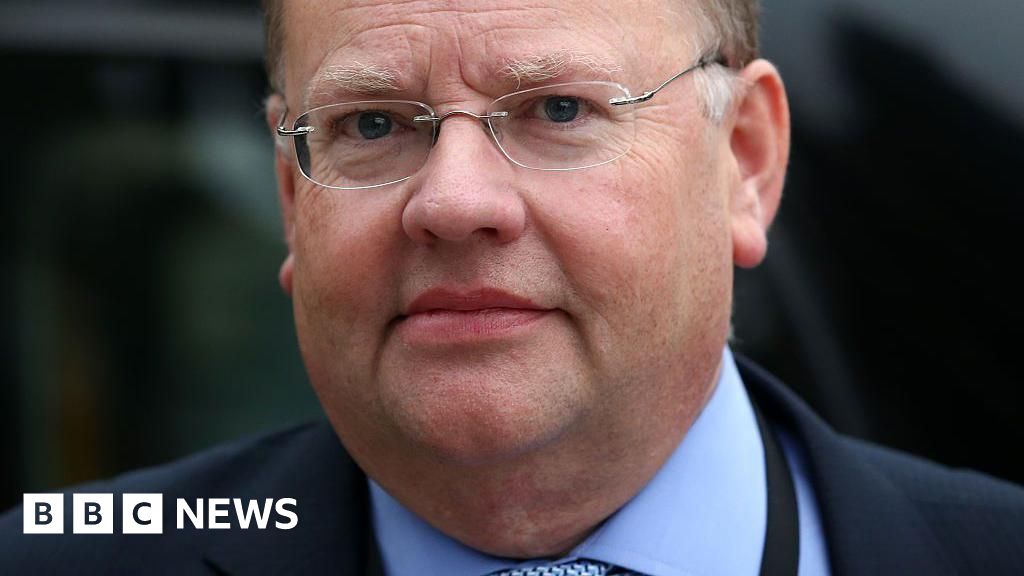
Lib Dem peer suspended again over harassment allegationsImage Credit: BBC News
Key Points
- •LONDON – A senior Liberal Democrat peer has been suspended from the party for a second time following new allegations of harassment, reopening a damaging chapter for the party and casting a harsh spotlight on its historical handling of misconduct claims. The move plunges the party back into a controversy that first erupted over a decade ago and raises critical questions about accountability within Westminster.
- •Initial Allegations (2013): Multiple women involved with the Liberal Democrat party made separate allegations of harassment against the same senior peer. The claims related to alleged unwanted advances and inappropriate behaviour.
- •The 2014 Investigation: The party appointed an independent barrister to investigate. This was presented as a move to ensure impartiality, although the process remained an internal party matter rather than a parliamentary one.
- •The Controversial Verdict: The investigator's report concluded the accounts of the accusers were "broadly credible." However, it stated the high legal standard of "beyond reasonable doubt" had not been met, and therefore no formal disciplinary action was taken against the peer, who remained a sitting legislator with the party whip.
- •The Fallout: The outcome was met with anger from the complainants and criticism from women's rights campaigners, who argued the party had chosen an impossibly high burden of proof to avoid a politically difficult situation.
Lib Dem peer suspended again over harassment allegations
LONDON – A senior Liberal Democrat peer has been suspended from the party for a second time following new allegations of harassment, reopening a damaging chapter for the party and casting a harsh spotlight on its historical handling of misconduct claims. The move plunges the party back into a controversy that first erupted over a decade ago and raises critical questions about accountability within Westminster.
The party whip was withdrawn from the prominent peer late yesterday, pending a full investigation into what a spokesperson described as "new and serious allegations." The identity of the peer and the specific nature of the new complaints have not been made public.
This action marks a stark contrast to the party's handling of a previous wave of complaints against the same individual. The suspension immediately resurrects difficult questions about a 2014 internal inquiry that left both the alleged victims and the party in a state of unresolved tension, and highlights the dramatic shift in institutional responses to harassment in the post-#MeToo era.
A History of Unresolved Claims
The core of the controversy dates back to 2013, when several women, all active within the Liberal Democrats, brought forward allegations of harassment against the peer. The claims prompted the party to commission an internal investigation, led by a respected independent barrister, to assess the evidence.
The resulting report, delivered in 2014, became a source of significant internal and external criticism. While the barrister found the testimonies of the four women to be "broadly credible," the investigation ultimately concluded that the allegations could not be "proved beyond reasonable doubt."
This high standard of proof—typically used in criminal courts—was widely seen as an inappropriate and insurmountable barrier for an internal party disciplinary process. In civil matters or internal hearings, the accepted standard is the "balance ofprobabilities," a lower threshold that asks what is more likely to have happened than not. The 2014 decision effectively exonerated the peer without clearing the air, leaving the accusers feeling dismissed and the party accused of failing to adequately address serious misconduct.
The Shifting Landscape of Accountability
The context surrounding this latest suspension is profoundly different from that of 2014. The intervening years have seen a seismic shift in public and political tolerance for harassment, driven largely by the #MeToo movement.
Westminster itself has been forced to overhaul its own dysfunctional procedures. The creation of the Independent Complaints and Grievance Scheme (ICGS) in 2018 established a new, independent framework for handling bullying and harassment complaints against anyone in the parliamentary community.
This new environment, coupled with the political cost of inaction, has placed immense pressure on all parties to act decisively when new allegations surface. The Liberal Democrats' swift suspension suggests a recognition that the approach taken a decade ago is no longer tenable.
Key Chronology of Events
-
Initial Allegations (2013): Multiple women involved with the Liberal Democrat party made separate allegations of harassment against the same senior peer. The claims related to alleged unwanted advances and inappropriate behaviour.
-
The 2014 Investigation: The party appointed an independent barrister to investigate. This was presented as a move to ensure impartiality, although the process remained an internal party matter rather than a parliamentary one.
-
The Controversial Verdict: The investigator's report concluded the accounts of the accusers were "broadly credible." However, it stated the high legal standard of "beyond reasonable doubt" had not been met, and therefore no formal disciplinary action was taken against the peer, who remained a sitting legislator with the party whip.
-
The Fallout: The outcome was met with anger from the complainants and criticism from women's rights campaigners, who argued the party had chosen an impossibly high burden of proof to avoid a politically difficult situation.
-
Current Suspension (2024): The party has suspended the peer in response to "new and serious allegations," which are understood to be from different individuals than the 2013 group. This triggers a new, formal investigation under the party's current disciplinary rules.
Implications and Next Steps
The decision to suspend the peer again carries significant implications for a party that prides itself on a progressive and transparent image, particularly in the run-up to a general election.
For the Liberal Democrats, this is a critical test of their modernised disciplinary framework. The handling of the new investigation will be scrutinised for its fairness, independence, and timeliness. Failure to manage the process effectively could result in significant reputational damage, alienate members and voters, and provide potent ammunition for political opponents. The financial cost of another lengthy legal and procedural investigation also adds a pragmatic pressure to find a definitive resolution.
For the House of Lords, the case may eventually be referred to the House of Lords Commissioner for Standards, who operates independently of party politics. If the peer is found to have breached the House's Code of Conduct, sanctions could range from a formal reprimand to a lengthy suspension from the chamber.
The path forward involves a formal and confidential investigation by the Liberal Democrats. The outcome will determine whether the peer is permanently expelled from the party. Depending on the nature of the evidence, the case could also be referred to the police. For now, the suspension signals an unambiguous, if delayed, message: the standards of a decade ago no longer apply.
Source: BBC News
Related Articles
Nationwide Protests Against ICE Enforcement Erupt in U.S.
Thousands are protesting ICE after the DOJ declined to investigate a fatal agent-involved shooting in Minneapolis, fueling a national movement and public anger.
Venezuela Amnesty Bill Could Free Political Prisoners
Learn about Venezuela's proposed amnesty bill to release political prisoners. The move could signal a major political shift and affect future economic sanctions
Pokémon Cancels Yasukuni Shrine Event After Backlash
The Pokémon Company has canceled an event at Tokyo's controversial Yasukuni Shrine after facing international backlash from China and South Korea.
US to Lose Measles Elimination Status: What It Means
The U.S. is poised to lose its measles elimination status due to escalating outbreaks. Learn what this downgrade means for public health and the economy.