Report: 'Lost Generation' Facing Shrinking Opportunities
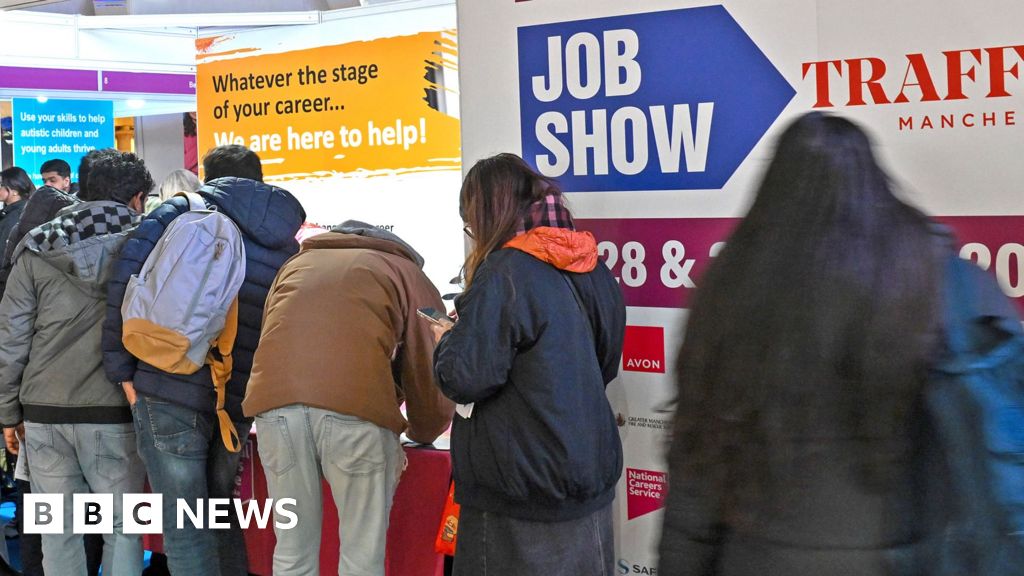
Opportunities shrinking for too many young people, says major report on 'lost generation'Image Credit: BBC Business (Finance)
Key Points
- •Economic Scarring: The pandemic disproportionately disrupted sectors that typically employ young people, such as hospitality and retail. While headline employment has recovered in many nations, the ILSO finds that the quality of jobs has not. The report notes that youth underemployment is 35% higher than in 2019, and entry-level wage growth has lagged inflation by an average of 4.5 percentage points across the OECD.
- •The Cost-of-Living Squeeze: Unlike previous generations who entered the workforce during periods of lower inflation, today's young adults are seeing their real wages immediately eroded. The report highlights that in major economic hubs like London, New York, and Singapore, the average worker under 30 now spends over 55% of their post-tax income on housing, a record high. This leaves little room for saving, investment, or further education.
- •A Widening Skills Deficit: Perhaps the report's most alarming finding is the impact on non-technical, interpersonal skills. Years of remote learning and onboarding have deprived a generation of the organic, in-person interactions that build professional competency. As one survey respondent, a 23-year-old project manager, told the ILSO researchers, the experience was isolating. "We weren't really seeing people in person, so we didn't get used to the social aspect of connecting with people. Maintaining eye contact, hand gestures and all sorts. We were just sitting behind screens. There were skills that people were struggling to develop," they said.
- •Communication and Collaboration: The lack of physical presence in meetings has, according to the study, diminished the ability of young professionals to read non-verbal cues, engage in spontaneous brainstorming, or build rapport with senior colleagues. This can lead to misinterpretations, reduced team cohesion, and a reluctance to speak up.
- •Resilience and Problem-Solving: The highly structured and often isolated nature of remote work has limited exposure to the "messy" reality of office life. The report suggests this has reduced opportunities to develop resilience by navigating unexpected challenges, resolving low-level conflicts, or adapting to rapidly changing priorities in a team environment.
Opportunities shrinking for too many young people, says major report on 'lost generation'
A landmark report has issued a stark warning that a combination of economic shocks, a persistent cost-of-living crisis, and a critical deficit in workplace skills is creating a "lost generation" of young people whose long-term prospects are being severely diminished. The findings suggest that the pandemic's after-effects are not merely economic but have fundamentally altered the development of an entire cohort entering the workforce, with potentially profound consequences for future productivity and social mobility.
The comprehensive study, "The Fractured Future: Youth Opportunity in a Post-Pandemic World," published by the Geneva-based International Labour & Skills Organisation (ILSO), paints a sobering picture. It argues that young adults (aged 18-29) are facing a "triple shock" that older generations did not have to navigate, threatening to lock in disadvantage for years to come.
A Confluence of Crises
The ILSO report details how three distinct but interconnected pressures are converging on today's youth. The analysis, which draws on data from 35 advanced and emerging economies, moves beyond simple unemployment statistics to examine the quality of work, wage progression, and the very skills required to succeed.
The core argument is that the scars left by the pandemic extend far beyond the initial job losses. The shift to remote work and learning during crucial formative years has created a "soft skills gap" that businesses are now beginning to confront, leaving many young employees feeling adrift and unprepared for the nuances of the modern workplace.
The 'Triple Shock' Explained
The report structures its findings around three primary challenges that are uniquely impacting the current generation of young workers.
-
Economic Scarring: The pandemic disproportionately disrupted sectors that typically employ young people, such as hospitality and retail. While headline employment has recovered in many nations, the ILSO finds that the quality of jobs has not. The report notes that youth underemployment is 35% higher than in 2019, and entry-level wage growth has lagged inflation by an average of 4.5 percentage points across the OECD.
-
The Cost-of-Living Squeeze: Unlike previous generations who entered the workforce during periods of lower inflation, today's young adults are seeing their real wages immediately eroded. The report highlights that in major economic hubs like London, New York, and Singapore, the average worker under 30 now spends over 55% of their post-tax income on housing, a record high. This leaves little room for saving, investment, or further education.
-
A Widening Skills Deficit: Perhaps the report's most alarming finding is the impact on non-technical, interpersonal skills. Years of remote learning and onboarding have deprived a generation of the organic, in-person interactions that build professional competency. As one survey respondent, a 23-year-old project manager, told the ILSO researchers, the experience was isolating. "We weren't really seeing people in person, so we didn't get used to the social aspect of connecting with people. Maintaining eye contact, hand gestures and all sorts. We were just sitting behind screens. There were skills that people were struggling to develop," they said.
The Critical Soft Skills Gap
The ILSO report dedicates a significant chapter to the tangible effects of this skills gap, which it warns could become a major drag on corporate productivity and innovation over the next decade.
-
Communication and Collaboration: The lack of physical presence in meetings has, according to the study, diminished the ability of young professionals to read non-verbal cues, engage in spontaneous brainstorming, or build rapport with senior colleagues. This can lead to misinterpretations, reduced team cohesion, and a reluctance to speak up.
-
Resilience and Problem-Solving: The highly structured and often isolated nature of remote work has limited exposure to the "messy" reality of office life. The report suggests this has reduced opportunities to develop resilience by navigating unexpected challenges, resolving low-level conflicts, or adapting to rapidly changing priorities in a team environment.
-
Networking and Career Navigation: The informal "water cooler" conversations, departmental lunches, and mentorship moments that are crucial for career development have been largely absent. The report finds that 65% of managers believe their younger staff have a significantly smaller internal network than their predecessors did at the same career stage.
The Broader Economic Consequences
The ILSO warns that these individual challenges will aggregate into significant macroeconomic headwinds if left unaddressed. The report outlines several key risks for both businesses and national economies.
-
A Future Leadership Deficit: Companies face a looming crisis in their talent pipeline. The interpersonal, negotiation, and influencing skills that are essential for management are precisely the ones being underdeveloped. This could lead to a shortage of effective leaders in 5-10 years.
-
Stagnating Productivity: Teams that struggle with communication and collaboration are inherently less efficient and innovative. The report estimates that this "communication friction" could shave as much as 0.5% off annual productivity growth in knowledge-based industries.
-
Deepening Inequality: The impacts are not felt equally. The report shows that young people from lower-income backgrounds, who often rely more heavily on workplace-based training and networking to advance, are falling further behind their more privileged peers who may have stronger existing social and professional networks.
A Call for Urgent, Coordinated Action
While the diagnosis is grim, the ILSO report concludes with a series of urgent recommendations, stressing that the window for effective intervention is closing. It calls for a multi-stakeholder approach involving governments, corporations, and educational institutions.
-
For Businesses: The report urges companies to move beyond ad-hoc hybrid policies and intentionally design for skill development. Recommendations include implementing structured, cross-generational mentorship programs; investing in high-quality training focused on communication and negotiation; and creating purposeful in-office days centered on collaborative, un-structured problem-solving rather than solo screen time.
-
For Governments: Policymakers are encouraged to increase funding for high-quality apprenticeships and vocational training programs that blend technical and soft skills. The report also recommends offering tax incentives to companies that can demonstrate significant investment in the professional development of their under-30 workforce.
-
For Education: Universities and colleges must better integrate real-world skills into their curricula. The ILSO suggests a greater emphasis on group projects that mimic workplace dynamics, mandatory internship programs with clear learning objectives, and courses on professional etiquette and networking.
The final message of the report is one of profound urgency. The challenges facing today's young people are not a cyclical downturn but a structural shift. Without a concerted effort to rebuild the bridges between education and effective employment, society risks leaving an entire generation behind, with economic and social costs that will be paid for decades to come.
Source: BBC Business (Finance)
Related Articles
Nationwide Protests Against ICE Enforcement Erupt in U.S.
Thousands are protesting ICE after the DOJ declined to investigate a fatal agent-involved shooting in Minneapolis, fueling a national movement and public anger.
Venezuela Amnesty Bill Could Free Political Prisoners
Learn about Venezuela's proposed amnesty bill to release political prisoners. The move could signal a major political shift and affect future economic sanctions
Pokémon Cancels Yasukuni Shrine Event After Backlash
The Pokémon Company has canceled an event at Tokyo's controversial Yasukuni Shrine after facing international backlash from China and South Korea.
US to Lose Measles Elimination Status: What It Means
The U.S. is poised to lose its measles elimination status due to escalating outbreaks. Learn what this downgrade means for public health and the economy.